Tony Beets Fired a Driver Over Suspected Drinking—and Drew a Hard Line on Mine Safety
Tony Beets Fired a Driver Over Suspected Drinking—and Drew a Hard Line on Mine Safety
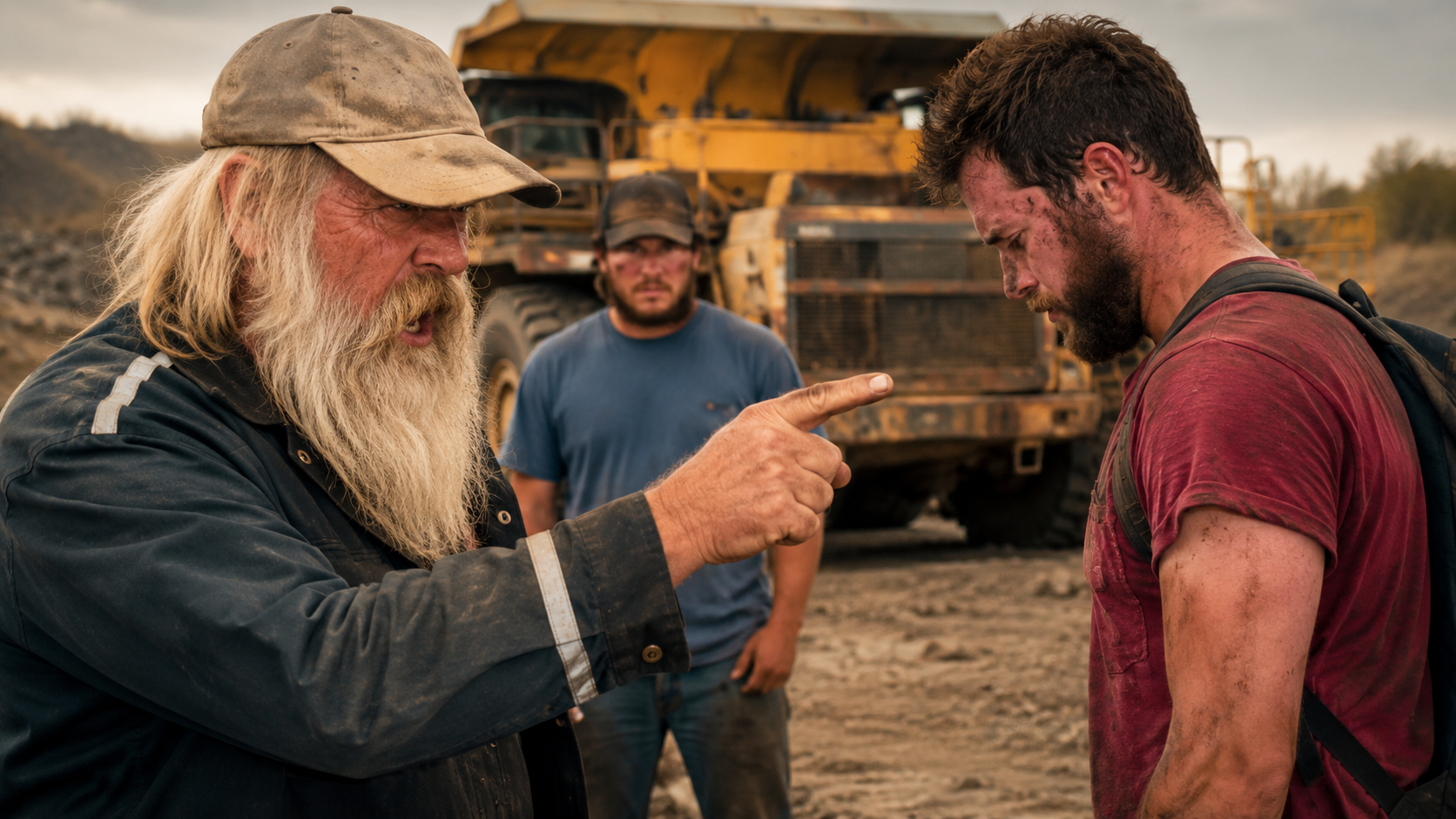
Tony Beets has built his television reputation on speed, pressure and an almost limitless tolerance for mechanical chaos. He will move giant machines through difficult ground, demand more production from an exhausted operation and use language that leaves no doubt about his impatience. But when a driver’s behavior raised concerns about alcohol and heavy equipment, Tony’s tolerance ended.
Jarrod Macleod was removed from the crew.
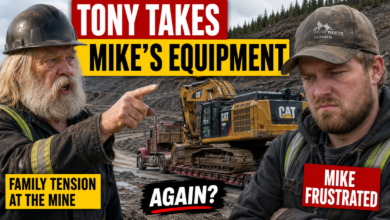
The incident unfolded during an expansion that had already created new risk. Tony brought in multiple drivers to increase activity at the Corner Cut. More trucks promised more material moved and more ground opened, but rapid hiring also introduced people who were less familiar with the site, its expectations and the judgment required around wet or unstable areas. Some drivers had already ignored instructions and entered dangerous flooded ground.
Against that background, Jarrod’s truck was noticed moving in a way that appeared erratic. Cousin Mike became concerned and asked him to step out. Jarrod acknowledged that he had been partying and drinking the previous night. Mike said he suspected the alcohol use had continued into the workday. Tony ultimately fired Jarrod because he believed the situation placed Jarrod and others at unacceptable risk.



It is important to state the evidence carefully. The televised account did not publicly present a breath test, laboratory result or legal finding proving Jarrod’s level of impairment at work. The concern arose from observed driving, his admission about the night before and Mike’s stated suspicion about continued drinking. Describing him as conclusively intoxicated on the job would go beyond what viewers were shown.
That uncertainty does not make Tony’s safety decision unreasonable.
An employer responsible for heavy equipment does not need to wait for a collision before removing a driver whose behavior creates a credible impairment concern. A mine is not an office where a questionable decision can be corrected with an email. Rock trucks carry enormous loads. Operators work around blind spots, steep edges, soft ground, water, excavators and people on foot. A few seconds of delayed reaction can turn an ordinary maneuver into a fatal event.
The first duty is to stop the exposure.
Tony’s immediate choice was therefore less about judging Jarrod’s character than controlling a hazard. Once irregular driving and alcohol concerns appeared together, allowing Jarrod to continue operating would have made every subsequent movement an unnecessary gamble. Removing him from the truck protected the crew while the situation was addressed.
Whether termination was the only possible final response is a separate question. Companies often use policies that require testing, documentation, suspension pending investigation or access to treatment, depending on law, contracts and circumstances. The episode did not provide a complete human-resources file or every conversation behind the decision. Viewers saw Tony apply a direct mine-site rule: if he believed a driver might be drinking and endangering others, that driver was finished.
That rule fits Tony’s blunt management style, but it also reflects a principle that extends far beyond one personality. Safety-sensitive work depends on trust. The excavator operator trusts the truck driver to stop in the right place. The ground worker trusts that the person in the cab sees the radio call and follows the site plan. Every employee assumes coworkers have the physical and mental ability to control the equipment assigned to them. Suspected impairment damages that trust immediately.
Jarrod’s admission that he had been drinking the night before did not by itself prove he was impaired during the shift. Many adults drink socially and report to work later without violating policy. The relevant issues would include when the drinking stopped, how much was consumed, whether he slept, how he felt and whether any alcohol or fatigue remained capable of affecting performance. A hangover alone can also impair attention and reaction even after blood alcohol has fallen.
The driving behavior made those questions urgent.
If Jarrod had been operating normally, the previous night’s party might never have become a workplace issue. Once the truck appeared erratic, the personal choice and the job-site observation were connected. Management could no longer treat the matter as private.
Tony also had to consider the message sent to the rest of the new crew. The operation had expanded quickly, and some drivers were already testing boundaries in flooded areas. A weak response could suggest that production mattered more than rules. A decisive response established that Tony’s demand for speed did not include permission to operate unpredictably or ignore hazards.
That distinction matters because leaders can create mixed signals. A boss may speak constantly about safety while rewarding only output. Workers quickly learn which message is real. If the fastest driver receives praise despite risky behavior and cautious workers are ridiculed, the written policy becomes meaningless. By firing a driver during an expansion, Tony accepted an immediate production cost to enforce the standard.
He lost labor at the very moment he had hired people to move more dirt.
That sacrifice gave the decision credibility. Safety rules become believable when following them is inconvenient.
The episode also exposed a weakness in rapid workforce growth. Hiring ten drivers, or any large group in a short period, does not instantly create a crew. Each person needs site-specific orientation, clear radio procedures, designated routes, rules for water and soft ground, expectations about fatigue and alcohol, and a clear understanding of who can stop work. Experienced drivers may know their machines while remaining unfamiliar with the mine’s particular hazards.
Tony’s operation is famous for moving fast. Onboarding cannot be allowed to move faster than competence.
The earlier incidents involving flooded ground suggested that the problem was broader than one employee. If several new drivers ignored instructions, management needed to examine training and supervision as well as individual discipline. Were the boundaries marked? Were instructions consistent? Did drivers understand why a route was closed? Was someone assigned to observe them during the first shifts? Firing Jarrod addressed the immediate alcohol concern; it did not automatically fix the system that allowed multiple unsafe choices.
Cousin Mike played a crucial role because he noticed the behavior and acted. Safety programs often fail not because no one sees a problem but because people hesitate to challenge a coworker. They may fear conflict, embarrassment or the possibility of being wrong. On a close crew, accusing someone of drinking can destroy a relationship. Yet silence transfers that risk to everyone nearby.
Mike chose intervention.
That decision should be judged by what was reasonable at the time, not only by whether later proof became public. He observed driving that concerned him. He had a conversation in which Jarrod acknowledged the previous night’s drinking. Mike then communicated his suspicion to Tony. The responsible next step was to keep Jarrod out of the cab while management decided what to do.
Jarrod, for his part, deserved to be treated as a person rather than a television villain. One incident does not tell viewers his entire history, work ethic or private circumstances. Alcohol problems, if present, are serious health and personal issues as well as workplace risks. Accountability and human dignity can exist together. Removing someone from dangerous equipment does not require public humiliation or exaggerated claims.
The program’s dramatic framing can make a firing feel like a final moral verdict. In real life, it is a management decision about employment and risk. Tony determined that Jarrod could no longer remain in his operation under the circumstances. That does not give the audience license to invent facts not shown or to define the rest of Jarrod’s life by one episode.
It does, however, allow a clear evaluation of the safety principle.
When credible signs of impairment appear in heavy-equipment work, the person must be removed from the task immediately. The investigation and employment decision can follow. Production should not continue while supervisors debate whether the evidence is certain enough. The potential consequence is too severe.
Many older workers know why this standard developed. Industries once treated drinking at lunch, fatigue and informal risk-taking as ordinary parts of the job. Accidents were accepted as the price of hard work. Over time, families and crews learned that many of those losses were preventable. Modern expectations are stricter because the old costs were real.
Tony’s mine may look rough and improvised, but the machines are modern in scale and unforgiving in force. A loaded truck can weigh many times more than a passenger vehicle and takes space to stop. Visibility from the cab is limited. Other workers cannot assume they can simply move out of the way. The operator’s judgment is one of the primary safety systems.
Anything that weakens that judgment threatens the entire site.
The incident also raises a leadership responsibility Tony cannot delegate: his own production pressure must not encourage workers to hide problems. If employees believe admitting fatigue, medication effects or a bad night will lead automatically to ridicule, they may climb into the cab when they should not. A strong safety culture allows a person to declare himself unfit before operating. Discipline should focus most severely on dishonesty, violation and endangerment, while prevention gives workers a path to stop before harm occurs.
The episode did not reveal whether Jarrod had such a path or whether he believed he could use it. That remains unknown. What viewers did see was a concern identified after he was already driving.
The ideal system would catch the problem earlier. Pre-shift checks, supervisor contact and a clear fitness-for-duty policy can prevent a questionable operator from starting. Workers should know whom to contact and what happens if they disclose a concern. Supervisors should be trained to document observations such as speech, balance, odor, behavior and driving performance without turning suspicion into unsupported certainty.
Testing, where lawful and properly administered, can protect both sides. It can confirm a serious violation or prevent a worker from being punished solely on rumor. Documentation also ensures that similar cases receive similar treatment rather than depending on a boss’s mood.
Tony’s direct style produced a fast answer, but a larger company would need a repeatable process.
Still, the mine’s immediate reality favored speed in one respect: the truck had to stop. There was no benefit in leaving Jarrod behind the wheel while someone searched for perfect evidence. Mike’s concern and Tony’s response broke the sequence before a crash could supply the proof no one wanted.
The firing may have strained the crew and reduced capacity at the Corner Cut. It also told every remaining driver that Tony would not trade their safety for another load. That message was especially necessary after new hires had entered hazardous wet areas. The expansion could not become an excuse for disorder.
Tony is often criticized for driving people and machines too hard. In this case, his decision showed a boundary inside that aggressive culture. He may tolerate shouting, breakdowns and unconventional repairs. He would not tolerate a driver whom he believed posed an impairment risk.
The distinction does not erase every other safety concern on the mine. It should not be used to claim that one firing makes the entire operation exemplary. Safety is measured across ordinary days, not only dramatic incidents. Roads, maintenance, training, fatigue and supervision all matter. Tony’s response was one correct control in a much larger system.
It was also a reminder that leadership sometimes means removing a productive person before harm occurs. No gold recovered that day could justify a collision caused by a preventable concern. Machines can be repaired. A lost shift can be recovered. A worker killed or permanently injured cannot be restored by the next weigh-in.
Jarrod’s case should remain described with the limits of the public evidence. He admitted drinking the night before. Mike suspected more. The driving raised concern. Tony made an employment decision. Those facts are serious enough without adding certainty that the record does not provide.
In the end, Tony did not wait for a damaged truck, an injured worker or a police report to establish that the risk had become unacceptable. He acted while the consequence was still only a possibility.
That is the moment safety rules are meant for—not after the mine has proof in the form of tragedy, but before.