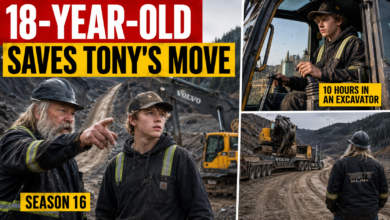
Where Fred Lewis Went After Gold Rush—and Why Mining May Not Be Finished With Him
Where Fred Lewis Went After Gold Rush—and Why Mining May Not Be Finished With Him
Fred Lewis’s departure from Gold Rush was not presented as the end of his interest in adventure. It was presented as a boundary. After joining the franchise in Season 11 and working in the mining world through Season 13, the former Special Forces medic said he had received a serious threat and needed to protect his family. That explanation changed the way his exit should be understood.
Fred did not say that the physical work had become too difficult or that he had lost all interest in gold. He said family safety was paramount and that, because of his background, he no longer had space for violence in his life. The statement suggested that stepping away was less about abandoning one career than refusing an environment he believed could expose the people closest to him to unacceptable risk.
Since leaving, Fred has continued sharing parts of his life publicly. His updates have included target shooting, fitness, cooking, and learning to make sourdough bread. He has also discussed his attraction to new challenges and acknowledged that mining still interests him. The result is not a simple retirement story. It is the portrait of someone rebuilding his routine while deciding which parts of his former life still belong in the next chapter.
Fred’s Route Into the Gold Rush World
Fred entered the series with a professional identity that immediately distinguished him from many other cast members. He was introduced as a Special Forces medic, bringing medical experience, military discipline, and a background in high-pressure environments. Those skills gave him a role that extended beyond operating equipment or chasing an ounce target.
His military history also shaped how viewers interpreted his approach to mining. He was often framed as hardworking, resilient, and willing to learn unfamiliar tasks. Gold mining offered a new mission structure: a team, a difficult objective, a restricted season, and visible consequences when plans failed.



Fred worked with Parker Schnabel before attempting to build a path of his own. That transition exposed him to the difference between participating in an established system and leading a less experienced crew. Parker’s operation had developed processes, equipment, and expectations over years. Fred’s later efforts had to create structure while also overcoming the learning curve of new miners.
That challenge made him a divisive figure among viewers. Supporters respected his persistence and the opportunities he tried to create for veterans. Critics questioned production, planning, and whether the operation was economically competitive. Both reactions became part of his television identity.
Why He Said He Left
In July 2024, Fred shared a lengthy message explaining that his departure was not caused by mining itself. He said he had received a “serious threat” and wanted to protect his family. He also stated that his background had left him unwilling to allow violence back into his life.
“My family’s safety is paramount and with my background I simply don’t have a space for violence in my life anymore so I’m separating myself from it and moving on.”
The supplied account does not identify who made the alleged threat, what form it took, or whether law enforcement became involved. Those details should not be invented. The confirmed public point is Fred’s own explanation: he perceived a serious enough risk to separate himself from the situation.
That lack of detail may leave fans curious, but privacy is understandable when a statement concerns family safety. Publicly naming people or describing security arrangements could create additional exposure. Fred gave a reason for his decision without opening every part of the event to outside analysis.

Leaving a Show Is Not the Same as Leaving an Identity
Long-running reality television can merge a person’s job, public reputation, and private life. Fred was not only mining; he was being filmed while mining, evaluated by viewers, and placed inside storylines shaped by seasonal results. Walking away meant separating from several systems at once.
He lost the regular structure of production and the public platform attached to new episodes. He also gained control over what he shared and when he shared it. His social-media activity after the show reflects that shift. Instead of one dominant professional storyline, followers see multiple interests.
This kind of transition can look unfocused from the outside. Fred himself has said that he is adventurous, enjoys trying different things, and does not always remain in one hobby or job for long. That characteristic can complicate a traditional career path, but it also explains why his post-show life contains several parallel pursuits.
Target Shooting and a Return to Familiar Skills
Fred has posted photographs and clips of himself participating in target shooting with friends, including the use of rifles and pistols. The supplied report says he enjoys target-shooting tournaments. These updates connect with his military background without establishing that he intends to return to military service.
Target shooting is a structured sport and recreational activity when conducted lawfully and with appropriate safety controls. Fred’s public posts appear to focus on participation and community rather than providing tactical instruction. They show him spending time around a skill set that is familiar from his earlier life.
The contrast with his departure statement is worth handling carefully. Saying that he wanted no space for violence does not necessarily mean rejecting all lawful firearm sport. A controlled target range is different from a threat directed at a family. His decision can be understood as an attempt to avoid interpersonal danger while continuing an activity he enjoys.
It would be inaccurate to infer more from the posts than they show. They do not confirm a new profession, security role, or military commitment. They show a recreational interest that Fred has chosen to share.

Fitness as a Form of Continuity
Fred has also used his platform to promote an active lifestyle and share workout routines. This interest fits both his military past and the physical demands of mining. Heavy-equipment work may appear machine-driven, but remote operations still require long days, awkward movement, maintenance labor, and the ability to function while tired.
Fitness can also provide structure after leaving an intense production environment. A training schedule creates measurable goals without the financial uncertainty of a mine. Progress can be tracked through consistency rather than gold totals or episode edits.
His posts should not be treated as medical prescriptions. They reflect his personal routine, and viewers would need to adapt any exercise to their own health and ability. In the context of his transition, the important point is that physical discipline remains part of his identity.
Cooking and Sourdough Show a Different Pace
Some of Fred’s most revealing updates are also the least dramatic. He has shared recipes and described learning to make sourdough bread. Those activities are far removed from the noise and urgency of a televised mine.
Sourdough requires patience, repetition, and attention to small changes. A starter must be maintained, fermentation must be observed, and results improve through adjustment. In that sense, it offers a quieter version of the same experimental mindset that attracts people to mining: use evidence, change the process, and try again.
Cooking also places Fred in an ordinary domestic setting rather than an isolated claim. After leaving because of concern for his family, that shift carries meaning. His new chapter appears to include not only the search for another high-stakes mission but the deliberate recovery of everyday life.
Does Fred Miss the Military?
The original report interpreted his shooting content as a possible sign that he missed military service. That is a reasonable impression, not a confirmed statement from Fred in the supplied material. Familiar equipment and training environments can evoke a former career without indicating a desire to reenlist or recreate every part of it.
Fred’s public identity remains strongly connected to his service. Viewers met him through that background, and many of his habits—fitness, teamwork, readiness, and attraction to difficult assignments—are interpreted through it. He may be preserving parts of that identity while choosing not to return to the dangers he explicitly said he wanted to leave behind.
Why Mining Still Appeals to Him
Fred has discussed the possibility of mining again. He described himself as someone who likes adventure and tries different activities. He also acknowledged that other opportunities may provide income more quickly than gold mining.
That observation is financially important. Mining can require substantial spending before the first meaningful cleanup. Ground must be evaluated, equipment mobilized, fuel purchased, and a crew supported. Even then, production is uncertain. A person with several income options may reasonably decide that another business offers a faster or more predictable return.
At the same time, mining provides a combination that few ordinary jobs can match: exploration, machinery, team leadership, physical environment, and the possibility of a dramatic result. For someone drawn to changing missions, that combination may remain difficult to abandon permanently.
A Return Would Probably Look Different
The supplied account suggests that Fred has explored other mining options but may not return with Parker and the same team. That is not surprising. His previous working relationship with Parker did not develop into a long-term partnership.
Fred and his crew sought Parker’s help and offered their services, but Parker declined. Some viewers interpreted that moment as a turning point. The source does not establish it as the sole cause of Fred’s departure, especially because Fred later gave the serious-threat explanation. It does show that the two miners did not have an obvious path back into the same operation.
If Fred returns, a smaller independent project, partnership, advisory role, or non-televised mine may fit better than attempting to recreate his previous storyline. He could also use his medical and leadership experience without serving as the principal mine boss.
What Went Wrong With the Parker Connection
Parker’s refusal should not automatically be interpreted as personal hostility. Established mining operations make hiring and partnership decisions based on available roles, costs, trust, and whether a new group fits the production plan. Fred’s willingness to work did not create an obligation for Parker to accept the offer.
From Fred’s perspective, the rejection may have clarified that his future would require a separate route. Operating under Parker had given him experience, but independence meant taking responsibility for ground selection, planning, and results.
The two men also represented different stages of mining development. Parker had spent years building a system around large production. Fred was still translating military leadership and new mining experience into a sustainable operation. Their goals could overlap without their methods or needs aligning.
The Difference Between Television Failure and Personal Progress
Reality shows often judge a miner through a seasonal target. If the gold total is low, the story is framed as failure. That standard can obscure other forms of progress: learning equipment, understanding ground, building a team, or deciding that the cost is no longer worth the outcome.
Fred’s post-show life cannot be measured by whether he immediately found another claim. His decision to prioritize family safety, maintain physical health, develop new interests, and consider future work on his own terms represents a different kind of result.
This does not erase criticism of his mining performance. It places that performance inside a larger life. A person can struggle as a mine operator and still make a responsible decision about when to leave.
What Is Confirmed and What Remains Unknown
- Confirmed by Fred’s public statement: He said a serious threat influenced his decision and that family safety was his priority.
- Shown in his updates: He has participated in target shooting, shared fitness content, cooked, and practiced making sourdough bread.
- Discussed by Fred: He remains interested in adventure and has considered other mining possibilities.
- Not confirmed: A specific new mine, television return, employer, or formal reunion with Parker Schnabel.
Keeping those categories separate prevents a social-media update from becoming a false comeback announcement.
Why Fans Continue to Ask About Him
Fred’s time on Gold Rush generated strong reactions because his story combined military service, inexperienced crews, ambitious plans, and visible setbacks. Viewers who supported him wanted the veteran-led mission to succeed. Viewers who criticized him wanted the mining results to justify the resources being spent.
His departure left that conflict unresolved. He did not end with a triumphant season or a definitive statement that he would never mine again. Instead, he said he was beginning another chapter. Every new adventure therefore feels like a possible continuation.
A Future Defined by Choice
Fred’s next move may involve mining, but the evidence does not support claiming that a return is scheduled. He appears to be exploring a wider life rather than rushing to replace the show with another identical project.
That flexibility may be the most important difference between his television years and his current situation. On the show, the season calendar and production target determined the pace. Now he can decide whether an opportunity serves his family, finances, and sense of purpose before committing.
Mining remains credible because Fred has said the interest is still present. A return with Parker appears less likely based on their past interaction, but another operator or independent venture remains possible. Target shooting, fitness, and cooking are not distractions from that story; they are evidence that his identity no longer depends on one claim.
Fred Lewis left Gold Rush under circumstances he described as serious and personal. What followed was not disappearance. It was recalibration. He kept the discipline, curiosity, and appetite for challenge that brought him to mining while drawing a clearer line around family safety. Whether gold becomes part of the next chapter is still unknown, but the decision now appears to belong to him rather than to the demands of a television season.