TONY BEETS’ FLOODED-DOZER RESCUE “COMPLETELY DERAILS” IN A HIGH-RISK FAMILY MISSION
TONY BEETS’ FLOODED-DOZER RESCUE “COMPLETELY DERAILS” IN A HIGH-RISK FAMILY MISSION
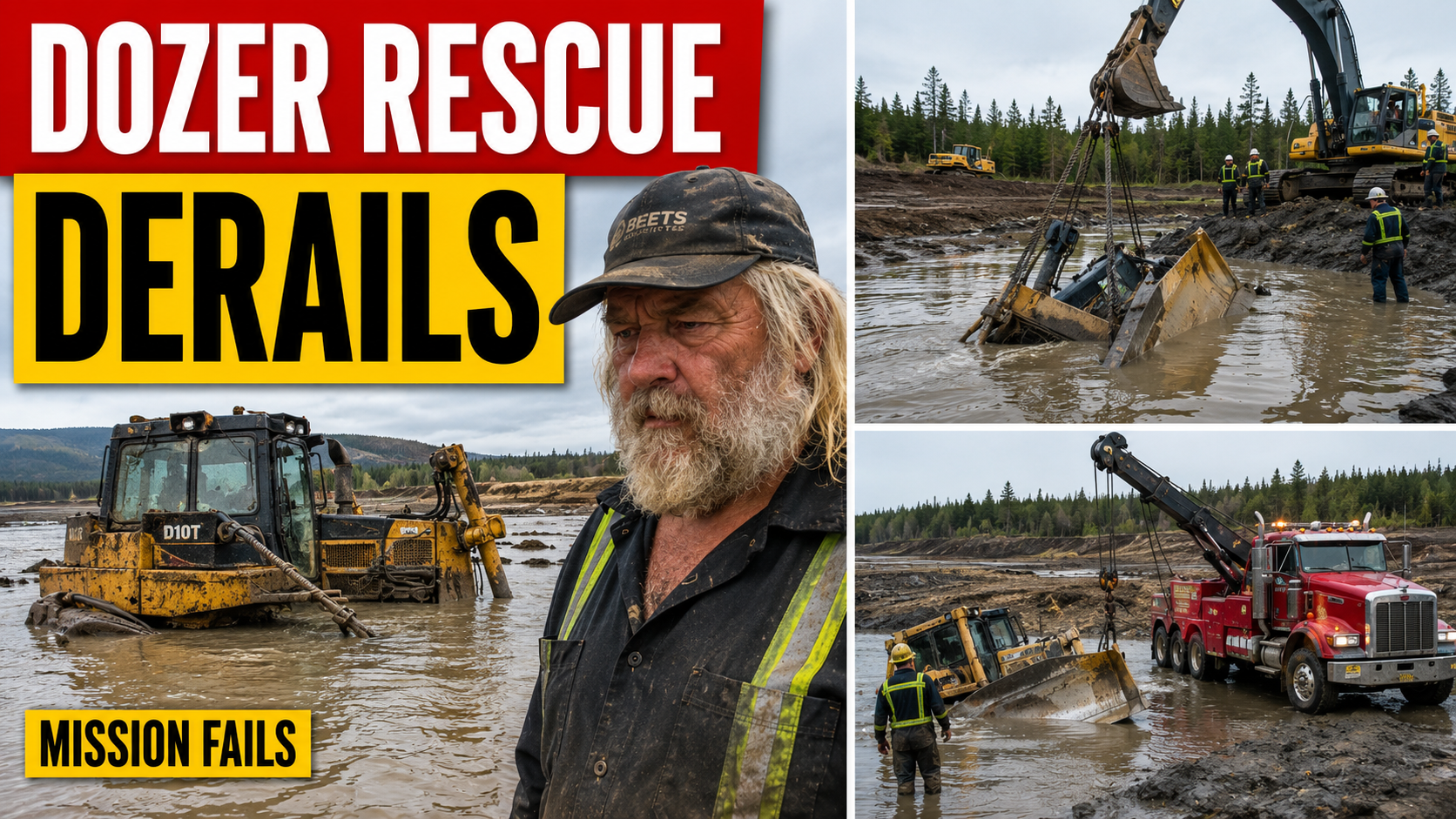
A large dozer is one of the most valuable tools on a placer mine. It clears ground, pushes overburden, builds roads, manages material, and helps create the conditions every other machine needs. When that dozer becomes disabled in water, it stops being an asset and becomes a problem measured in weight, access, time, and risk.
That was the crisis facing the Beets family in the Gold Rush special “Like Brother, Like Brother.”
The episode also followed Tony bringing his brother Klaas into the mining operation and Tony stacking nearly $1 million in gold. But one of its most troubling stories centered on a mission to recover a flooded dozer. Discovery’s official description warned that the rescue “completely derails.”
The phrase was brief, but the stakes behind it were enormous. Recovering heavy equipment from water is not a routine tow. The ground beneath the machine may be unstable. Water can hide obstacles and damage. The dozer’s tracks may be buried by mud or sediment. Any cable, chain, winch, excavator, or second dozer used in the recovery becomes part of a system carrying tremendous force.
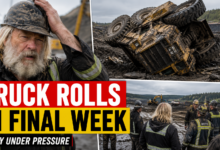
If the plan fails, the crew can lose more than time. A second machine can become stuck. Recovery gear can break. The trapped dozer can shift unexpectedly. People working too close can be placed in danger.
The Beets family has built its reputation on solving problems with experience, machinery, and determination. The flooded-dozer mission tested the limit of that formula. Some problems cannot be forced into submission simply because the season is moving and the equipment is expensive.
HOW A DOZER ENDS UP “FLOODED”
The public episode description does not provide a full engineering report or a step-by-step explanation of how the machine became submerged. Viewers should therefore avoid inventing a cause.
In general, heavy equipment can become flooded or trapped when water levels rise, drainage fails, a machine enters saturated ground, an embankment gives way, or a work area proves softer than expected. A dozer’s tracks spread its weight better than wheels, allowing it to work in difficult ground, but the machine remains extremely heavy.
Once tracks sink into mud, suction and packed material can resist movement. If water reaches mechanical or electrical systems, the crew must also consider contamination and damage before restarting the machine. Engines, final drives, hydraulic systems, fuel, and lubricants may require inspection depending on the depth and duration of exposure.
The first instinct on a busy mine may be to pull immediately. Every hour the dozer sits appears to increase cost. Yet pulling without understanding what holds the machine can make the situation worse.
A safe recovery begins with information. How deep is the water? What is the ground composition? Is the dozer level or leaning? Are the tracks intact and free to move? Where are structurally suitable recovery points? What equipment can approach without entering the same unstable area?
The episode’s “completely derails” description suggests that the original plan did not survive contact with the actual conditions.
WHY WATER CHANGES EVERYTHING
On dry, firm ground, operators can often see the route, attachment points, and obstacles. In muddy water, visibility disappears. The surface may look calm while the bottom contains ruts, soft sediment, rocks, broken material, or abrupt drop-offs.
Water also affects the working area around the dozer. Crew members may struggle to maintain footing. Recovery equipment may have limited places to stand. Building a stable approach can require pumps, drainage, fill, mats, or substantial earthwork before the first serious pull begins.
The trapped machine’s apparent weight is only part of the calculation. Resistance from mud and the angle of extraction can increase the force required. A straight pull may be impossible. An angled pull can load attachment points and rigging in ways the crew did not intend.
This is where urgency becomes dangerous. A mine owner looks at a machine worth a great deal of money sitting in water and sees value being destroyed. An experienced recovery planner looks at the same scene and sees stored energy, uncertain ground, and multiple ways for the situation to injure someone.
The dozer can wait. People must remain the priority.
THE DANGER OF THE SECOND MACHINE
Many recoveries fail because attention stays fixed on the disabled equipment. The rescuer is treated as automatically safe.
It is not.
An excavator used to dig around the dozer may be operating near an unstable edge. A second dozer providing pulling force may lose traction and slide. A loader may enter soft ground while carrying fill. Each machine adds weight to an area already shown to be unreliable.
If a rescue machine becomes disabled, the problem grows geometrically. The crew now has two machines to recover, fewer resources available, and a more crowded work zone. The second machine may also block the safest route to the first.
This is why a recovery plan needs defined stopping points. If the ground moves, the rigging changes angle, a machine loses traction, or expected force does not move the dozer, the team should pause and reassess.
Gold Rush often builds drama around pushing through obstacles. Heavy-equipment recovery sometimes demands the opposite kind of strength: the willingness to stop.
TONY’S EXPERIENCE IS AN ADVANTAGE—NOT A GUARANTEE
Tony Beets has spent decades mining in the Klondike. He understands large equipment, changing ground, water problems, and the practical realities of keeping an operation alive in a short season. That experience gives him a deep library of solutions.
It can also create confidence that a problem resembles something solved before.
Experience is most valuable when it helps a leader recognize both patterns and differences. Two stuck dozers may look similar from the bank, yet one may rest on firm ground while the other sits over deep saturated sediment. A recovery method that worked last year may fail because access, angle, or machine condition has changed.
There is no basis in the brief official description to claim Tony ignored professional advice or caused the rescue to fail. The phrase “completely derails” tells viewers that the mission went badly, not why. Responsible reporting must preserve that uncertainty.
What the story demonstrates is that reputation cannot remove physical risk. The “King of the Klondike” still operates under the same laws of weight, traction, water, and force as every other miner.
FAMILY CAN MAKE A CRISIS STRONGER AND MORE COMPLICATED
The special’s title, “Like Brother, Like Brother,” emphasized family. Tony brought Klaas into the operation, adding another Beets relationship to a business already shaped by Tony, Minnie, their children, and extended relatives.
Family crews can respond to emergencies with unusual speed and loyalty. Relatives may trust one another’s judgment, communicate in shorthand, and work long hours because the equipment and season belong to the family rather than an anonymous corporation.
That loyalty can be an enormous strength during a recovery. People do not walk away when conditions become frustrating.
It can also make roles less clear. Who has final authority to stop the attempt? Can a younger family member challenge Tony’s plan? Does concern sound like disloyalty? Are relatives more willing to accept risk because they do not want to disappoint one another?
These questions are not accusations about the Beets family. They are common risks in family businesses. Formal companies use written recovery procedures, designated supervisors, and independent safety authority because emergencies can overwhelm ordinary relationships.
A family operation needs the same clarity, even when everyone has decades of shared history.
THE FINANCIAL PRESSURE BEHIND THE RESCUE
A dozer out of service can delay stripping, road building, reclamation, and material movement. If the operation lacks a replacement, other machines and workers may sit idle. Renting or moving another large dozer can be expensive and slow.
Water exposure may also become more damaging with time. The owner therefore has legitimate reasons to recover the machine promptly.
But urgency should be divided into two separate questions.
First: How quickly must the dozer be stabilized to prevent further damage?
Second: How quickly can it be fully extracted without unacceptable risk?
Those answers may differ. Stabilizing water levels, securing the machine, or preventing further submersion may be possible before a safe extraction route is ready.
Television compresses these choices into a dramatic mission. In real operations, the best financial decision may be a slower recovery that protects other equipment and avoids injury.
The gold stacked elsewhere in the episode intensified the contrast. Tony could display nearly $1 million in recovered metal while a single machinery crisis threatened to consume time and money. Mining creates wealth and destroys capital in the same landscape.
WHAT “COMPLETELY DERAILED” SHOULD—AND SHOULD NOT—MEAN
Promotional descriptions are written to attract viewers. The phrase does not, by itself, prove a catastrophe, regulatory violation, injury, or total loss of the dozer. It should not be stretched beyond the available evidence.
At minimum, it tells the audience that the planned recovery did not proceed as expected and that the mission became a central complication in the episode.
That is significant because recovery work depends on planning. A derailment means assumptions changed. The force may have been insufficient. The approach may have failed. Another component may have broken. Ground or water may have behaved differently than expected.
Without a verified technical account, those possibilities must remain possibilities.
The larger lesson does not require speculation. Any failed attempt should trigger reassessment before another attempt begins. More power is not always the answer. The crew may need a different pulling angle, better drainage, excavation around the tracks, additional anchoring, or specialist assistance.
Failure is valuable only if it changes the next decision.
WHY VIEWERS FIND EQUIPMENT RESCUES SO COMPELLING
Gold totals can feel distant. Few viewers will ever hold a hundred-ounce cleanup or manage a multimillion-dollar mining season. A stuck machine is easier to understand.
People who have worked farms, construction sites, logging roads, or snowy highways know the sinking feeling of seeing valuable equipment trapped. The temptation is immediate: get a bigger machine, attach a chain, and pull.
They also know how quickly the rescue can become worse than the original problem. A tractor gets stuck while pulling a truck. The second tractor enters and sinks. A chain breaks. A tow point fails. What began as inconvenience becomes danger because pride and momentum replace planning.
The Beets dozer story magnified that familiar experience to mining scale. The equipment was larger, the forces greater, and the cameras rolling, but the human impulse was the same.
That recognition is one reason older viewers remain loyal to Gold Rush. The show’s most memorable scenes often involve practical judgment rather than gold. People watch not only to see whether a machine moves, but to compare the crew’s solution with what they would have done.
THE QUESTIONS A RESPONSIBLE RECOVERY MUST ANSWER
A sound heavy-equipment recovery generally requires a few basic decisions, though the exact method must be designed by qualified people on site.
The crew needs control of the work zone. Unnecessary personnel should remain clear. Communication between operators must be unambiguous. Rigging and attachment points must be suitable for the expected load. No one should stand in the line of tension, where a failed cable or connection could travel.
The recovery machines need stable positions. The team must understand what will happen if the trapped dozer moves suddenly or begins to slide. An escape path should exist for equipment and people.
The machine itself needs inspection before startup. Water or mud entering critical systems can turn a successful extraction into an expensive mechanical failure if the engine is started too soon.
These principles are general context, not a judgment about which steps the Beets crew did or did not follow. An edited episode cannot substitute for a safety investigation.
THE REAL MEASURE OF THE MISSION
Fans naturally want to know whether the dozer was saved. For the business, that outcome matters. A recovered, repairable machine represents a major asset returned to service.
But a rescue should not be judged only by whether the dozer eventually reaches dry ground.
Did everyone remain safe? Was additional equipment protected? Did the crew identify why the first plan failed? Were future water and ground risks reduced? Was the machine inspected before returning to work?
A successful pull that nearly injures someone is not a successful operation. A slower recovery that avoids a second accident may be the better result even if television makes it feel less heroic.
Tony Beets’ career is built on action, and his family’s willingness to tackle difficult work is real. The flooded-dozer mission showed why action must be matched by restraint. The larger the machine, the more powerful the forces, and the less room there is for improvisation without control.
In “Like Brother, Like Brother,” the gold bricks proved what decades of persistence could produce. The dozer in the water proved how quickly the ground could take control back.