TONY BEETS UNLEASHES WRATH: GOLD RUSH KING FIRES DRIVER OVER SHOCKING DRUNK-DRIVING SUSPICION AT THE MINE
TONY BEETS UNLEASHES WRATH: GOLD RUSH KING FIRES DRIVER OVER SHOCKING DRUNK-DRIVING SUSPICION AT THE MINE
The Iron Fist of the Klondike
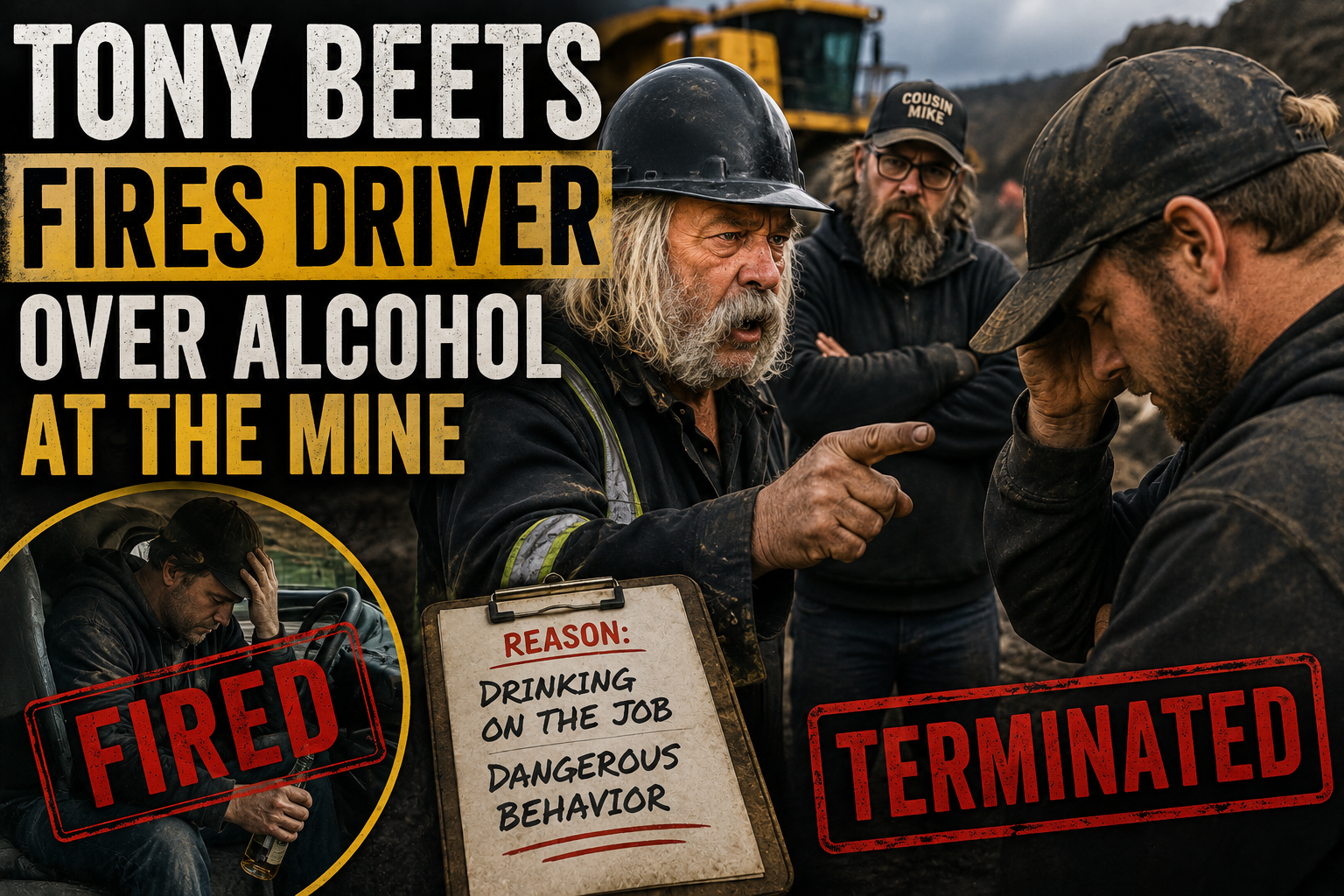
In the unforgiving world of placer mining, where million-dollar machinery meets the frozen, unforgiving earth of the Yukon, there is no room for error, and absolutely no tolerance for recklessness. At the heart of this high-stakes domain stands Tony Beets, the Dutch-born patriarch of Gold Rush who has built a sprawling empire through sheer grit, strategic cunning, and an unyielding demand for discipline. Beets is not known for his patience or his gentle touch; he is a man who communicates in growls and glares, and whose approval is earned through sweat and unflinching reliability. His operation at Paradise Hill and the Indian River is a finely tuned machine, with dozens of employees, colossal excavators, roaring washplants, and a fleet of massive rock trucks that haul thousands of yards of paydirt daily. It is a ballet of brute force, and any dancer who steps out of line risks being crushed by the very machinery they operate. Recently, that brutal reality came crashing down on one of his own drivers, Jarrod Macleod, in a dramatic confrontation that was captured for the Discovery Channel cameras and has since become a cautionary tale whispered across every mining camp in the territory. The incident, which unfolded with the tension of a thriller, saw Tony Beets and his right-hand man, Cousin Mike, engage in a tense, high-octane showdown with Macleod, ultimately resulting in a summary execution of his employment. The reason: a suspected case of driving under the influence of alcohol while operating heavy machinery, a cardinal sin in an industry where a single lapse in judgment can mean the difference between a productive shift and a fatal catastrophe.
Reckless Driving Triggers Immediate Alarm
The drama began not with a dramatic accusation, but with a simple, alarming observation. As the morning shift got underway at one of Tony Beets’ sprawling mining claims, a seasoned member of the management team noticed something deeply unsettling about the way driver Jarrod Macleod was operating his heavy hauler. The massive truck, capable of carrying dozens of tons of earth, was not following its usual steady, predictable line across the rugged terrain. Instead, it was veering, swerving in a manner that immediately raised red flags for anyone watching. In a mining environment, where trucks operate on narrow, uneven haul roads carved into the permafrost, any deviation from a straight path can result in a catastrophic rollover, a collision with another vehicle, or a dangerous spill that endangers the lives of ground crews. The abnormal movement was not just a minor traffic infraction; it was a glaring warning signal that something was profoundly wrong with the driver behind the wheel. The management team, trained to spot even the smallest signs of fatigue or impairment, knew that such erratic behavior could not be dismissed as a simple accident or a rough patch in the road. It pointed to a human error of the most dangerous kind, and they knew they had to act immediately to prevent a potential disaster. The word spread quickly through the chain of command, and within minutes, the incident was brought to the attention of the highest authority on the claim: Tony Beets and his nephew, Cousin Mike, who serve as the eyes and ears of the operation, ensuring that every machine and every man operates with the precision of a Swiss watch.



The Confrontation: Face-to-Face with Cousin Mike and Tony
What followed was a dramatic, television-ready confrontation that encapsulated the high-stakes pressure cooker of the Klondike gold rush. Cousin Mike, acting as the first line of enforcement, approached Jarrod Macleod directly. The air was thick with tension as the heavy equipment fell silent around them, the other crew members acutely aware that something significant was unfolding. Mike did not dance around the issue; he confronted Jarrod with the blunt, no-nonsense observation that his driving had been erratic and dangerous. He pressed Jarrod for an explanation, demanding to know what had caused such a blatant lapse in concentration and control. Initially, there may have been hesitation or deflection, but under the intense scrutiny of the management, the truth began to seep through the cracks. When Tony Beets himself joined the interrogation, the pressure became almost unbearable. Tony, with his penetrating stare and gravelly voice, does not conduct interviews; he conducts inquisitions. He stood face-to-face with his employee, the silence punctuated only by the distant hum of generators, and demanded the full story. He wasn’t looking for excuses; he was looking for accountability, and he was prepared to make a split-second decision that would alter the course of Jarrod’s season. The scene was a masterclass in old-school management, where the boss looks you in the eye and forces you to own your mistakes.
A Night of Partying, A Morning of Consequences
Faced with the undeniable evidence of his erratic driving and the direct questioning of his bosses, Jarrod Macleod had no choice but to come clean. He confessed that he had been engaging in a night of heavy partying with friends or crew members during the precious hours of rest that should have been dedicated to sleep and recovery. The celebration, whatever its cause, had stretched deep into the early morning, involving significant alcohol consumption. This was not a matter of a single beer with dinner; it was a full-blown session that left him in no condition to operate a multi-ton vehicle just a few hours later. Jarrod admitted to the crew that he had been indulging late into the night, fully aware that he was scheduled to work the following morning. His admission was a stark confession of poor judgment, a decision to prioritize immediate gratification over professional responsibility and personal safety. In the cold light of the Yukon morning, his night of fun had morphed into a nightmare of professional consequences. The management team, upon hearing this admission, didn’t need a breathalyzer to confirm what they already knew. The erratic driving, the glassy eyes, and the admission of late-night drinking painted a clear picture of a man who was, at best, severely hungover, and at worst, still actively intoxicated while behind the wheel. The line between a good time and a fatal accident had been blurred, and Tony Beets was not about to wait for someone to die before drawing a hard line in the sand.
Safety Above All: Tony Beets’ Unwavering Zero-Tolerance Policy
For Tony Beets, the decision to terminate Jarrod Macleod was not driven by personal animosity or a desire to be cruel; it was rooted in an absolute, non-negotiable commitment to safety. In the mining industry, particularly in the remote and dangerous conditions of the Yukon, alcohol and heavy machinery are a deadly combination. The risks extend far beyond the impaired individual; every member of the crew, every piece of expensive equipment, and the very viability of the entire operation hinges on the sobriety and alertness of each worker. A truck driver under the influence can easily lose control, crashing into an excavator, rolling the hauler, or running over a ground worker who is unseen in the blind spot. Such an accident does not just cost money; it costs lives, and the trauma of witnessing or surviving such an event can haunt a crew for decades. Tony, who has spent a lifetime in the mining industry, has seen the consequences of carelessness and understands that a culture of leniency is a culture of disaster. By firing Jarrod on the spot, Tony was sending a crystal-clear message to the rest of his workforce: no one is above the law of the mine, and your right to work here ends the moment you compromise the safety of your brothers in the mud. It is a harsh, unforgiving policy, but it is precisely this rigid discipline that has allowed Tony to build and maintain his vast empire while keeping his crew largely intact against the odds of the harsh frontier. He would rather lose a driver for a season than lose a driver for a lifetime, and he knows that every man watching that confrontation will think twice before making the same fatal mistake.
The Aftermath: Jarrod’s Fate and the Crew’s Reaction
The immediate aftermath of the confrontation was a heavy silence that fell over the mining camp. Jarrod Macleod, having been given his walking papers, was left to gather his belongings and face the cold reality of being cut loose from one of the most lucrative jobs in the region. It is a devastating blow, not just financially, but professionally; a reputation for being fired by Tony Beets for alcohol use is a scarlet letter that can follow a miner through the entire Klondike circuit. For the remaining crew members, the dismissal served as a sobering reminder of the razor-thin margins of their employment. There was likely a mix of emotions—sympathy for a man who made a terrible mistake, but also a palpable sense of relief that his poor judgment hadn’t resulted in a tragedy that could have claimed one of their own. The crew knows that Tony’s wrath is fierce but consistent; he plays no favorites and offers no exceptions. In the days following the incident, the work continued at a relentless pace, but the story of Jarrod’s firing became a campfire legend, a cautionary tale passed down to new hires and old hands alike. It reinforced the unwritten code of the gold miner: you can be exhausted, you can be cold, you can be frustrated, but you cannot be drunk. The zero-tolerance policy was no longer just a sign on the wall; it was a lived reality that everyone had witnessed firsthand.
A Harsh Reminder of the High-Stakes Mining World
This incident, while dramatic, is merely a microcosm of the larger realities facing the Gold Rush cast and the mining industry as a whole. The pressure to deliver gold, combined with the isolation of the camps and the physical toll of the work, often leads to high-stress environments where alcohol and substance abuse can become tempting escapes. However, the risks are exponentially greater in an industrial setting than they are in an office cubicle. Tony Beets’ decisive action highlights a paradox of the modern mining world: while the equipment becomes increasingly automated and computerized, the human element remains the most volatile and unpredictable variable. The King of the Klondike understands that his ultimate responsibility is not just to the shareholders or the Discovery Channel producers, but to the men and women who trust him to bring them home safely at the end of the season. By sacrificing the employment of one negligent driver, he is actively protecting the lives of the dozens of others who are relying on him to maintain a safe worksite. It is a leadership lesson in the starkest possible terms: sometimes, the most compassionate thing a leader can do is to wield the axe swiftly, reminding everyone that their lives are too precious to be left in the hands of someone who thinks a night of partying is more important than a morning of vigilance.
The Unwritten Law of the Klondike
As Jarrod Macleod packs his bags and heads for the nearest town, he leaves behind a legacy that will be discussed for weeks to come. His name will join the short but infamous list of miners who crossed the line and paid the ultimate professional price. For Tony Beets, the matter is closed; there is no time to dwell on the past when there is gold to be extracted and a season to be won. He will move on, replacing Jarrod with another eager hand who understands the stakes and respects the unwritten law of the Klondike. For the viewers at home, however, this incident offers a rare, unvarnished look at the brutal, behind-the-scenes management that makes the show more than just entertainment. It is a documentary of human nature, where greed meets grit, and where the consequences of a bad decision can unravel years of hard work in a single morning. Jarrod’s story is a tragic, yet necessary, lesson in responsibility, reminding us all that in the race for riches, the only thing more valuable than gold is a clear head and a steady hand. And as Tony Beets stands on his claim, watching the remaining trucks roll smoothly along the haul road, he knows that he has once again asserted his authority, preserving the thin line between order and chaos that keeps his empire from crumbling into the mud. The gold will keep flowing, but the memory of that confrontation will linger, a silent sentinel reminding every miner that on Tony’s turf, you either stay straight, or you get shown the door.