Rick Ness’ Valhalla Push Nearly Turned Violent When His Crew Said Speed Could Get Someone Killed
Rick Ness’ Valhalla Push Nearly Turned Violent When His Crew Said Speed Could Get Someone Killed
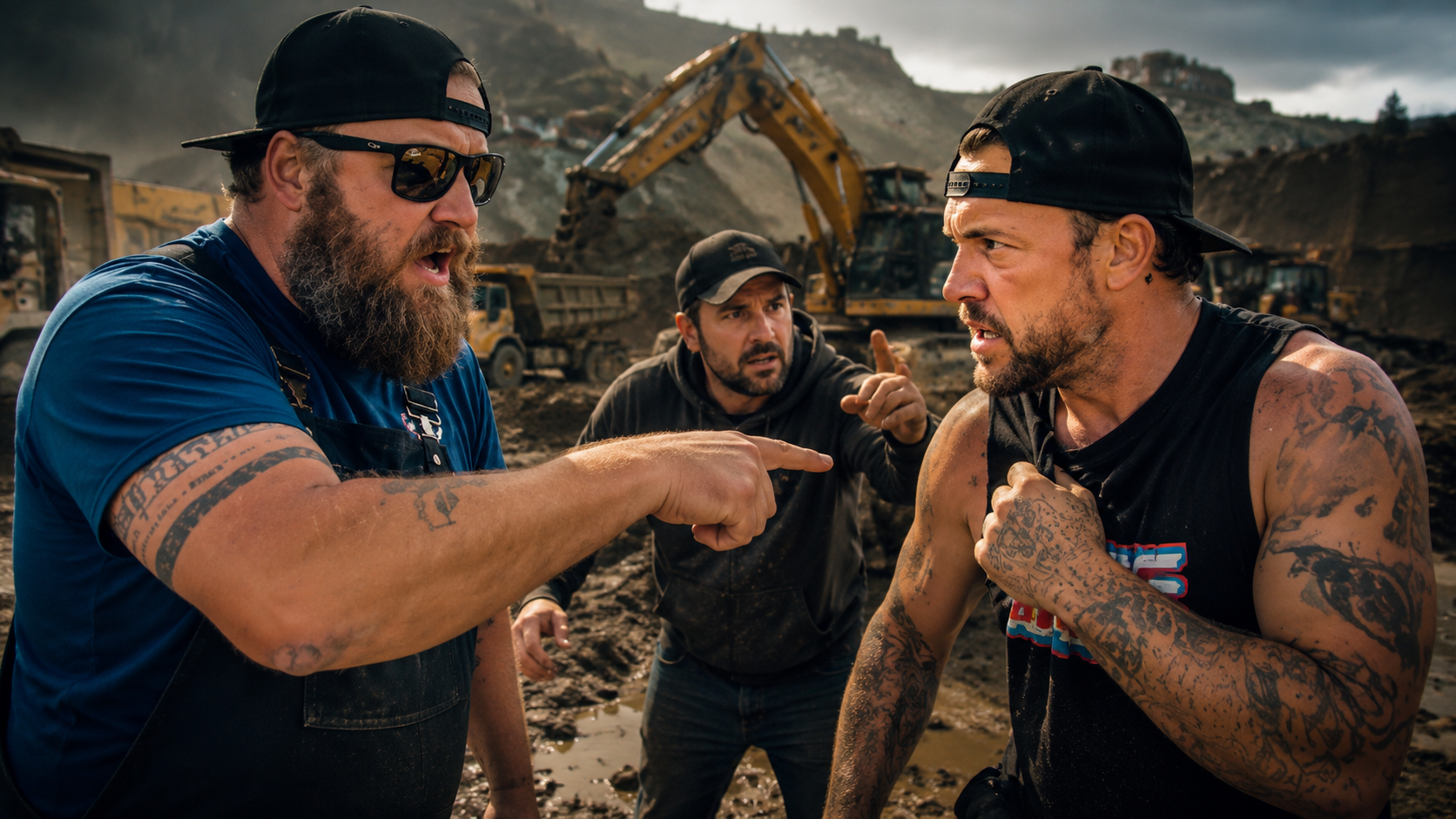
The argument at Valhalla did not begin with a punch or a threat. It began with a horn.
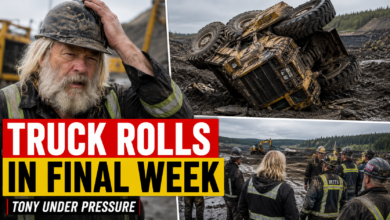
Kai Shallcross was behind Chris Lalonde on a haul route where every slow turn seemed to move Rick Ness farther from his goal. The crew was trying to remove an enormous amount of overburden and reach pay dirt buried roughly 120 feet below the surface. Three rock trucks were expected to make about 100 trips a day. On a schedule like that, minutes become loads, loads become weeks and a driver who appears too cautious can look like the person holding back the entire mine.
Kai honked. Then he honked again.
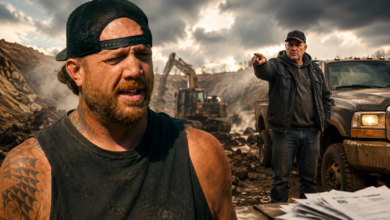
Chris stopped, climbed out and confronted him.
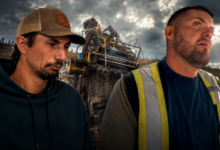
What followed was one of those scenes that can be marketed as crew drama but should be understood first as a warning. Chris argued that speed was not the only measure that mattered on a haul road. Cutting corners with loaded heavy equipment could injure or kill someone. Kai saw a driver failing to maintain the pace the operation required. Chris saw pressure being applied in a way that threatened judgment and safety. Both men were reacting to the same impossible arithmetic from different seats.
Rick intervened before the confrontation became worse. He told Chris to take a break and then climbed into the truck himself. That decision changed the episode. For the first time in the conflict, the boss experienced the haul not as a target on a production plan but as a route that had to be driven repeatedly, under real conditions, while sharing space with other machines.
Rick’s conclusion was telling: the system was not sustainable.
That admission matters more than the raised voices. It revealed that the clash was not simply the result of one impatient worker and one angry worker. The design of the job had created the pressure. If a crew must repeatedly choose between meeting the expected cycle time and operating at a pace its drivers believe is safe, management has not solved the production problem. It has passed the problem down to the cab.
Valhalla was already a high-stakes gamble. Rick’s season depended on reaching ground he believed could transform his results, but that ground sat beneath a deep layer of material that produced no immediate revenue. Every truckload removed cost fuel, wages, maintenance and time before a single ounce from the target zone could be washed. The deeper the cut, the more urgent the schedule became. Rick was investing heavily in access to gold that remained out of reach.
That kind of project creates a dangerous psychological trap. Because so much has already been spent, slowing down feels unacceptable. Each delay seems to threaten the entire investment. The crew is told that the mine needs more loads, more hours and fewer interruptions. Yet the same equipment is operating on a route where fatigue, blind spots, road condition and stopping distance cannot be negotiated.
A loaded rock truck does not become safer because the gold target is behind.
Chris’ warning about someone being killed should therefore not be treated as an excuse for poor performance. It was an assertion that the schedule had reached the boundary where production pressure could change operator behavior. A driver who feels hunted by the truck behind may accelerate into corners, follow too closely, brake too late, skip inspections or take a line that saves seconds while reducing margin. None of those choices guarantees an accident. Together, they create the conditions in which a small mistake becomes catastrophic.
Kai’s frustration also deserves a fair reading. He was not necessarily demanding reckless driving. From his perspective, the crew had agreed to a cycle and one truck’s slower pace was disrupting the flow. In hauling operations, inconsistency can create queues at the loader, gaps at the dump and wasted machine time. A driver who is materially slower than the rest of the team can reduce the output of the whole system. Kai may have believed that the route could be driven faster without compromising safety and that Chris was failing to meet a reasonable standard.
The horn was still the wrong tool.
Honking repeatedly at a colleague operating heavy equipment adds emotional pressure without diagnosing the cause of the slower cycle. Was Chris unfamiliar with the route? Was his truck behaving differently? Were road conditions worse in a particular section? Was visibility limited? Was he protecting following distance? Or was he simply driving below the expected standard? A supervisor should answer those questions with observation and data. A coworker using a horn turns an operational problem into a personal confrontation.
Once Chris climbed out of the cab, the danger changed form. The immediate risk was no longer only how the trucks were being driven. Two angry employees were now confronting each other in an active work area. Rick needed to separate them, and sending Chris on a break was a sensible first action. The more important leadership test came afterward: would he treat Chris as the problem, or would he investigate the system that made the conflict predictable?
By taking over the haul, Rick did the most valuable thing a manager can do when workers describe a task as unrealistic. He tested the work himself.
That does not mean a boss must be able to outperform every operator. Management has different responsibilities, and a brief drive cannot reproduce the fatigue of an entire shift. But direct experience can expose assumptions hidden inside a spreadsheet. A route that looks short on a map may include turns, grades, soft sections, tight passing points or a dump approach that makes the planned cycle impossible without excessive risk. The person assigning 100 trips may not feel those constraints until he sits behind the wheel.
Rick did, and he recognized that the current method could not continue.
His answer was not to abandon Valhalla. It was to change the haul route. By cutting a straighter road to the dump area, the crew could reduce unnecessary travel time without requiring drivers to create speed through aggression. That is the difference between genuine productivity and pressure disguised as productivity. Genuine productivity removes friction from the process. Pressure tells individuals to compensate for bad design.
The road change was an engineering response to a human conflict. It acknowledged that Kai was right about the need for more efficient cycles while also validating Chris’ insistence that the answer could not be unsafe driving. Neither man had to win the argument for the mine to improve. The route had to improve.
For viewers who have spent decades around construction, farming, trucking or manufacturing, the scene was painfully familiar. A deadline slips. Management raises the quota. Experienced workers warn that the new pace leaves no margin. Others accuse them of resisting change. Personalities flare, and the organization blames “attitude” until a breakdown or injury proves the system was overloaded.
The best operations interrupt that pattern before the accident.
They establish clear rules that production cannot override: speed limits, following distances, radio procedures, right-of-way standards, fatigue controls and the authority to stop work when conditions change. They also measure cycle times honestly. If the expected number of loads can be achieved only when drivers violate the rules, the expected number is fiction.
Rick’s 100-trip goal needed that test. How many trips were possible with the trucks available, the route as built and normal delays at the loader and dump? How did weather and road maintenance change the answer? Did each truck have similar capacity and performance? Was the target based on an ideal cycle repeated all day without interruption, or on observed operating data? Without those answers, the schedule could become an accusation rather than a plan.
The episode also showed why crew culture matters in high-risk work. Kai and Chris needed to trust that neither man would pressure the other into danger or use safety language to conceal poor effort. That trust cannot be commanded in the middle of an argument. It is built when leaders address performance concerns directly, enforce the same rules for everyone and invite operators to report hazards without being labeled weak.
Rick had reason to be anxious. He had invested heavily and was far behind where he wanted to be. Valhalla offered a path back, but only if the crew reached the pay before the season closed. No one should pretend that he had unlimited time to redesign every process. Yet urgency is precisely when leadership discipline becomes most important. A relaxed mine can survive an inefficient plan. A desperate mine is the one most likely to ask workers for more than the system can safely provide.
Chris’ anger was not ideal. Leaving the truck to confront Kai could have escalated the situation and exposed both men to disciplinary action or physical harm. A better response would have been to stop in a safe location, call the issue over the radio and request a supervisor. But anger often appears after a worker believes a quieter warning has no power. The responsibility for his conduct remained his own; the responsibility for the environment remained Rick’s.
Kai likewise had a legitimate performance concern but expressed it in a way that made resolution harder. If he believed Chris was unnecessarily slow, he needed to report specific observations rather than attempt to push him from behind. On a haul road, intimidation is not coaching.
The fact that the two men later put the incident behind them was important, but reconciliation should not erase the lesson. A crew can apologize and still return to the same broken process. Rick’s decision to alter the route showed that he understood this. The conflict had produced operational information. Ignoring that information would have guaranteed another confrontation.
There is a broader truth in the Valhalla story. Mining programs often frame success as a test of individual toughness: the worker who keeps going, the boss who refuses to quit, the crew that moves mountains before winter. Toughness is valuable. It cannot substitute for design. No amount of determination changes a truck’s stopping distance or widens a narrow road.
The mature form of toughness is the willingness to stop, admit that a plan is failing and build a better one while the clock is still running.
Rick showed some of that maturity when he drove the route and changed his mind. He did not need to agree with every word Chris used or excuse the confrontation. He needed to accept the evidence that the haul schedule, in its current form, was pushing the crew toward conflict and could not be maintained. That admission protected more than morale. It protected the project.
Valhalla still required thousands of loads. The gold was still buried. The financial pressure did not disappear because the road changed. But the crew now had a chance to gain time from a straighter route rather than stealing it from safety margins. That is the kind of adjustment that allows a mine to become faster and safer at the same time.
The scene began with a horn because one worker believed another was costing the mine time. It nearly ended with two men allowing that frustration to become something physical. Rick’s intervention stopped the immediate conflict, but his time in the driver’s seat addressed the cause.
The strongest evidence of leadership would come after the cameras moved on: whether the new road was maintained, whether realistic cycle times replaced assumptions and whether Kai and Chris were given a clear way to raise future concerns. One resolved argument does not create a safety culture. Repeated management choices do.
If Rick applied that lesson, the confrontation may have prevented a far more serious incident. If the crew returned to the same pressure under a different route, the warning would merely have been postponed.
The most important thing he carried out of that truck was not another load of overburden. It was the realization that his crew had been asked to make an unsustainable plan look possible.
At a gold mine, pressure is unavoidable. Turning pressure into danger is a choice. On that day at Valhalla, Rick came close enough to see the difference.