A $750,000 Rock Truck Nearly Plunged 200 Feet — With the Driver Trapped Inside
A $750,000 Rock Truck Nearly Plunged 200 Feet — With the Driver Trapped Inside
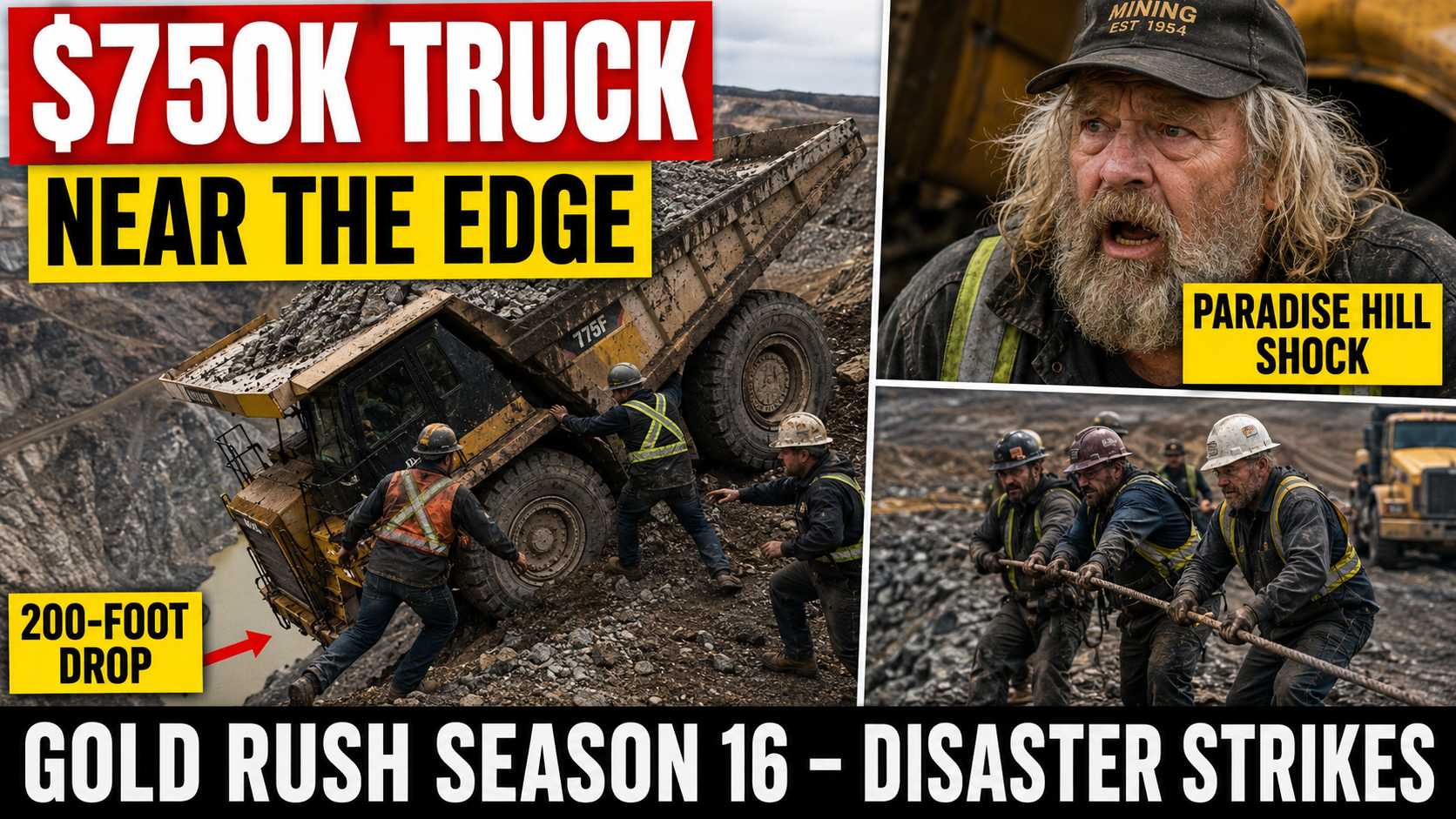
Mike Beets has faced countless challenges since taking over the operation at Paradise Hill. He has battled mechanical failures, crew shortages, and the relentless pressure of proving himself as a mine boss. But nothing could have prepared him for the terrifying moment in the November 7 episode of Gold Rush Season 16 when a $750,000 rock truck nearly plunged 200 feet into a ravine — with the driver still trapped inside. The incident was a stark reminder that in the gold mining business, the stakes are not just financial. They are measured in human lives.
The drama unfolded at Paradise Hill, where Mike’s crew was working on a critical project to build a new water supply pond. The terrain was treacherous, with steep slopes and unstable ground that made every movement a potential disaster. The rock truck, a massive piece of machinery worth approximately $750,000, was being operated by Graham, a relatively new driver who had been working on the crew for only a short time. The job required precision and care, but one mistake would change everything.
As Graham maneuvered the truck near the edge of the ravine, the ground beneath him gave way. The massive vehicle lurched sideways, its wheels slipping on the loose gravel and mud. In an instant, the truck was teetering on the precipice, its front end hanging over a 200-foot drop. Graham was still inside, trapped in the cab as the truck threatened to plunge into the abyss.
The Terrifying Moment


The scene was chaos. The crew watched in horror as the $750,000 truck dangled precariously, its weight straining against the edge of the cliff. Graham, still inside the cab, was unable to escape. The doors were jammed, and the angle of the truck made it impossible for him to climb out on his own. Every second that passed felt like an eternity.
Mike Beets arrived on the scene, his heart pounding as he assessed the situation. The truck was balanced on the edge of a 200-foot drop, and any sudden movement could send it tumbling into the ravine. The priority was clear: get Graham out. The truck could be replaced. A life could not.
The crew sprang into action. They grabbed tools and rushed to the truck, working frantically to free Graham from the cab. The windows were smashed, and the crew pulled Graham to safety. It was a moment of pure relief. But the danger was not over.
The Rescue of the Truck
With Graham safely out of the truck, the crew turned their attention to the machine itself. The $750,000 rock truck was still hanging over the edge, and they needed to secure it before it fell. The loss of the truck would be a devastating blow to Mike’s operation, and the crew was determined to save it.
The team quickly devised a plan. They would use a dozer and an excavator to stabilize the truck and prevent it from slipping further. The machines were positioned carefully, their powerful arms bracing the rock truck against the edge. Every movement was calculated and precise, as a single mistake could send the truck tumbling into the void.
The tension was palpable as the crew worked. The sound of metal grinding against metal echoed across the site, a stark reminder of the forces at play. But the team was relentless. They worked with a focus that bordered on desperation, determined to save the machine that was essential to their operation.
The Aftermath: A Crisis Averted
In the end, the crew’s efforts paid off. The truck was secured, and the operation was back on track. Mike could not hide his relief. A serious accident had been averted, and the crew had proven that they could work together under pressure. But the incident had left a mark. It had exposed the dangers of their operation and reminded everyone that in the gold mining industry, complacency can be deadly.
The successful rescue was a testament to the skill and determination of Mike’s crew. They had worked quickly and effectively, preventing what could have been a catastrophic loss. The truck was returned to service, and Mike’s operation continued. But the memory of the incident lingered, a sobering reminder of the risks they faced every day.
The Driver: Graham’s Experience
For Graham, the experience was terrifying. The young driver had been on the job for only a short time, and he had never faced anything like this. The moment the truck began to slip, his life flashed before his eyes. “It was the scariest moment of my life,” he admitted in a private conversation with a crew member.
Graham’s inexperience had been a contributing factor. He had not anticipated the instability of the ground, and he had made a mistake that could have cost him his life. But the incident was not entirely his fault. The terrain was treacherous, and even experienced drivers had struggled with the conditions.
The crew rallied around Graham in the aftermath of the incident. He was shaken, but he was alive. The support of his teammates helped him process the trauma and return to work. The incident had been a close call, and everyone knew it.
The Broader Context of the Season
The incident at Paradise Hill was just one of many challenges Mike Beets faced during the season. He was already under immense pressure to deliver gold, and the accident threatened to derail his progress. The loss of a $750,000 truck would have been a devastating financial blow, and the crew’s ability to prevent it was a major victory.
The season had been a rollercoaster for Mike. He had struggled to find his footing as a mine boss, facing criticism from his father Tony and dealing with the constant pressure to perform. The accident was a reminder of the stakes involved in his work. It was not just about the gold; it was about the lives of his crew and the machines they relied on.
The incident also highlighted the importance of safety in the mining industry. The crew had responded quickly and effectively, demonstrating that they were well-trained and prepared for emergencies. But the accident was also a warning. The conditions at Paradise Hill were dangerous, and they required constant vigilance.
Mike’s Leadership
Mike Beets had been working hard to prove himself as a leader, and the incident was a test of his leadership skills. He had remained calm under pressure, directing the crew and ensuring that Graham was rescued quickly. His handling of the situation earned him the respect of his crew.
The accident also demonstrated Mike’s commitment to safety. He had emphasized the importance of safety protocols, and he had ensured that his crew was prepared for emergencies. The fact that the crew had responded so effectively was a testament to his leadership.
But the incident also exposed areas where Mike needed to improve. He needed to ensure that his crew was better trained to handle the dangerous conditions at Paradise Hill. He needed to prioritize safety in every aspect of the operation. The accident was a wake-up call that he could not ignore.
The Financial Implications
The incident had significant financial implications. The rock truck was worth approximately $750,000, and losing it would have been a massive blow to Mike’s budget. The cost of replacing the truck, combined with the lost production time, would have been devastating.
The crew’s success in saving the truck was a major financial victory. They had prevented a catastrophic loss, and they had kept the operation on track. But the incident was also a reminder of the constant financial pressures that Mike faced. Every piece of equipment was a significant investment, and every accident had the potential to derail the season.
The Crew’s Dedication
The incident at Paradise Hill was a testament to the dedication of Mike’s crew. They had worked tirelessly to save the truck and ensure that Graham was safe. The rescue had been a team effort, with everyone contributing to the success of the operation.
The crew’s dedication was a reflection of their commitment to the operation and to each other. They had been through a lot together, and they were determined to succeed. The incident had brought them closer together, reinforcing the bonds that were essential to their success.
The Bigger Picture
The incident at Paradise Hill was a microcosm of the challenges that all miners face. The gold mining industry is dangerous, and accidents are a constant threat. The ability to respond effectively to emergencies is essential, and it is a skill that can only be developed through experience and training.
The accident was also a reminder that in the gold mining business, there are no guarantees. Even the best-laid plans can be derailed by unexpected events. Mike’s crew had been tested, and they had proven that they were up to the challenge.
The Aftermath and Lessons Learned
The incident at Paradise Hill was a learning experience for everyone involved. Graham learned the importance of being cautious and vigilant while operating heavy equipment. The crew learned the importance of responding quickly and effectively to emergencies. And Mike learned the importance of prioritizing safety in every aspect of the operation.
The accident also reinforced the importance of the crew’s bond. They had worked together to overcome a dangerous situation, and they had emerged stronger for it. The incident had tested their skills and their resolve, and they had proven that they could handle anything.
The Bottom Line
The near-disaster at Paradise Hill was one of the most dramatic moments of Gold Rush Season 16. A $750,000 rock truck had nearly plunged 200 feet into a ravine, with the driver trapped inside. The rescue had been a triumph, but the incident had exposed the dangers of the mining industry.
Mike’s crew had responded quickly and effectively, saving both the driver and the truck. But the incident was also a warning. The conditions at Paradise Hill were dangerous, and they required constant vigilance. The crew would need to remain focused and cautious to prevent similar accidents in the future.
For Mike Beets, the incident was a test of his leadership. He had passed the test, but he knew that he could not afford to let his guard down. The stakes were too high, and the consequences of failure were too severe.