Parker Schnabel’s $100,000-a-Day Mining Machine Hits a Dangerous Gold Slide
Parker Schnabel’s $100,000-a-Day Mining Machine Hits a Dangerous Gold Slide
The most alarming number in Parker Schnabel’s season was not the amount of gold in the box.
It was the amount of money leaving the bank before the first ounce could be recovered.
Parker entered Season 16 of Gold Rush determined not to repeat the disappointment of the year before. He expanded early, added people, opened more ground and pushed more equipment into service. At one point, four wash plants were operating across an organization so large that it resembled an industrial campaign more than the small mining crew viewers first met years ago.
The base cost of that campaign was roughly $100,000 a day. Parker later explained that when land acquisitions and other major expenses were included, the true daily figure could rise to approximately $200,000 or even $250,000. The lower number alone was enough to make the stakes clear. Every sunrise started a meter. Fuel, payroll, repairs, camp costs, trucking and heavy equipment did not wait to see whether the dirt would pay.


For a while, the strategy appeared to be working. Parker’s operation banked millions of dollars in gold and moved toward an ambitious 10,000-ounce season goal. The size of the early haul could make the business look invincible.
Then the weekly totals began to slide.
That was when the scale that had looked like Parker’s greatest advantage became a threat.
A wash plant does not create gold. It separates gold from material that has already been selected, excavated, hauled and fed. If the ground is poorer than expected, a larger operation can process disappointing dirt faster. If a plant is losing fine gold, every extra yard can magnify the loss. If a road, pump, generator or conveyor fails, the expensive people and machines connected to it may wait while the daily cost continues.
Parker’s four-plant push therefore depended on more than keeping equipment in motion. Each part of the operation had to deliver enough value to justify the money being consumed elsewhere.
By the February 20, 2026 episode, Parker had already banked about $22 million in gold. That figure would represent a remarkable season for almost any mine boss. Yet his crew had just recorded its weakest cleanup of the season, and production dropped for a second week. The problem was not that Parker had stopped finding gold. The problem was that the gold was arriving at a level that felt dangerously ordinary for an operation with extraordinary costs.
The week’s weigh-in demonstrated the contradiction.
Roxanne produced 76.03 ounces from the last material in one pit. Bob added 120.07 ounces at the Bridge Cut. Sluicifer and Big Red contributed 236.04 ounces from the Golden Mile. Together, the plants recovered more than 430 ounces, with the episode valuing the combined haul at well over $1 million.
For a smaller crew, that would be a celebration.
For Parker, it was another warning.
Gold Rush has always turned weekly weigh-ins into moments of suspense, but Parker’s numbers cannot be understood without the expense behind them. Gross value is not profit. The gold on the scale must first answer for the fuel burned to expose it, the wages paid to move it, the machinery used to wash it and the capital spent to control the ground. A million-dollar cleanup can still be an uncomfortable result when an operation is burning hundreds of thousands of dollars over the same period.
That is the trap created by rapid expansion. Bigger production can spread costs across more ounces, but only if the ounces arrive. When yield declines, scale works in reverse. The same organization built to multiply profit begins multiplying exposure.
Parker knew that standing still was not an option. He had pits to finish, pay dirt to move and wash plants that needed steady feed. Winter would eventually close the season whether the 10,000-ounce goal had been reached or not. Reducing activity might protect cash for a few days, but it could also leave valuable ground unfinished and strand prepared material when the freeze arrived.
Spending more, however, carried its own danger.
This is why Parker’s response to falling production was not simply to shut everything down. He had already built a system in which several locations and crews depended on one another. A decision at the Golden Mile could affect trucks assigned elsewhere. A plant move could require a new road. A delay at one cut could force another plant to wash lower-priority material. The operation was not one machine that could be switched off without consequences. It was a network.
The arrival of seven experienced workers from Tony Beets’ crew appeared to offer relief. Parker needed skilled operators, and the newcomers arrived at a moment when every additional hand could help move more ground. But even that solution created tension. Existing employees worried that the new arrivals might take opportunities they had waited years to earn. One worker, Evan Kurtz, expressed frustration that advancement could become harder when experienced outsiders entered above people already on the team.
The reaction exposed another cost that never appears on the gold scale.
A large operation needs trust. Workers must believe that good performance will be noticed, that instructions are clear and that promotions are possible. New hires can bring valuable experience, but a poorly managed transition can weaken the loyalty of the crew already carrying the season. Parker had to increase capacity without convincing established workers that they had become replaceable.
The danger became visible when a recently hired operator jammed Sluicifer’s super stacker. The generator surged, smoke appeared and the plant shut down. The crew corrected the problem, but foreman Tyson Lee removed the operator from that assignment. It was a small incident compared with the season’s total haul, yet it showed how quickly one mistake could place an expensive chain of equipment at risk.
At this scale, management becomes as important as mining.
Parker could not personally watch every feeder, road, pump and excavator. He relied on foremen such as Tyson Lee, Mitch Blaschke and Brennan Ruault to make immediate decisions. They, in turn, depended on mechanics, operators and truck drivers to recognize trouble before it became a shutdown. A mine boss may choose the ground and set the goal, but the season is protected minute by minute by people who hear an unusual sound, notice a slipping belt or stop a machine before metal destroys metal.
The falling gold totals also forced Parker to confront a more difficult question: Was the problem temporary, or was it evidence that the mine plan itself needed to change?
Temporary setbacks invite patience. Poor ground demands movement. Gold loss inside a plant requires repair or redesign. Insufficient feed calls for more trucks or faster stripping. Each diagnosis points toward a different solution, and the wrong answer can be expensive. Moving a plant away from recoverable gold wastes setup time. Continuing through weak ground wastes fuel. Adding workers to a bottleneck that is mechanical rather than human merely raises payroll.
Parker’s later decision at the Golden Mile showed how severe that calculation became. With yields declining and long-term mine planning at risk, he ordered Sluicifer and Big Red shut down so their crews and equipment could help remove pay dirt from the pit. The shutdown was expected to sacrifice as much as three-quarters of a million dollars in weekly gold production.
It sounded backward: stop two plants when the gold total is already falling.
But leaving pay in the Golden Mile could interfere with future work and create a larger domino effect. Parker believed he had to accept an immediate loss to protect the mine plan. Tyson was frustrated, yet the decision reflected the reality of a long operation. Sometimes the most important dirt is not the dirt being washed today. It is the dirt that must be moved so tomorrow’s ground remains accessible.
That choice separated cash flow from strategy.
Cash flow demanded that the plants run. Strategy demanded that the pit be cleared. Parker chose the second, even though the daily bills continued and the weigh-in would suffer. It was the kind of decision that can look foolish in one episode and essential over several seasons.
The pressure was intensified by Parker’s public goal. Ten thousand ounces was not simply a private target written in a notebook. It became the number against which every cleanup was judged. After the team crossed 7,000 ounces, the achievement was substantial, but the remaining 3,000 ounces still dominated the conversation. A viewer could see success. Parker saw distance.
That mindset has helped him grow from a teenage miner into the leader of a massive operation. It can also make an excellent week feel like failure.
Older viewers who have managed a farm, a construction company or any family business may recognize the tension. Revenue can be higher than ever while anxiety also rises. More employees mean more families depending on payroll. More equipment means more repairs and financing. More customers or more acreage can produce greater profit, but they also make it harder to pause when conditions change.
Parker’s season offered the mining version of that familiar business problem. He was not short of assets. He was burdened by the need to make every asset productive.
The television format naturally emphasizes dramatic breakdowns, heated conversations and the suspense of a gold weigh. The quieter threat is utilization. A parked rock truck still represents money. A wash plant waiting for pay cannot earn back its cost. A trained operator assigned to the wrong bottleneck cannot increase recovery. Parker’s challenge was to keep a 60-machine organization pointed at the same goal while the quality of the ground changed beneath it.
There was also no guarantee that higher gold prices would solve the problem. Rising prices increase the value of every recovered ounce, but they can encourage miners to spend aggressively, chase marginal ground and accept costs that would otherwise appear reckless. Parker openly described the high-price environment as a reason to push production. The opportunity was real. So was the temptation to believe that volume could cure every weakness.
When the gold slide arrived, it tested that belief.
The season did not suddenly become a story of collapse. Parker continued producing gold at a level few miners ever reach. His crew repaired equipment, moved plants and opened new ground. What changed was the margin for error. Each weaker cleanup made the daily burn more visible. Every breakdown raised the possibility that a profitable plan could become a race merely to cover costs.
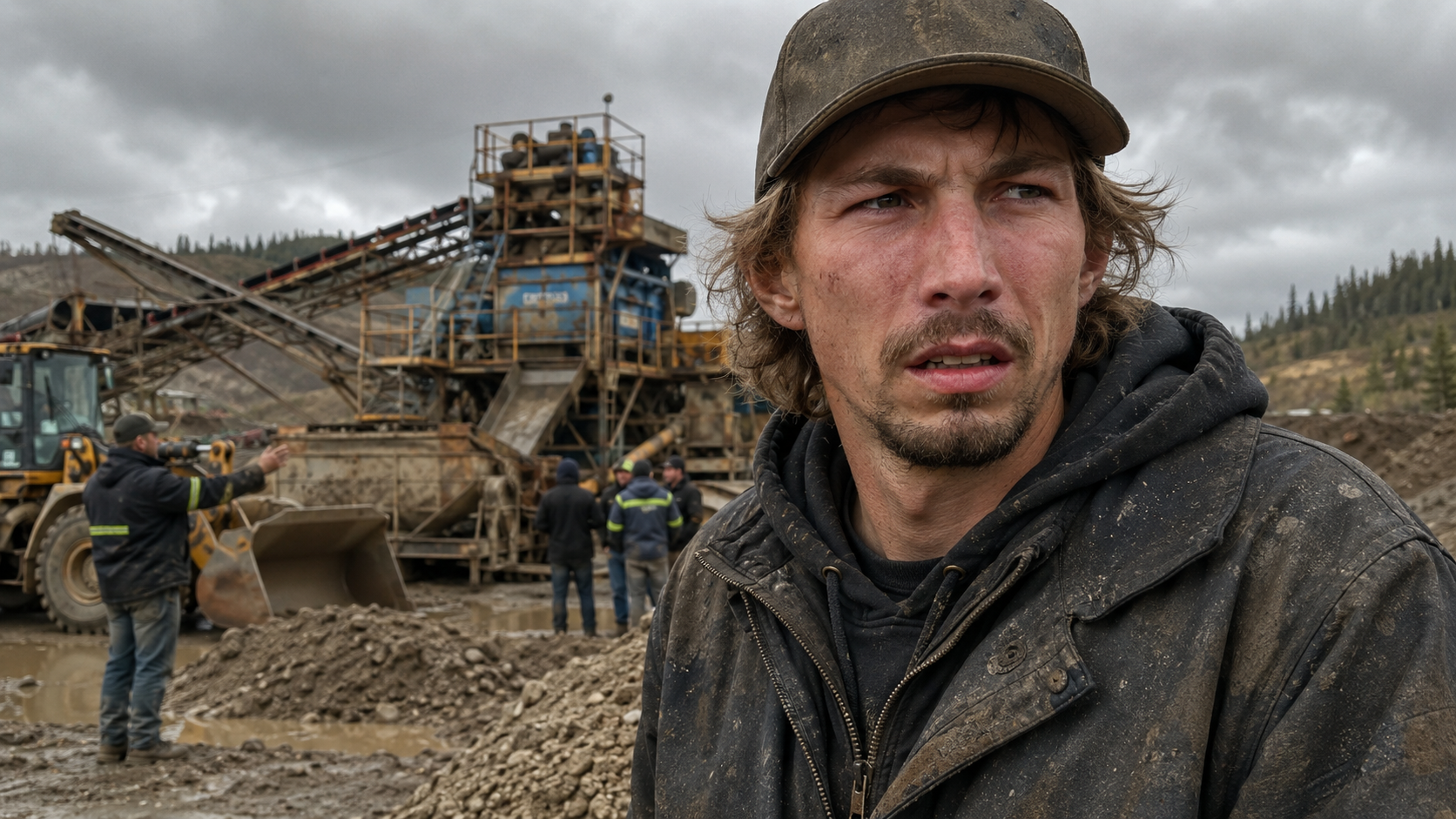
That is why the image of Parker standing near a wash plant with a worried expression carried more weight than a routine mechanical problem. He was not looking at one machine. He was looking at an entire company whose appetite did not shrink when the gold did.
There was another risk hidden inside the falling total: fatigue. A four-plant operation does not merely need more people; it asks those people to coordinate more moves, more repairs and more night work. Parker’s foremen were expected to maintain urgency across separate sites while absorbing the emotional effect of disappointing cleanups. Fatigue can reduce attention precisely when weak production encourages everyone to push harder. The fastest possible response to a gold slide may therefore make the next mechanical or personnel mistake more likely.
That pressure helps explain why Parker valued employees who treated responsibility as a personal challenge. A large mine cannot be supervised through fear alone. The boss needs people who will protect production when he is miles away, question a plan when conditions change and report bad news before it becomes expensive. The organization Parker assembled was being tested not only by ounces, but by whether authority could travel safely through several layers of leadership.
The central question was no longer whether Parker could find gold. His record had answered that years ago.
The question was whether he could find enough gold, quickly enough, to feed the largest operation he had ever assembled.
Parker built Season 16 around force, speed and scale. Those choices gave him the power to recover millions when the ground cooperated. They also ensured that a production slide would be felt across every crew, plant and bank account.
At $100,000 a day in base operating costs, time was not simply running out.
It was being purchased—one unforgiving day at a time.