FREDDY AND JUAN WARN MINE BUYERS: THE PROMISE OF “VIRGIN GROUND” MAY HIDE AN EXPENSIVE TRUTH
FREDDY AND JUAN WARN MINE BUYERS: THE PROMISE OF “VIRGIN GROUND” MAY HIDE AN EXPENSIVE TRUTH
Gold mining begins with hope, but hope is most expensive when it is attached to land.
A used excavator can be inspected. A wash plant can be measured, tested, and repaired. A claim is different. Its value depends on what lies underground, what previous miners removed, what legal rights transfer, what access exists, and whether the remaining gold can be recovered at a profit.
That uncertainty is why Freddy Dodge and Juan Ibarra’s warning to prospective miners deserves attention far beyond Gold Rush: Mine Rescue.
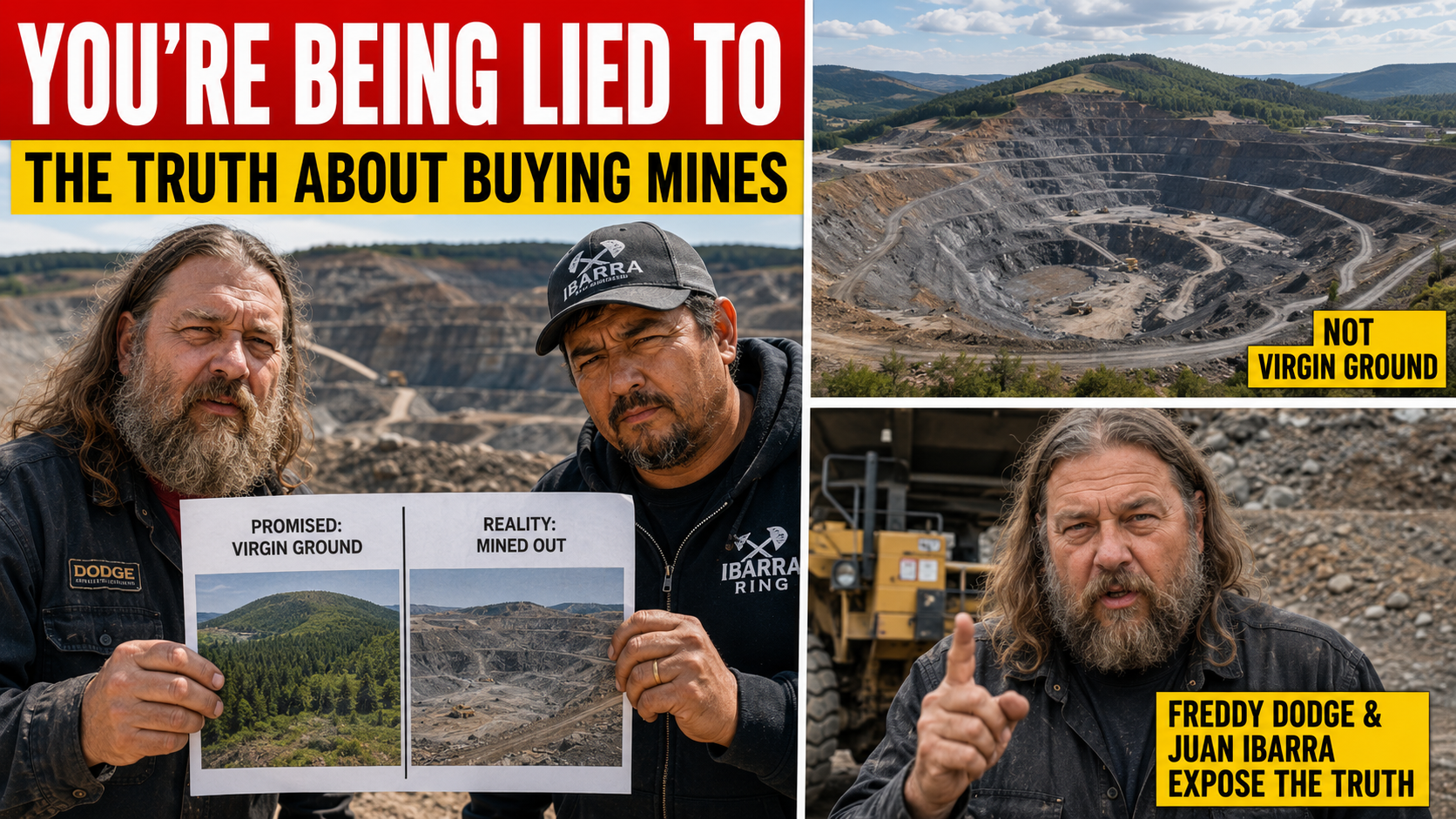
The two mining veterans have encountered owners who leased or purchased rights based heavily on another person’s description of the ground. Juan has warned that people are not always fully honest about how much untouched—or “virgin”—ground remains. In a British Columbia case discussed within the Mine Rescue world, earlier miners had already worked the area heavily, leaving less truly untouched material than the hopeful operators expected.

Freddy has repeated an old mining expression that captures the problem: a mine can be “a hole in the ground with a liar standing on top.” The line is memorable because it turns gold fever into a sales warning. A claim can look full of possibility while the person selling it knows more about its disappointing history than the buyer.
That does not mean every seller is dishonest or every used claim is worthless. Previously mined ground can still contain profitable gold, especially if earlier crews had poor recovery, missed channels, or lacked modern equipment. It means the buyer must verify the story independently.
In mining, trust is not due diligence.
WHAT “VIRGIN GROUND” ACTUALLY MEANS
To many newcomers, virgin ground sounds like a guarantee of riches. It creates an image of untouched pay gravel waiting for the first capable miner.
The term generally refers to ground that has not previously been mined. But the practical meaning can be uncertain. An area may have old hand workings, undocumented test holes, buried tailings, or partial disturbance not obvious at the surface. Historical miners may have followed the richest channel and left lower-grade material behind. Later floods or earth movement can make the old pattern difficult to read.
A seller may call an entire property virgin because some sections were not worked. A buyer may hear that every promising acre is untouched. Both people use the same phrase while imagining different ground.
That is why the term should be converted into specific questions.
Which areas were mined? When? By whom? With what equipment? How deep did they reach? Where were tailings placed? Are production records, maps, aerial photographs, drill logs, or permit documents available? Has the claimed untouched area been tested independently?
If the answers remain vague, the phrase “virgin ground” is marketing, not evidence.
THE BRITISH COLUMBIA EXAMPLE
British Columbia has a long and complicated placer-mining history. Generations of miners have worked rivers, benches, and old channels. Some activity was carefully recorded. Some was small, informal, or poorly documented.
That history creates both opportunity and risk. Old miners may have missed fine gold or left ground their equipment could not reach. Their workings can also reveal where gold traveled. But a claim that appears remote and untouched today may have been disturbed decades earlier, then reclaimed by vegetation.
In the Mine Rescue example, the problem was not simply that someone had dug a few holes. The area had reportedly been worked aggressively enough that the quantity of remaining virgin ground was lower than expected.
For a buyer, that difference can destroy a business plan. Equipment, staffing, fuel, and debt may have been calculated on the assumption that a certain volume of untouched pay was available. If much of that volume is actually old workings or tailings, expected ounces can collapse.
The remaining ground may still hold gold. But the buyer is no longer operating the mine that was described.
It is important not to turn this general account into an unsupported accusation against a named seller. Public summaries do not provide a complete contract, disclosure record, geological report, or legal finding of fraud. “Being misled” can range from deliberate falsehood to careless language, incomplete records, or two parties misunderstanding the same claim.
The lesson is about verification, not a verdict against an unidentified person.
WHY OLD WORKINGS CAN BE HARD TO RECOGNIZE
New miners often expect previously worked ground to look obvious: piles of tailings, rusting equipment, or a clear cut through the landscape.
Time can erase those signs. Trees grow. Water moves sediment. Roads disappear. Tailings flatten and collect organic material. A hillside worked with older methods may look natural to someone unfamiliar with local patterns.
Subtle evidence can include rounded or sorted rock, unnatural piles, changes in vegetation, old ditches, stacked stones, depressions, buried wood, or gravel layers disturbed from their original order. None of these signs alone proves the history. An experienced geologist, prospector, or placer-mining consultant can help interpret them.
Modern mapping also matters. Historical aerial imagery may show disturbances no longer visible. Government records can identify permits, claims, or reported production. Local miners may remember who operated the ground and where they worked.
The most important evidence, however, comes from systematic testing. Test pits, drilling, bulk samples, and careful gold recovery can help estimate what material remains and whether it can pay.
One attractive pan is not enough. Gold is unevenly distributed. A sample taken from a hand-selected spot can look excellent while the surrounding ground is poor.
THE SELLER KNOWS MORE THAN THE BUYER
Every used asset sale contains an information imbalance. The seller has lived with the asset. The buyer sees it during limited visits.
With mining ground, the imbalance can be extreme. A seller may know which cuts disappointed, where equipment repeatedly found old tailings, which drill holes were poor, or why a previous crew left. The buyer may see only a map, a promising pan, and a story about untapped potential.
Honest sellers can reduce that imbalance by providing records and access for independent testing. Buyers can reduce it by refusing to rely on demonstrations controlled entirely by the seller.
The danger increases when the buyer is emotionally committed. Someone who has sold a business, borrowed against a home, or moved a family may need the claim to be good. Every uncertain sign is interpreted favorably because admitting doubt would threaten the dream.
Freddy and Juan often arrive after that commitment has been made. Their task is not only mechanical. They must separate what owners hope the mine contains from what the ground and recovery system actually show.
That can be painful, but the ground does not respond to optimism.
WHY PREVIOUSLY MINED GROUND IS NOT AUTOMATICALLY BAD
The phrase “worked out” can be as misleading as “virgin.”
Historical miners did not recover every piece of gold. Equipment and methods differed. Some operations lost fine gold through poor sluice setup. Others followed only the richest streak because lower-grade material was not profitable at the time. Gold prices, fuel costs, access, and recovery technology change.
Tailings can sometimes be reprocessed profitably if they contain gold that earlier systems missed. Ground beneath or beside old workings may remain valuable. An ancient channel may extend beyond the area historical miners reached.
Freddy and Juan’s warning is therefore not “never buy an old claim.” It is “know what you are buying.”
A business plan for reprocessing tailings is different from a plan for virgin pay. Expected grade, recovery, volume, and operating cost must match the actual material. A buyer who pays a virgin-ground price for uncertain tailings begins at a disadvantage.
The mine’s history should be treated as data, not shame. Old work can guide exploration if it is mapped honestly.
THE TESTING TRAP
Testing protects buyers only when the test represents the ground.
A seller can show a sample from a known rich pocket. A newcomer may pan visible gold and assume the entire claim carries the same value. Even without deliberate deception, both parties may overgeneralize from a small amount of material.
Representative testing requires a plan. Samples should cover the areas and depths the buyer expects to mine. The volume must be large enough to reduce the effect of isolated flakes or nuggets. Recovery equipment used during the test should capture the type and size of gold present.
Results should be recorded by location. Combining material from different test sites can hide which areas pay and which do not. Independent custody and processing may be appropriate when the purchase price is substantial.
Testing also needs an economic interpretation. Finding gold is not the same as finding profitable gold. A yard of material may contain value, but if reaching, hauling, washing, and reclaiming that yard cost more, the mine loses money.
Buyers should model conservative scenarios. What happens if grade is lower than the test average? What if only part of the claimed volume is mineable? What if water, permits, access, or equipment reduce the number of working days?
A claim that works only under the best possible assumptions is not a safe investment.
LEGAL RIGHTS CAN BE AS IMPORTANT AS GEOLOGY
Gold in the ground has no value to an operator who lacks the legal right to extract it.
A prospective buyer must understand exactly what is being sold: land ownership, mineral rights, a placer claim, a lease, an option, equipment, access rights, or some combination. These interests are not interchangeable.
Permits and water authorizations may not automatically transfer with a property or claim. Existing liabilities, reclamation obligations, royalties, liens, boundaries, and Indigenous rights or consultation requirements may affect the operation.
Rules differ by jurisdiction, and legal advice should come from qualified professionals familiar with the location. A television rescue cannot replace title review, regulatory confirmation, and a written contract.
This point matters because a seller can speak truthfully about gold and still offer a deal the buyer cannot operate as expected. The ground may be promising, but access may cross someone else’s land. Water may be unavailable at the needed rate. A permit may limit disturbance to previously worked areas.
Due diligence must ask two questions: Is the gold likely there, and can the buyer legally and economically recover it?
THE EMOTIONAL POWER OF A MINE SALE
Gold claims are sold through stories as much as geology.
The seller describes an old-timer who found nuggets nearby, a channel that continues beneath a bench, or a season cut short just before the richest ground. These stories may be sincere and historically useful. They are not proof.
For middle-aged and older buyers, a claim may represent more than an investment. It can be a second career, a retirement dream, or a chance to build something with children and grandchildren. That emotional value makes walking away especially difficult.
The best protection is deciding standards before seeing the property. Set a maximum investment. Identify required records. Choose independent experts. Define minimum test results. Preserve the right to cancel if permits or ground history differ from representations.
Once a buyer imagines the family standing around a gold weigh, discipline becomes harder.
Freddy’s “hole in the ground” saying survives because mining has always attracted both dreamers and people willing to sell dreams. The line should create caution, not cynicism. Good claims and honest sellers exist. Verification protects them too, because clear evidence supports a fair price.
WHAT BUYERS SHOULD VERIFY BEFORE SIGNING
No short checklist can guarantee a profitable mine, but several steps can reduce avoidable risk.
First, confirm the exact legal interest and boundaries through official records and qualified legal review. Do not rely on a seller pointing across a valley.
Second, gather the property’s history. Review old maps, permits, production reports, aerial images, drill logs, and local knowledge. Ask the seller to identify every known worked area in writing.
Third, conduct independent, representative testing across the proposed mine plan. Record locations, depths, volumes, recovery methods, and results.
Fourth, inspect infrastructure and equipment separately from the ground. A broken plant should not be hidden inside a single price for a “turnkey” mine.
Fifth, build a conservative financial model that includes fuel, labor, royalties, repair, access, reclamation, and unplanned downtime. Use lower-than-hoped grade and fewer working days.
Finally, be willing to walk away. The money spent on testing and professional advice may feel wasted if the deal fails. In reality, it may be the cheapest mining loss the buyer ever takes.
THE WARNING BEHIND MINE RESCUE
Gold Rush: Mine Rescue is built around second chances. Freddy and Juan repair plants, search for better ground, and help owners recover more gold. The emotional payoff comes when experience turns a failing operation toward survival.
But not every bad purchase can be repaired with welding and better riffles.
If the expected virgin ground was mined decades ago, a more efficient plant cannot recreate it. Freddy and Juan may find another area or improve recovery from what remains, but the original investment decision still carries consequences.
That is why their strongest advice may arrive before any rescue call: investigate first.
The warning is not as exciting as a gold weigh. It will never produce the same television image as a pile of nuggets. Yet it speaks to the central truth of mining.
The person selling the dream gets paid when the contract is signed. The person buying it gets paid only if the ground, rights, equipment, and economics all prove real.
“Virgin ground” should describe verified mining history. It should never be treated as a magic phrase.