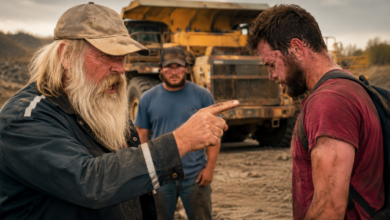
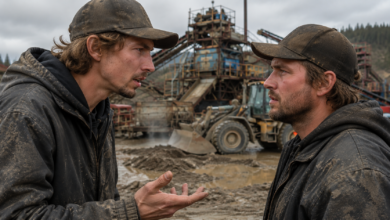
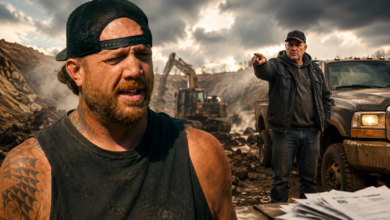
Parker Schnabel Made Tyson Lee Choose the “Weakest Link”—Then Fire Him Face to Face
Parker Schnabel Made Tyson Lee Choose the “Weakest Link”—Then Fire Him Face to Face
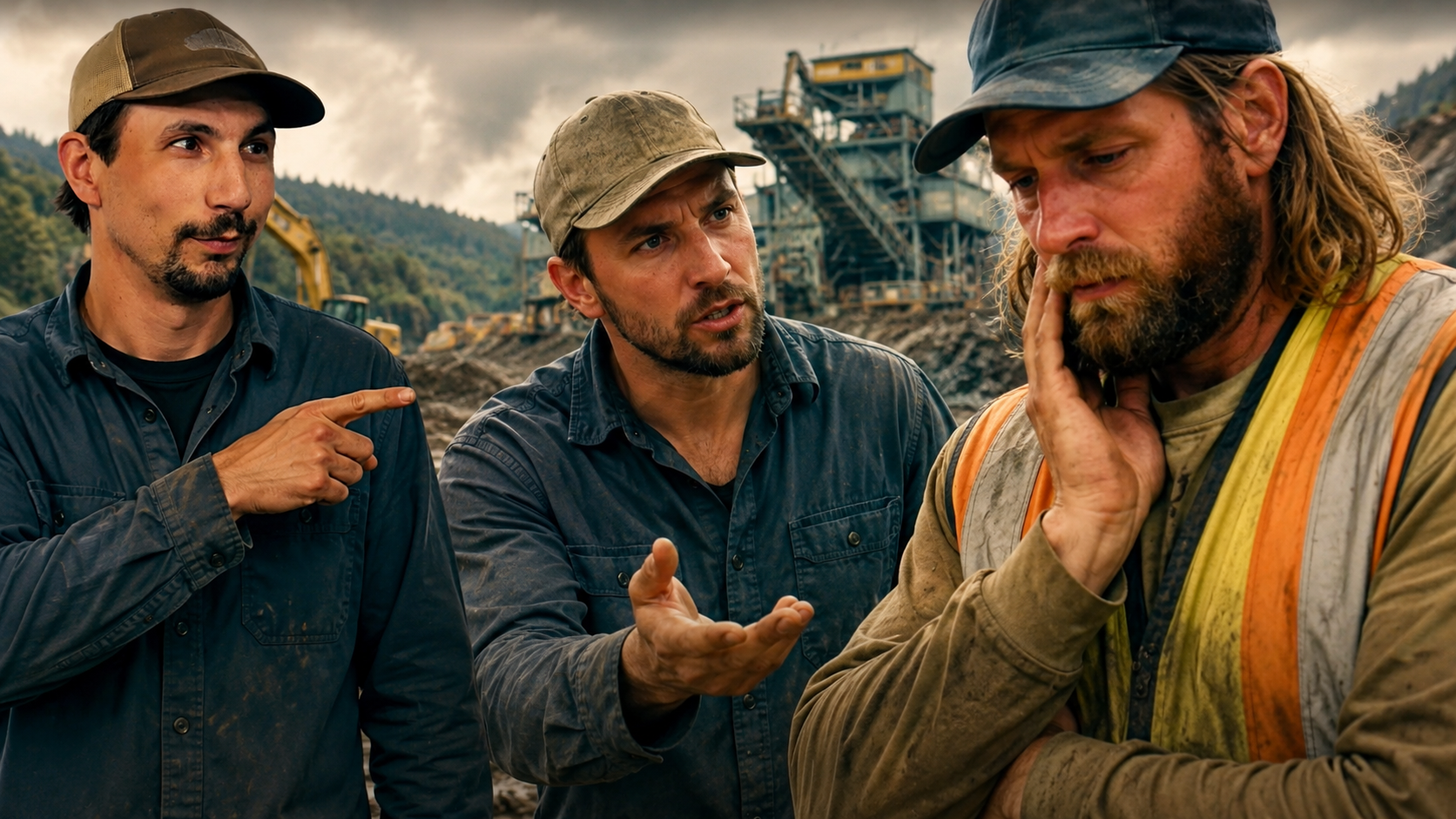
Parker Schnabel did not hand Tyson Lee a list of names. He handed him responsibility.
Find the weakest link on the crew. Decide who no longer met the standard. Then tell that person his time was over.
The assignment sounded simple only to someone who has never supervised people. Tyson was being asked to compare workers performing different jobs under different conditions, judge whether their problems came from skill, training or fit, and make a decision that would change a person’s livelihood. He would then have to keep leading everyone who remained, knowing they had watched what happened.
Parker could have made the choice himself. By forcing Tyson to do it, he turned a staffing decision into a leadership examination.

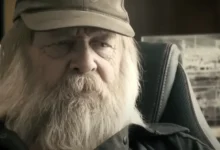


Two workers emerged as the central candidates. Charlie Carleton had presented himself as a highly experienced operator, reportedly with about 20 years in the field, but struggled while clearing tailings near wash plant Bob. Sandy Dubois had to provide guidance. Kayden Foote, who had come from Kevin Beets’ crew, also made costly mistakes while working around pay and water at the Golden Mile. Tyson repeatedly needed to correct him, and poor handling of drainage was costing Parker thousands of dollars.
The easiest answer might have been to fire the younger or newer worker whose mistakes had a clear dollar value. Tyson instead chose Charlie.
His reasoning rested on the gap between expectation and performance. A worker who claims two decades of experience is hired with the assumption that he will require less supervision and contribute judgment immediately. When his work does not reflect that background, the problem is not only current output. Management begins to question whether it can trust the information used to assign him.
Tyson told Charlie that he had oversold himself.
Kayden remained on the crew, but not without consequence. He was moved to a loader-operator role. The decision suggested that Tyson saw a difference between a person who might improve in a better-fitting position and a person whose stated experience no longer matched what the crew believed it was receiving.
That distinction is the heart of the episode.
Firing decisions are often described as ranking people from best to worst. Good management is more complicated. A worker can perform poorly because he lacks ability, because he was placed in the wrong role, because expectations were unclear, because training was weak or because the surrounding system made success unlikely. The manager’s job is to determine which explanation is most accurate before removing someone.
Tyson did not have unlimited time for a perfect assessment. Parker’s 10,000-ounce goal placed enormous pressure on every active plant. The operation was moving at a scale where one person’s delay could affect loaders, trucks, plant feed and weekly gold. Parker made it clear that he did not want dead weight. Tyson had to decide under production conditions, not inside a quiet annual review.
That urgency explains Parker’s demand. It does not automatically prove it was the best way to manage.
Telling a new foreman to “pick someone to fire” can create fear and competition rather than improvement. It begins with the assumption that one person must leave, even if coaching, reassignment or a clearer performance plan could solve the problem. It may encourage the supervisor to look for a target rather than diagnose the operation. If used carelessly, the exercise can become a display of power.
In Tyson’s case, both candidates had documented performance concerns. The choice was not random. Parker was also trying to teach a real requirement of leadership: authority includes the duty to protect the team from repeated underperformance. A foreman who avoids every difficult conversation forces stronger workers to carry the burden and eventually loses their respect.
The challenge was whether Tyson could make the decision fairly.
Charlie’s claimed experience created a high standard. Twenty years in heavy equipment should normally produce familiarity with machine control, awareness of site flow and the ability to adapt without constant instruction. Yet experience is not automatically transferable. A person may have spent decades on different machines, in different material or under a different production system. A résumé can be truthful while still overstating readiness for a particular job.
That possibility should lead to specific questions. What exactly had Charlie operated? For how long? Was he shown the mine’s preferred method? Did he receive direct feedback before termination? Was the tailings task representative of the job he had been hired to do? The episode presented Tyson’s conclusion but could not show viewers every hour of observation or every conversation.
The public therefore cannot independently determine whether Charlie intentionally exaggerated his background. What can be said is that Tyson believed the performance he observed did not match the experience Charlie had represented.
For a foreman, that belief had practical consequences. If Tyson continued assigning Charlie as though he were a 20-year veteran, the operation would plan around capability that Tyson did not believe existed. If he treated Charlie as a trainee, the mine would be paying for and relying on a different role than expected. Either way, the mismatch needed resolution.
Kayden’s errors were also serious. Poor drainage and incorrect digging can contaminate pay, slow equipment and cost large amounts of production. Keeping him was not an act of generosity without risk. Tyson effectively bet that Kayden’s problems were correctable through reassignment and oversight. Moving him to the loader narrowed his responsibilities and placed him where his current skills could be more useful.
That choice created a future test. If Kayden performed well after the move, Tyson’s judgment would look like thoughtful personnel management. If the costly mistakes continued, the crew might conclude that Tyson fired the wrong person.
Leadership decisions remain visible long after the conversation ends.
Parker understood that. His instruction forced Tyson to move beyond the comfortable identity of experienced crew member. A respected coworker can offer advice, solve problems and maintain friendships. A foreman must evaluate those same friends, document poor performance and sometimes end their employment. The promotion changes relationships even if the person’s personality does not change.
Tyson’s hesitation was therefore not weakness. It was evidence that he understood the weight of the task. Supervisors who enjoy firing people are rarely the ones employees trust. The goal is not to become emotionally untouched. It is to make the decision despite discomfort when the evidence supports it.
Chris Doumitt’s presence was valuable because he represented the mine’s institutional memory. He could remind Tyson that leadership is not proved by acting like Parker or copying Parker’s bluntness. Tyson needed to deliver a clear message in his own voice. The worker being fired deserved to know the decision, the performance reason and that the conversation was final without being subjected to unnecessary humiliation.
The face-to-face element mattered. Tyson could not hide behind Parker’s authority or say that the owner had already selected Charlie. Parker had assigned the judgment to him. If Tyson believed Charlie was the weakest link, he had to own that conclusion.
This is where many new managers fail. They announce a difficult decision while blaming “the company,” “upper management” or an unnamed policy. The explanation may protect the supervisor from immediate anger, but it also tells the crew that his authority is hollow. Tyson’s credibility required him to stand behind the result.
At the same time, Parker retained responsibility for creating the conditions. A senior leader cannot demand that a subordinate fire someone and then pretend the consequence belongs only to the subordinate. Parker set the performance target, approved staffing and instructed Tyson to remove a worker. Tyson made the selection, but the organizational decision was shared.
That balance should matter when judging the scene. Parker was developing Tyson, but he was also transferring the emotional labor downward. The most constructive version of the exercise would include support before and after: reviewing evidence, confirming that expectations had been communicated, checking that the decision complied with policy and discussing how the remaining crew should be managed.
Simply saying “fire someone” is not leadership development by itself.
The response of the remaining workers can determine whether the decision improves performance. Some may feel relief if they believed Charlie was slowing the operation. Others may become anxious that any mistake will place them next. Fear can create short bursts of effort while reducing communication. Employees who are afraid to admit uncertainty may conceal problems until they become more expensive.
Tyson needed to explain the standard without discussing private details. The message should not have been that everyone was disposable. It should have been that claimed capability, actual performance and willingness to learn had to align. Kayden’s reassignment could support that message: the operation was willing to find a better fit when improvement seemed possible, but it would not ignore a major mismatch indefinitely.
Parker’s operation produced a huge weekly total around this period, demonstrating why he guarded performance so aggressively. Multiple plants and rich ground can generate extraordinary gold only when the crew keeps the system moving. One slow point becomes a queue, and one mistake around water can interrupt valuable pay. At that scale, personnel decisions are production decisions.
But large totals can also hide the cost of turnover. A fired worker must be replaced or his duties redistributed. New hires require training and may bring unknown weaknesses. Experienced employees watch how departures are handled and decide whether they trust management. Removing the wrong person can cost more than tolerating a temporary performance problem.
Tyson’s evaluation therefore needed more than a single bad shift. The reported pattern—Charlie struggling despite claimed experience and Kayden repeatedly requiring correction—gave him a basis. The audience was shown the conclusion, but the mine had lived the daily evidence.
For Americans who have spent a career in family firms, factories or construction crews, the scene may recall the first time they had to supervise former peers. The technical part of the promotion is often easy. The social part is brutal. Yesterday’s coworker expects the same friendship. The owner expects discipline. Every decision is interpreted as favoritism, weakness or an attempt to impress the boss.
Tyson could not remain neutral. Avoiding the decision would itself favor the status quo and leave the stronger crew members absorbing the cost.
The manner of Charlie’s firing was therefore as important as the selection. A dignified termination should be direct, brief and tied to job performance rather than personal attack. It should avoid arguing over every incident or inviting a debate that cannot change the outcome. It should also ensure that pay, transportation and site departure are handled safely. Heavy-equipment camps are not ordinary workplaces; an angry worker cannot simply wander through active operations.
The episode focused on the emotional conversation, but professional follow-through protects everyone.
Charlie’s departure did not prove that he lacked all skill. It meant Tyson concluded he was not meeting the needs of this crew in this role at this time. That narrower judgment is sufficient for an employment decision and fairer than turning a televised firing into a permanent label.
Kayden’s survival likewise did not prove that his mistakes were minor. Being kept and demoted was a warning. He now had to show that the problem was role fit and inexperience rather than a continuing failure to follow instruction. Tyson had invested his credibility in that possibility.
Parker’s test ultimately measured three abilities. Could Tyson identify performance gaps without relying on friendship? Could he distinguish between someone who needed a different role and someone who should leave? Could he deliver the decision himself?
He did all three.
Whether every viewer agrees with the choice is less important than recognizing the transition it represented. Tyson was no longer only the person who kept the plants fed and solved operating problems. He had become responsible for the human system around those machines. Steel can be repaired according to a manual. People require judgment, evidence and the willingness to live with consequences.
Parker’s phrase “weakest link” made the crew sound like parts in a chain. The reality was more complicated. Charlie and Kayden were individuals with different histories, strengths and problems. Tyson’s job was not merely to remove the lowest-ranked name. It was to decide which arrangement gave the operation the best chance to succeed.
He chose to end Charlie’s employment and reposition Kayden.
The gold totals would eventually show whether production improved, but the immediate result was already clear. Parker had given Tyson authority, and Tyson had discovered its price. It was not the right to tell people what to do. It was the obligation to look one of them in the eye and say that he would not be returning tomorrow.
That is the part of leadership no promotion announcement celebrates—and the part Parker wanted to know Tyson could handle.