Parker Schnabel Confronts Kevin Beets Over a $130,000 Debt and Sets a Final Deadline
Parker Schnabel Confronts Kevin Beets Over a $130,000 Debt and Sets a Final Deadline
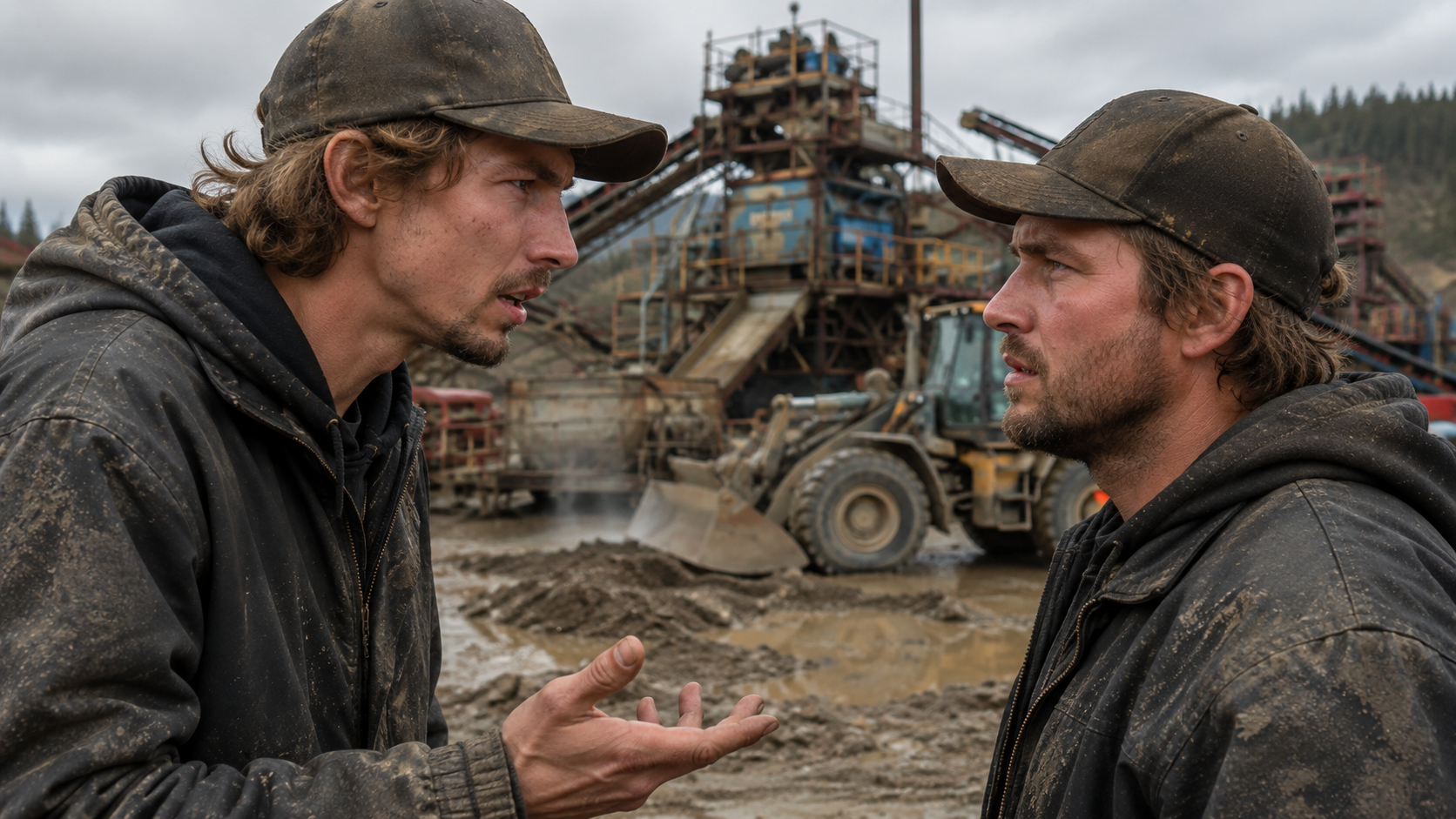
Parker Schnabel did not arrive at Scribner Creek to talk about the weather.
He came to collect.
Kevin Beets had acquired equipment connected to Parker’s operation and still owed approximately $130,000. Six months had passed. Kevin’s mining season was already under pressure, but Parker was no longer willing to let the debt remain another problem for another day.
The January 2, 2026 episode of Gold Rush turned their meeting into a collision between two men who had inherited famous mining names but were living very different financial realities.




Parker was running a large, expanding organization with three wash plants active and millions of dollars in gold already recovered. He had invested roughly $4.5 million into the season. Kevin, in only his second year as a mine boss, was trying to keep a smaller operation alive after crew departures, plant shutdowns and the temporary loss of Buzz Legault, who left for the birth of his child.
The difference in scale made the confrontation appear unequal.
The debt made it simple.
Parker believed he had waited long enough. Kevin tried to explain the pressure he was under, but Parker had not traveled to hear a list of setbacks. He gave Kevin until Thursday to pay and warned that if the money did not arrive, “the pitchforks come out.”
The line sounded theatrical. The deadline was real.
Kevin and his partner, Faith Teng, calculated that they needed approximately 36 ounces of gold to satisfy Parker. That target turned the wash plant into more than a production tool. It became a clock. Every shutdown threatened not only the season goal but Kevin’s credibility with one of the most powerful miners in the Klondike.
Their final weigh-in produced gold valued at about $97,000.
It was a substantial amount of money and still not enough.
Kevin would have to pull additional funds from savings to make Parker whole. The scene offered a reminder easily lost in Gold Rush’s large numbers: a pile of gold can look impressive while the business behind it remains short of cash.
The debt began with equipment, but the conflict was about trust.
Mining communities depend on deals between people who may compete one week and need one another the next. Machinery moves between claims. Parts are borrowed. Ground is leased. Payments may depend on production that has not yet occurred. Reputation becomes a form of credit.
When Parker allowed six months to pass, he was effectively carrying part of Kevin’s risk. The equipment had already changed hands or been used, while the money remained outstanding. Every additional delay asked Parker to believe Kevin would eventually produce enough gold to pay.
Parker’s patience ended before Kevin’s problems did.
From Kevin’s perspective, the timing was brutal. He was not refusing to pay while sitting on a successful cleanup. His operation had lost workers and fought mechanical setbacks. Every available dollar could support fuel, repairs, wages or stripping needed to reach the next pay. Removing $130,000 from the business might satisfy yesterday’s obligation while making tomorrow’s production harder.
That is the cash-flow trap faced by young companies.
A debt can be fully valid and still be difficult to pay. Revenue may exist on paper or beneath the ground, but creditors require cash on a date. The business owner must decide which obligation is allowed to wait and which delay could close the company.
Kevin chose to make Parker the priority.
The decision was not merely about avoiding an angry visit. Parker’s influence mattered. Kevin operated in the same small mining world, and a public failure to honor the debt could affect future equipment deals, partnerships and leases. A mine boss who cannot pay one respected operator may find that others demand cash in advance.
For a member of the Beets family, the reputational stakes were especially high.
Kevin had spent years working within Tony Beets’ operation before launching his own. The family name opened doors but also created expectations. Viewers knew his father as the “King of the Klondike,” a miner who measured success in thousands of ounces. Kevin wanted to prove he could lead independently, yet here was Parker arriving like a creditor at the gate.
The confrontation stripped away the protection of the Beets name.
Parker did not negotiate with Tony. He held Kevin responsible.
That detail mattered because Kevin’s season had already become a test of separation. Independence means keeping the gold, making the decisions and building a company around one’s own judgment. It also means paying bills without assuming family prestige will create more time.
Faith shared the burden. She was not simply watching Kevin face Parker; she was helping manage an operation whose choices affected both of them. Finding 36 ounces required practical changes at the wash plant. The crew replaced a rubber mat with a steel plate after material became trapped, trying to prevent pay dirt and potential gold from being lost.
The modification illustrated the narrow margin.
When a debt deadline is measured in ounces, small recovery problems become financial emergencies. Gold passing through the plant unrecovered is not an abstract efficiency issue. It may be the difference between paying a creditor and taking money from personal savings.
Kevin’s shortage also showed why gross gold value can mislead viewers.
The $97,000 cleanup did not represent $97,000 available to spend freely. Operating expenses continued. Royalties, fuel, payroll and repair costs did not disappear because Parker had set a deadline. To cover the debt, Kevin needed to redirect money that might otherwise sustain the mine.
Parker understood that calculation because he had lived through it on a much larger scale.
His own $4.5 million investment meant he also needed cash. Although Parker had recovered gold worth nearly $12.5 million by that point, he was operating multiple plants, moving equipment and financing an enormous season. A successful company can still insist on collecting a relatively small debt because scale creates obligations of its own.
To Parker, $130,000 may have been a fraction of the season’s gold total. It was still money committed elsewhere.
The confrontation therefore did not require a villain.
Kevin owed the money. Parker had the right to collect it. Kevin’s setbacks explained the delay but did not erase the obligation. Parker’s wealth explained why he could wait six months but did not require him to wait forever.
The tension came from two reasonable positions meeting at the worst possible time.
Reality television often encourages audiences to choose sides. Some viewers saw Parker as unnecessarily aggressive toward a younger mine boss already struggling. Others believed Kevin should have paid immediately and had received more patience than most creditors would offer.
Both reactions overlook how frequently business relationships depend on boundaries.
If Parker continued accepting excuses, the debt might become permanent. If he demanded payment too early, he could weaken Kevin’s ability to generate the money. The six-month mark became Parker’s boundary. Thursday became Kevin’s.
The phrase about pitchforks was never fully defined on screen. It might have meant repossession, legal pressure, refusal of future deals or simply a much less friendly visit. The uncertainty added weight. Kevin knew Parker had options and did not want to discover which one came next.
Older viewers may recognize the scene from family businesses where agreements begin with handshakes. A tractor is sold with time to pay. A contractor waits for a customer’s harvest. A relative lends equipment because the borrower expects a strong season. Such arrangements feel personal until the payment is late. Then both parties discover whether the relationship was built on friendship or enforceable terms.
Parker and Kevin’s mining world sits between those categories.
They know one another. Their families and crews have crossed paths. Parker has a long history with Tony. Yet the equipment debt was not a family favor without consequences. It was a business obligation.
The episode’s most revealing moment was not Parker’s warning. It was Kevin’s weigh-in.
He placed the result on the scale and watched it stop below the amount he needed. The gold was real. The shortfall was real. No speech could convert 97,000 dollars into 130,000.
Kevin and Faith would have to close the gap from savings.
Using savings can be responsible when it protects a valuable reputation and removes an expensive obligation. It can also be dangerous when the underlying operation continues losing money. The payment solved the immediate confrontation. It did not repair the staffing shortage, guarantee better ground or prevent the next mechanical failure.
That is why the debt story did not end with a transfer.
Kevin still needed the mine to work.
His longer-term goal required more than repaying Parker. He had to build a crew, maintain equipment, choose productive cuts and reach a season total that justified the risk of independence. The $130,000 deadline forced him to spend energy on the past when his company desperately needed investment in the future.
Parker’s visit may also have delivered a useful lesson. Mining does not reward avoidance. A broken pump grows worse when ignored. Unpaid debt works the same way. Kevin could not sluice his way out of the conversation without confronting the amount, the date and the consequences.
There was also a practical lesson in how equipment deals should be structured. A handshake supported by mutual respect may feel sufficient when gold prices are high and both operations expect a good season. Trouble begins when the agreement does not clearly answer what happens after poor production. Is payment tied to a calendar date or to a cleanup? Does the seller retain ownership until paid? Can the equipment be repossessed? Is interest added after a delay?
The episode did not reveal every contractual detail, and outsiders should not invent them. What viewers saw was the result of uncertainty becoming personal. Parker appeared at the claim, Kevin offered explanations and a new deadline was imposed face to face. Clear written milestones might not have made Kevin richer, but they could have reduced surprise.
Kevin also had to consider the danger of solving one debt with another. Pulling money from savings avoided a confrontation, yet replacing that cash later would require profitable production. Borrowing elsewhere could preserve savings but add interest and another creditor. Selling equipment might generate cash while reducing the mine’s ability to work. Every solution changed the operation that was supposed to generate the repayment.
That is why the 36-ounce target carried more meaning than its dollar value. It represented the hope that the business could pay a business debt through its normal work. When the cleanup stopped short, the boundary between company money and personal reserve weakened. For a young mine boss, that boundary is often the difference between owning an operation and merely financing a difficult job.
The encounter contrasted two stages of a mine boss’s career.
Parker had already built systems, capital and authority. He could walk into another operation and set terms because he had equipment, money and a record of paying his own bills. Kevin was still converting experience as Tony’s son into credibility as an independent owner.
That transition is rarely graceful.
The public nature of the confrontation made it harder. Millions of viewers watched Kevin face a creditor, come up short at the scale and dip into savings. Yet the embarrassment also revealed something important: independence is not proven by never struggling. It is proven by accepting responsibility when the struggle becomes visible.
Kevin did not deny the debt. He did not ask Tony to fight Parker for him. He and Faith worked to recover the gold and prepared to cover the difference.
Parker, for his part, did not pretend the relationship was more important than the agreement. Some viewers disliked the approach, but clear expectations may preserve a business relationship better than quiet resentment.
The showdown at Scribner Creek was not a feud about $130,000 alone.
It was a test of whether Kevin Beets could carry the full weight of his own name—and whether Parker Schnabel believed another extension would produce payment or merely another excuse.
When the scale stopped short, the answer could no longer come from the ground.
It had to come from Kevin’s bank account.