Tony Beets Strips Mike’s Crew and Equipment as His Son’s Mining Dream Stalls
Tony Beets Strips Mike’s Crew and Equipment as His Son’s Mining Dream Stalls
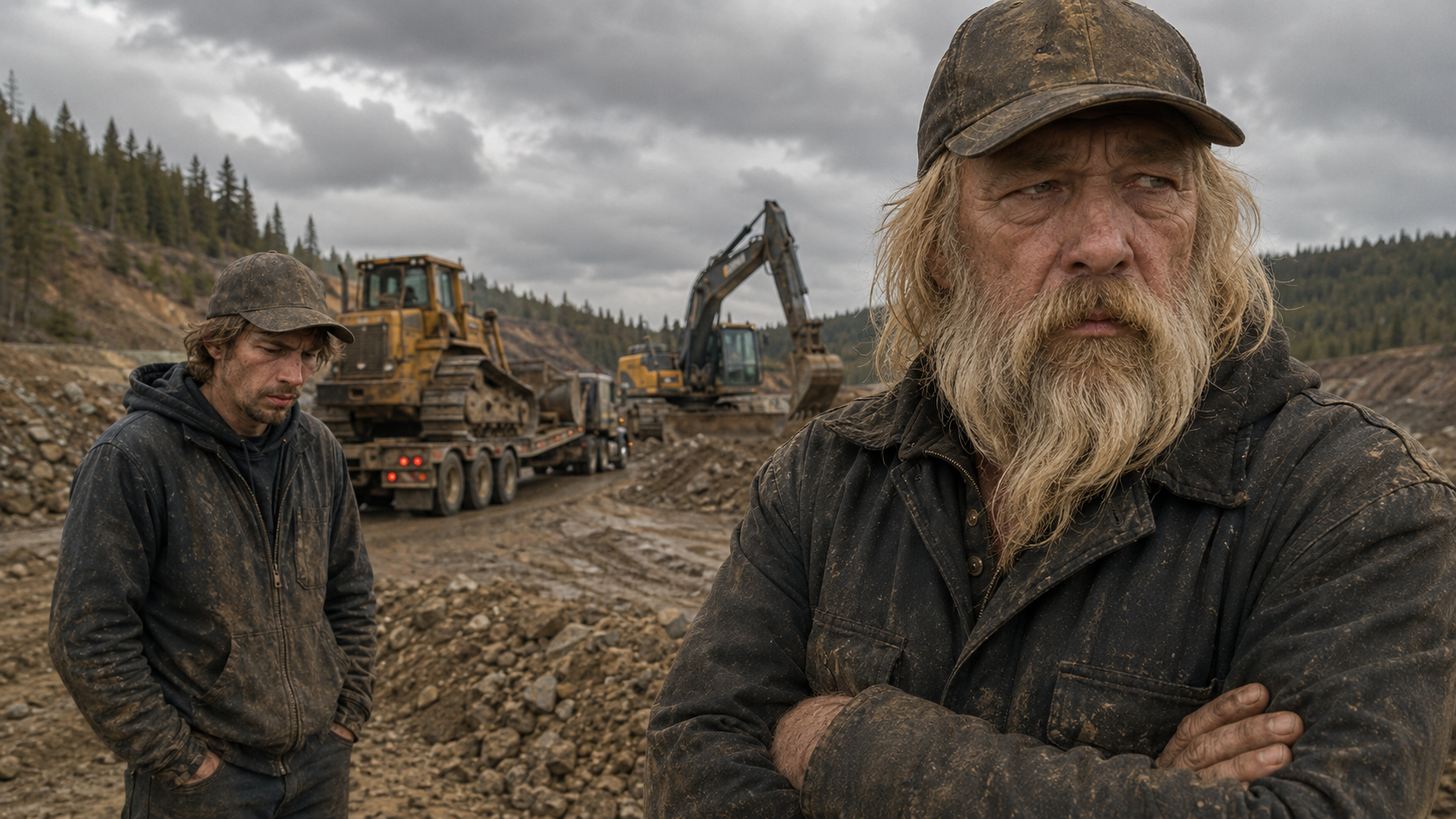
There is an old rule in family business: the owner’s priority becomes everyone’s priority.
At Paradise Hill, Mike Beets learned the harder version.
Tony Beets wanted two operations producing gold, but he did not value both sites equally. Indian River was the cash cow, the place where Sluice-A-Lot and Find-A-Lot could run side by side and generate the kind of weekly totals that pushed the family toward a record season. Paradise Hill was Mike’s responsibility—and, increasingly, the source of delays.
When Tony needed people and equipment at Indian River, he took them.
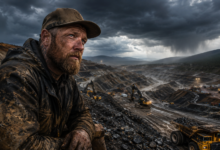

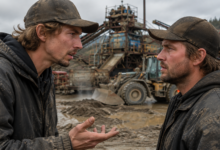
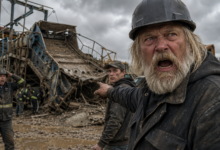
The decision made financial sense from the top of the company. It was devastating from Mike’s position below it.
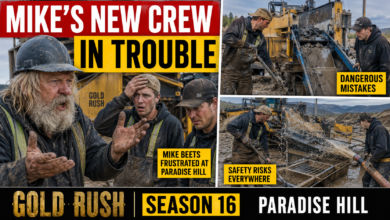
Season 16 repeatedly showed Mike trying to prepare Paradise Hill with a reduced and inexperienced crew. He was expected to get the trommel running, manage water, train workers and demonstrate that he deserved control of a claim. Yet the resources that could help him succeed were redirected toward the operation already succeeding.
That created a closed loop.
Indian River produced more gold, so Tony sent it more support. Paradise Hill fell behind after losing support, which gave Tony another reason to favor Indian River.
Mike’s struggle became evidence against him even when some of the conditions had been imposed by his father.
The imbalance was visible early in January 2026. Tony had already taken crew from Mike, leaving him searching for replacements. New recruits arrived with backgrounds in farming, construction or industrial work, but experience around heavy mining equipment could not be created instantly.
Mike walked them through basic responsibilities.
One worker overfilled oil after a pump appeared low. Another failed to stop when ordered after moving close to rock trucks and explained that she had been listening to the wrong radio channel. Mike issued a warning and reassigned the inexperienced operators to trucks because neither was ready to run the wash plant.
Each mistake cost time, but the larger problem was capacity.
Training demands the attention of the same experienced people needed to complete urgent work. A skeleton crew cannot easily produce and teach at full speed. Mike had to watch rookies while solving water pressure failures, ruptured hoses and the continuing problems that kept the trommel silent.
Tony saw a son failing to deliver.
Mike saw a boss removing the tools required to deliver.
The conflict intensified as Tony’s Indian River strategy became more ambitious. He invested about $1 million in Find-A-Lot, a wash plant matching Sluice-A-Lot, and planned to run both at the River Cut. Two plants required ground, water, operators, mechanics and a stream of trucks. The potential return was enormous, but the system consumed resources from elsewhere in the family business.
The January 23 episode made the choice explicit: Tony continued taking gear from Mike to protect the hot streak at Indian River.
The word “taking” carries emotional weight in a family, even when the equipment legally belongs to the larger company. Mike did not possess the final authority. Tony had built the operation, owned the machinery and carried the season goal. If a loader, pump or experienced worker could earn more money at Indian River, Tony believed moving it was common sense.
Mike’s goal was different.
He wanted the chance to prove he could become a mine boss in his own right. That required a functioning site and enough control to make decisions. Every time Tony removed machinery or labor, he reminded Mike that Paradise Hill was not truly independent.
The father wanted results before granting autonomy.
The son needed autonomy to produce results.
This is the central contradiction of succession.
Founders often say they want the next generation to take over, but they struggle to release equipment, money or decision-making authority. Their caution is understandable. They spent decades building the assets and know how quickly a bad call can destroy them. Yet heirs cannot demonstrate judgment if every meaningful choice can be reversed from above.
Tony’s management style made the tension sharper.
He is direct, impatient and focused on production. If a plant can run today, he wants it running. If one site contains a stronger pay opportunity, he sends resources there. Feelings do not appear on the gold scale.
Mike’s development did not fit that timetable.
Learning to manage a mine includes making mistakes, assembling a team and solving systems that do not work the first time. Those steps look inefficient beside two wash plants producing hundreds of ounces at Indian River. Tony compared actual gold with promised gold, and actual gold won.
Paradise Hill’s water system became a symbol of the struggle.
The distance between the trommel and the pump contributed to repeated breakdowns. Tony told Mike to create a new feeder pond, widen a dike, clear trees, excavate the pond and connect it to a nearby creek. The job demanded planning and safe heavy-equipment work from a crew already short on experience.
One dozer went over the road and needed help returning. Mike disagreed with crew member Len Hoekstra over how to move pipe. Each obstacle reinforced Tony’s view that the operation was taking too long.
Yet the project moved forward.
Mike stood his ground during disagreements, adjusted assignments and continued searching for capable people. Brayson Janvier and Noah Anderson joined. Brayson quickly noticed low water pressure and stopped the system, leading Mike to discover a ruptured pump hose. The early shutdown prevented another problem from becoming a larger failure.
That moment showed the value of training someone to recognize danger.
It also contrasted with the expensive breakdown at Sluice-A-Lot, where an operator waited too long to stop the plant. Experience was not merely about making machinery move. It was about knowing when motion had become dangerous.
Mike needed time to build that judgment across the crew.
Tony’s operation did not want to spend time where gold was not yet flowing.
The financial logic remained powerful. Indian River produced massive cleanups. In one week, Sluice-A-Lot recovered 339.92 ounces and Find-A-Lot added 332.62 ounces, a combined result valued at more than $2.3 million in the episode. Against those figures, removing one more truck or operator from Paradise Hill could appear obvious.
But a family mining company does not survive on one season alone.
Tony openly thought about future generations. His claims, plants and machinery represented a legacy. To preserve that legacy, someone must eventually lead without him. Kevin had already moved into his own operation. Mike wanted a claim of his own. Treating every developing site as a resource warehouse for the most profitable current site could maximize this year’s gold while weakening the next generation.
The resource moves also made planning almost impossible. A site manager normally builds a schedule around known trucks, operators and support equipment. If those assets can be recalled whenever another cut becomes more profitable, the schedule becomes a wish. Mike could not promise a plant start with confidence because the people assigned to today’s task might be sent elsewhere tomorrow.
Uncertainty creates waste even before an asset leaves. Workers may delay a complex move because they do not know whether the required dozer will remain available. New hires may receive rushed training because experienced operators are expected to transfer. Parts may be ordered for machinery that will produce at a different site. Tony’s flexibility at the company level became instability at the Paradise Hill level.
A better succession test would define a protected package of resources and a clear period in which Mike controlled them. Tony could still set safety standards, spending limits and a gold target. Mike would then own both the result and the decisions that produced it. If he failed, the evidence would be clean. If he succeeded, Tony would know the next generation could operate without constant rescue.
Season 16 did not provide that controlled test. It provided a moving target, which made every judgment about Mike incomplete.
This is why Mike’s frustration mattered even when the numbers favored Tony.
People do not inherit confidence with equipment. They build it through responsibility. If Mike succeeded only after Tony made every decision, the success would prove little. If he failed after Tony removed his best people and gear, the failure would also prove little.
Paradise Hill became a test with changing rules.
Tony could argue that a capable mine boss finds a way with what is available. Mike could answer that no responsible boss plans an operation around resources that can disappear without notice.
Both statements are true.
The conflict was not simply a harsh father mistreating a son. Tony faced a genuine allocation problem. Equipment is expensive, the Yukon season is short and rich ground must be processed before winter. Leaving machinery at an unproductive site can waste an opportunity worth millions.
Nor was Mike merely complaining. He had a legitimate operational need. A wash plant cannot run on ambition. Water systems, trained workers and support machines are not luxuries.
The episode asked viewers to decide what the family owed him: patience, resources or only a chance to struggle.
Mike eventually made progress. The trommel that had seemed cursed moved closer to operation, and Paradise Hill began producing. His persistence showed that the site was not hopeless. It also made the earlier deprivation more striking. The operation improved when people, water and machinery finally aligned.
Tony’s response remained focused on totals.
That approach had made him successful. He came to the Yukon with little, worked difficult jobs and built an empire large enough to support several family operations. He had survived by moving resources toward gold and refusing to wait for perfect conditions.
The same instinct that built the empire could complicate its transfer.
A founder can rescue every weak department by taking control, but repeated rescue teaches successors that control will always return to the founder. A founder can move every valuable machine toward the best immediate return, but doing so prevents a developing manager from learning how to plan and protect a full operation.
Older viewers who have transferred a farm, shop or contracting business to their children may recognize the dilemma. The machinery belongs to the family, but who decides where it works? The son wants room to lead. The father sees one season of poor judgment as a threat to property earned over a lifetime.
There is no clean moment when experience passes from one generation to the next.
It passes through arguments, deadlines and equipment keys.
Mike’s story also differed from Kevin’s. Kevin had established a separate operation and carried his own debts, including the roughly $130,000 owed to Parker. Mike remained more directly inside Tony’s system. He wanted independence but still depended on his father’s assets.
That dependence gave Tony leverage in every disagreement.
It also gave Tony responsibility for the conditions under which Mike was judged.
If the father removes a crew and the son falls behind, the result belongs partly to both. If the son adapts, trains replacements and starts producing anyway, the achievement says more about his leadership than an easy success would have.
Season 16 turned Paradise Hill into more than a troubled mine. It became the place where the Beets succession plan was tested in public.
Tony saw idle potential and wanted immediate gold.
Mike saw an opportunity repeatedly interrupted before it could prove itself.
Between them stood the trommel, silent for weeks, absorbing blame from both directions.
When the machine finally moved, it did not settle the argument. Tony’s strategy had helped create a record season at Indian River. Mike’s persistence suggested Paradise Hill might have produced sooner with stable support.
The family could celebrate both results while still avoiding the hardest question. Record gold at Indian River validated Tony’s allocation in the short term. Mike’s eventual progress validated his request for a real opportunity. Success on both sides did not erase the unfairness built into the test.
Was Tony preparing Mike to become a mine boss—or using Mike’s operation as a reserve of labor and equipment whenever the main business needed more?
Until Mike controls the answer, Paradise Hill will remain his responsibility without fully becoming his mine.