One Delayed Shutdown Put More Than $1 Million of Tony Beets’ Gold Production at Risk
One Delayed Shutdown Put More Than $1 Million of Tony Beets’ Gold Production at Risk
First came the sound.
It was not yet a collapsed wash plant, a six-day shutdown or a seven-figure production loss. It was simply a troubling noise inside Sluice-A-Lot, the kind of warning that experienced miners learn never to ignore.
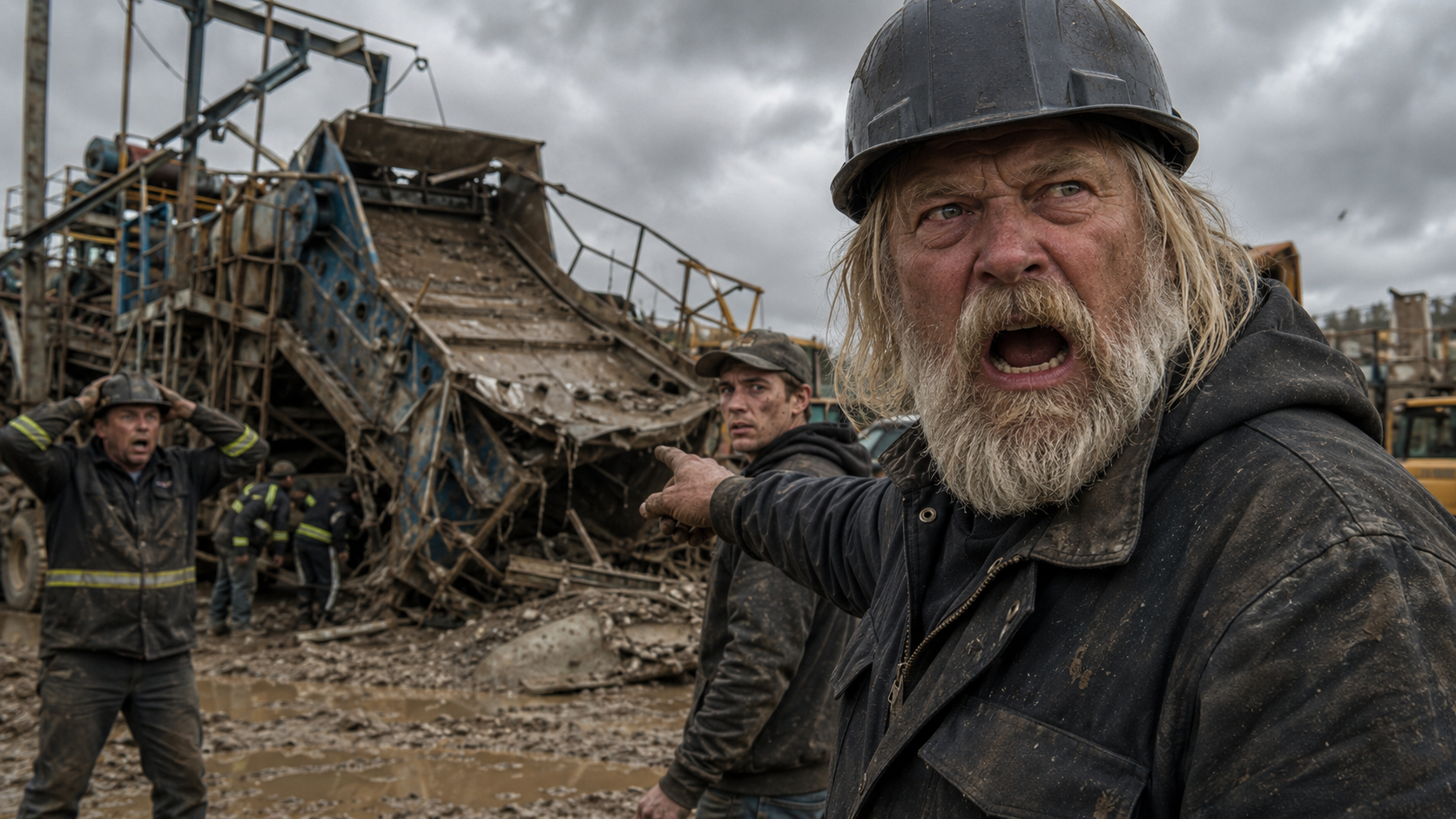
Meghan Roberts went to investigate. Darian Dennis, an operator carrying more responsibility after Tony Beets lost seven workers to Parker Schnabel, had allowed the plant to continue too long before stopping it. By the time the crew understood the full problem, the impact bed had fallen into the machinery and smashed the upper shaker deck.
In heavy industry, disaster often arrives in that order.



A signal is noticed. Someone must decide whether it is serious. Production competes with caution. Seconds pass. Then a problem that might have required an inspection becomes a rebuild.
Tony arrived in his truck and faced the result. Sluice-A-Lot could not simply be restarted after a quick weld. A representative from the manufacturer advised removing the entire top deck and replacing it. The plant needed a critical part, and the crew could not complete the work until that part arrived.
The first estimate placed the lost production at roughly $190,000.
That figure did not remain still.
Each day Sluice-A-Lot sat silent, gold-rich material remained unwashed. Workers and equipment could be redirected, but the plant’s expected output could not be recovered from an hour that had already passed. After six days, the episode described more than $1 million in potential lost gold production.
The distinction matters. Tony was not handed a $1 million repair invoice, and the crew did not physically spill a million dollars in refined gold onto the ground. The loss represented what the plant might have produced during the shutdown. It was an opportunity cost, but in a short Yukon mining season, opportunity can be as real as cash.
Winter does not return six extra days because a part was late.
The incident unfolded during a season in which Tony had reason to be confident. His operation had banked about $16 million in gold and had just delivered a 672-ounce week. Two wash plants at the Corner Cut gave him the ability to process material at a pace few crews could match. With gold prices elevated, every hour of sluicing carried enormous value.
That success increased the cost of failure.
If a poorly performing plant shuts down, the immediate production loss may be limited. Sluice-A-Lot was part of a proven operation expected to generate a major weekly return. Its silence removed one of Tony’s most reliable paths from dirt to revenue.
To understand the breakdown, it helps to understand what the shaker deck is asked to do. Pay dirt arrives mixed with rocks, clay and material of many sizes. The wash plant must break apart, classify and move that material while water carries the smaller fraction toward the gold-recovery system. The deck lives under repeated impact and vibration. It is built for punishment, but it depends on supports, beds and components remaining where they belong.
When the impact bed fell, it did not merely stop performing its own job. It entered a moving system and damaged the deck beneath it. The machine effectively began destroying itself.
The correct response to an abnormal sound is rarely glamorous. Stop. Lock out the equipment. Inspect the source. Accept a short loss in production to avoid a longer one.
That choice becomes psychologically harder when the boss has demanded speed, the plant is generating valuable gold and the worker wants to prove capable. An inexperienced operator may fear stopping unnecessarily. Nobody wants to be the person who shuts down a profitable line because of a harmless rattle.
Yet that is precisely why industrial judgment matters.
The safest decision may look timid for ten minutes and brilliant six days later.
Cousin Mike was angry that Darian had not stopped the plant sooner. Tony was furious at the damage. Their reaction was understandable, but the event also exposed a system under strain. Seven experienced workers had left for Parker’s operation. Less experienced employees were carrying greater responsibility. Sluice-A-Lot and Find-A-Lot were expected to keep running at a high pace. The organization wanted maximum production while possessing less of the experience needed to protect it.
A failure at that intersection cannot be explained by one person alone.
Darian made the immediate mistake. Management determined staffing, training, supervision and production pressure. The equipment itself operated in an environment designed to wear down metal. A responsible account must hold all of those facts at once.
Gold Rush presents the confrontation in dramatic terms because television needs a clear moment. The larger lesson is about prevention. Mining companies do not protect expensive equipment only by hiring careful people. They create procedures that make stopping normal, reporting fast and inspection unavoidable. A worker should not need to calculate whether the boss will be angrier about five minutes of downtime or a warning ignored.
The plant should be stopped before that debate begins.
After the collapse, Tony had no such choice. Production at Sluice-A-Lot ended completely while the crew assessed the damage. The team contacted the manufacturer, removed damaged components and waited for the replacement deck. Every stage required people, tools and coordination, but none of it added an ounce to the weekly total.
Find-A-Lot became the operation’s only major defense.
Tony chose to run material taken close to jagged bedrock, pursuing the possibility of richer gold even though sharp rocks could damage the remaining wash plant. It was a revealing gamble. One plant had already been destroyed, yet slowing down could make the week’s financial damage worse. Tony accepted additional mechanical risk to preserve cash flow.
A jam followed.
For a moment, the Beets operation appeared close to losing both plants. The crew cleared the problem in less than an hour, and Find-A-Lot returned to work. The short interruption looked almost harmless beside Sluice-A-Lot’s six-day silence, but it underscored the fragility of the recovery plan. There was no comfortable backup left.
When the new shaker deck finally arrived, the crew moved quickly. The replacement was installed, the plant was reassembled and Sluice-A-Lot returned to service. Its first 24 hours produced 45.58 ounces, valued at about $150,000 in the episode.
Find-A-Lot delivered 237.68 ounces worth more than $830,000.
The weekly weigh-in approached a million dollars in gross gold value and allowed the Beets family to say the operation was back on track. The recovery was real. So was the cost of the missing days.
The strong cleanup created an uncomfortable counterfactual: What would two functioning plants have produced over the full week?
That question is the foundation of the million-dollar estimate. It is not certain money in the same way as gold already weighed. Ground varies. Plants experience ordinary stoppages. Recovery rates change. But based on the operation’s recent output, the lost opportunity was large enough to transform a delayed shutdown into one of the season’s most expensive personnel mistakes.
The aftermath offered one surprising turn.
Darian received another chance.
Tony’s television persona is associated with quick judgments and blunt dismissals, but replacing every inexperienced worker after one mistake would deepen the staffing shortage. The operation needed people who could learn. A second chance therefore served both practical and human purposes.
The value of that decision depends on what follows. Forgiveness without training repeats risk. Training without responsibility leaves the lesson incomplete. A meaningful second chance requires the worker to understand not only what went wrong, but why the next warning must produce a different action.
For Darian, the lesson could not have been clearer. When a machine speaks, production comes second.
For Tony, the failure exposed the price of relying on a thin crew. Experienced operators are expensive, but inexperience can be far more costly. The wages saved or vacancies tolerated after a mass departure mean little if a critical plant runs itself into a six-day rebuild.
For Cousin Mike, it demonstrated the burden placed on a foreman. He had to keep two plants producing, supervise newer employees, diagnose damage and coordinate a repair while Tony measured the operation in hundreds of ounces. A foreman cannot stand beside every control panel at once. He needs workers who know when to act without waiting for permission.
The six-day wait revealed another vulnerability: parts logistics. Remote mining operations cannot assume that a specialized shaker deck is sitting on a nearby shelf. The more unusual the plant, the more a failure may depend on manufacturers, freight schedules and roads outside the crew’s control. A company can reduce that exposure by stocking critical spares, but inventory ties up cash and predicting the next failure is difficult. Tony’s operation had enough capital to survive the wait; the shutdown still demonstrated that a small component of the supply chain could control a multimillion-dollar season.
Maintenance planning must therefore consider consequence as well as probability. A part that rarely fails may deserve a spare if its absence stops the entire plant. The calculation is similar to insurance: money is spent on something the owner hopes never to use. When production is worth close to $190,000 a day, the cost of keeping a replacement available can suddenly look modest.
The incident also challenged a popular assumption about productivity. Running longer is not always producing more.
Had Sluice-A-Lot stopped at the first abnormal sound, it might have lost minutes or hours. By continuing, it lost nearly a week. The decision to avoid a small interruption created the largest possible interruption.
Farmers understand the same principle when an engine temperature rises. Truckers recognize it in oil pressure. Factory workers hear it in a bearing. Homeowners may even know it from a furnace that begins making a new sound. Equipment often gives a warning before it gives a bill.
The difference at Indian River was scale.
Sluice-A-Lot sat inside a system capable of producing hundreds of thousands of dollars in gold over a short period. A missed warning therefore carried a consequence beyond the machine’s replacement parts. The true loss included idle production, disrupted labor, changed mine plans and additional strain on the one remaining plant.
The episode’s dramatic framing placed responsibility on the worker who failed to stop. That was factually central, but the event should not become an excuse to treat one person as the entire cause. Safe operations are built so that a single uncertain employee does not stand between a strange noise and a million-dollar failure.
Clear stop-work authority matters. Training matters. Adequate staffing matters. Preventive inspection matters. A culture that rewards early reporting matters.
So does leadership after the damage.
Tony could not reverse the collapse by shouting. The crew could only inspect, order, wait, rebuild and return. The successful repair showed the experience still present in the Beets organization. The decision to keep Find-A-Lot running showed their appetite for risk. The second chance given to Darian showed that even Tony understood the operation could not fire its way out of every shortage.
By the time gold returned to the scale, the plant looked whole again. The six lost days remained invisible.
That invisibility is what makes production loss easy to underestimate. There is no pile of missing gold to photograph. There is only ground that was not washed, time that cannot be recovered and a seasonal total lower than it might have been.
Tony survived the setback because the operation had another plant, valuable ground and enough experience to complete the rebuild. A smaller miner could have been finished by the same sequence.
The story was presented as a worker’s costly mistake, and it was. It was also a warning to every boss who believes speed is the same as efficiency.
The gold recovered after the repair proved that the ground was still valuable. It also made the absence of six days impossible to dismiss. The plant returned, the crew moved on and television reached the next crisis. The calendar retained the damage.
Efficiency is not keeping the machine running at any price.
It is knowing the exact moment when stopping saves more than running—and having a crew confident enough to make that call.