Seven Tony Beets Workers Defect to Parker Schnabel as the Klondike Rivalry Explodes
Seven Tony Beets Workers Defect to Parker Schnabel as the Klondike Rivalry Explodes
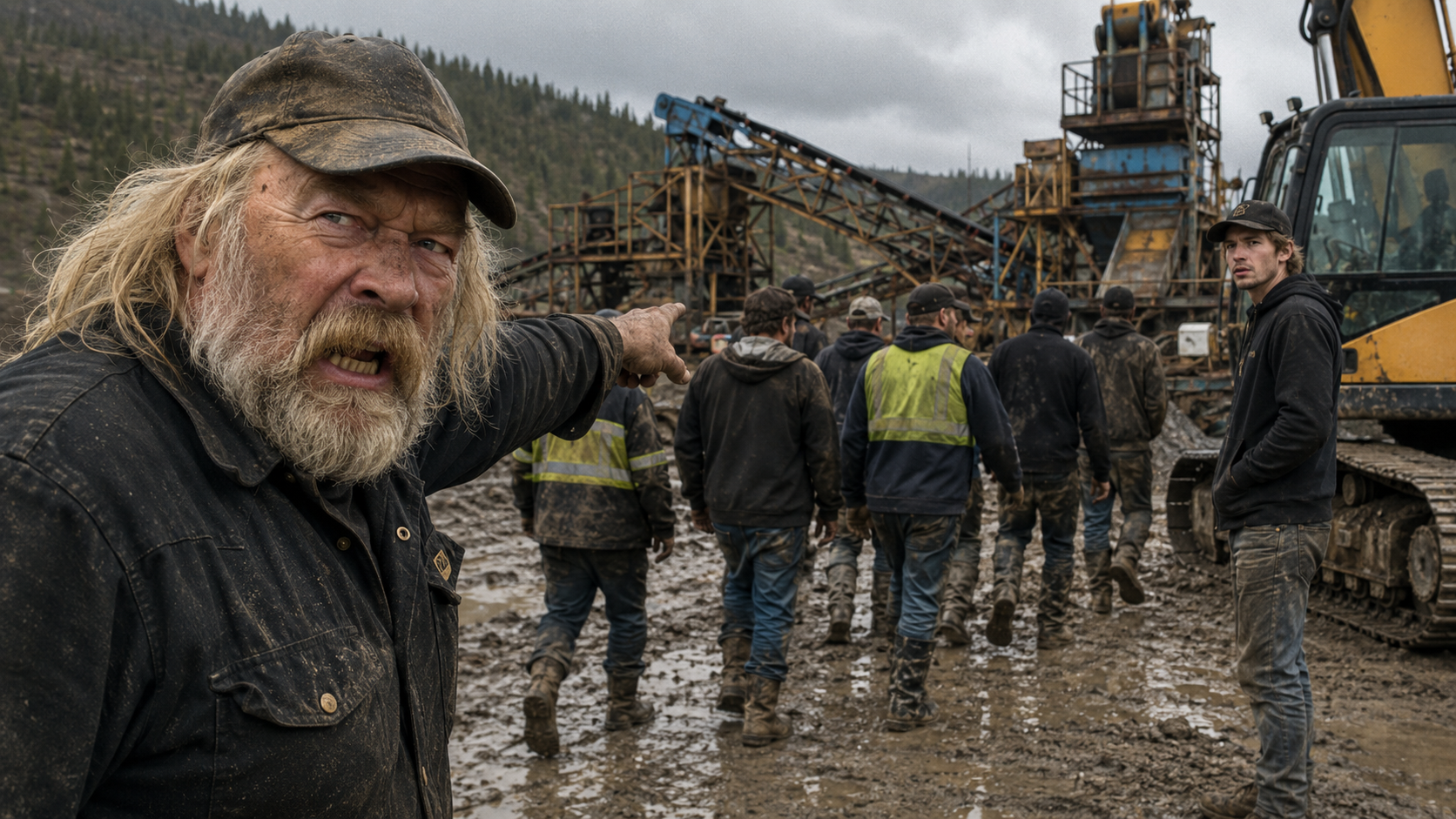
The empty seats mattered before the broken machinery did.
At the start of the February 20, 2026 episode of Gold Rush, Tony Beets learned that seven members of his workforce had left his operation and joined Parker Schnabel. In an industry where experienced heavy-equipment operators are difficult to replace quickly, the number was not a minor staffing adjustment. It was an exodus.
The destination made it personal.
Parker was not an unknown contractor down the road. He had once worked on Tony’s ground, paid Tony royalties and grown from a young mine boss into the strongest rival for the Klondike crown. Their history had included advice, deals, arguments and years of competition. Losing one worker to Parker might have been inconvenient. Losing seven at the same time looked like a vote of no confidence delivered directly to Tony’s competitor.


Tony responded in the blunt language viewers expected. He said he did not care, joked that his “shining personality” must have caused it and called the departing workers “weasels.” The remarks created a memorable television moment, but the operation around him told a more complicated story.
Tony could dismiss the people. He could not dismiss the work they had been doing.
At Indian River, the Beets family was running Sluice-A-Lot and Find-A-Lot at the Corner Cut. The strategy depended on keeping both plants supplied and operating for as many hours as possible. Tony had already recovered about $16 million in gold and had just celebrated a season-best weekly cleanup of 672 ounces. With gold prices high, the temptation was obvious: run harder, process more ground and repeat the payday before winter.
Seven departures struck at the exact moment when the business needed stability.
Cousin Mike was left overseeing a crew with less experience. Newer workers had to accept more responsibility, and every ordinary task carried more risk. Heavy mining equipment does not allow a long learning curve. A rookie who hesitates can stop production. A rookie who does not stop soon enough can damage machinery worth far more than a season’s wages.
That distinction soon became painfully important.
At Sluice-A-Lot, troubling sounds began coming from the plant. Meghan Roberts went to investigate. Another worker, Darian Dennis, had been given increased responsibility after the staffing losses, but the plant was not shut down quickly enough. By the time the problem was addressed, the impact bed had fallen into the wash plant and smashed the upper shaker deck.
The damage forced a major rebuild. A manufacturing representative advised removing and replacing the top deck, but the necessary part had to arrive before the crew could finish the repair. The initial estimate suggested roughly $190,000 in lost production. Six days later, the potential production loss had climbed beyond $1 million.
The sequence transformed the defections from workplace gossip into an operational crisis.
It would be unfair to claim that every mechanical failure was caused solely by seven workers leaving. Mining equipment breaks under punishing conditions, and experienced crews also make mistakes. The episode, however, drew a clear connection between the staffing shortage, the reliance on inexperienced operators and the difficulty of recognizing trouble in time.
That connection is what made the story resonate beyond Gold Rush.
Every long-running family business eventually faces a transfer of knowledge. The people who know which sound is normal, which vibration is dangerous and which shortcut should never be taken carry information that may not exist in any manual. When several of them leave together, a company loses more than labor. It loses memory.
Tony’s style had always been built around urgency. He expected people to move quickly, solve problems and keep the gold coming. Many viewers admired that directness. Others saw a workplace where criticism could be harsh and praise scarce. The defectors themselves appeared relieved by what they described as a more welcoming atmosphere under Parker, with less name-calling and less need to walk on eggshells.
Their comments did not prove that every worker shared the same experience. They did reveal that the decision was about more than a paycheck.
People often remain in demanding jobs because they trust the crew around them, respect the boss or believe the sacrifice will lead somewhere. When that trust weakens, a competitor does not need to offer an easy job. The competitor only needs to offer a different future.
Parker was well positioned to do exactly that.
His operation was expanding, his season goal was 10,000 ounces and his four wash plants required experienced people. He had banked approximately $22 million in gold by the time the seven arrived. Although his production had begun to fall, the size of his organization created opportunities that Tony’s former employees may have found attractive.
Parker also understood Tony’s management style from personal experience. Years earlier, he had operated on Tony’s land and navigated the older miner’s expectations. When the defectors joined him, Parker did not need a long explanation of where they had come from.
Yet their arrival created a second conflict.
Some members of Parker’s existing team were unhappy that experienced outsiders could block their advancement. Evan Kurtz, who had spent years operating trucks and loaders, worried that the newcomers would move ahead of people who had already earned their place. The very employees who solved Parker’s labor need also threatened the morale of the crew he wanted to retain.
This was the hidden cost of Tony’s loss.
The seven workers did not simply move from one payroll to another. They disturbed the internal balance of both companies. Tony had to promote and train people sooner than planned. Parker had to integrate newcomers without telling loyal workers that patience no longer mattered.
Both mine bosses faced the same management question from opposite sides: How do you protect a culture when the people inside it suddenly change?
Tony’s answer was to keep moving.
With Sluice-A-Lot down, Find-A-Lot had to carry the week. Tony chose to process material near jagged bedrock despite the possibility that sharp rocks could damage the remaining plant. A jam occurred, but the shutdown lasted less than an hour. The gamble worked well enough for Find-A-Lot to recover 237.68 ounces, valued in the episode at more than $830,000.
Sluice-A-Lot returned after six days and produced 45.58 ounces in its first 24 hours back. The family’s weigh-in demonstrated the resilience that had kept Tony mining for decades. He absorbed the loss, repaired the plant and resumed production.
But recovery did not erase the warning.
The crisis had shown how thin the operation could become when experienced people disappeared. Tony had machinery, gold-rich ground and a family name recognized across the Klondike. What he could not manufacture overnight was judgment.
A worker who has spent years around a wash plant learns to listen before looking. Bearings, conveyors, shaker decks and generators all create patterns. The valuable skill is not merely knowing how to start the machine. It is knowing when to stop it. That decision can feel costly because every minute of downtime means less pay dirt washed. In reality, an early shutdown may protect days of production.
The incident at Sluice-A-Lot illustrated that lesson with brutal clarity. A few minutes of caution might have prevented a six-day stoppage. Once the impact bed fell and the deck was destroyed, urgency no longer mattered. The crew had to wait for metal, parts and labor to catch up with a decision that had come too late.
The staffing story also exposed a generational pressure inside the Beets family.
Tony wanted multiple operations running, while his sons Mike and Kevin were trying to establish themselves as mine bosses. Resources and personnel moved according to Tony’s priorities. Mike struggled at Paradise Hill after Tony pulled people toward the more productive Indian River ground. Kevin dealt with his own staffing problems at Scribner Creek. The family possessed several opportunities but not an unlimited supply of experienced operators.
In that environment, losing seven people to Parker was not isolated. It intensified every existing shortage.
For viewers who have watched Tony for years, the anger was understandable. He had built his operation through hard work, risk and a refusal to quit. Seeing employees walk directly to a rival could feel like betrayal.
For workers, the calculation may have looked different. Employment is not ownership. They did not possess Tony’s claims or receive his share of the gold. Their reasons could include conditions, advancement, management, schedule or simple preference. Unless each person tells the full story, no outsider can know precisely why all seven left.
That uncertainty is important because reality television encourages simple sides. Tony becomes the furious boss. Parker becomes the poacher. The workers become defectors. Real employment decisions are rarely so clean.
What the audience could see was the consequence.
Tony’s remaining operation placed inexperienced people into critical roles. A plant suffered catastrophic damage after warning sounds continued too long. Parker’s team gained skilled labor but experienced resentment among existing employees. Neither boss received a perfect victory.
The timing also raised a question about retention that a gold weigh could not answer. Tony had just produced one of his strongest weekly results, yet seven people still chose to leave. If money was flowing and workers were walking, production success alone was not enough to hold the team together. A profitable workplace can still lose people when communication, respect, schedule or advancement becomes more important than the size of the owner’s cleanup.
Parker could learn from that warning as well. The defectors described his environment more favorably, but welcome is easiest during the first week. Long-term retention would depend on assignments, treatment and whether promises of opportunity became real. If established employees felt displaced and newcomers felt used only to solve a temporary shortage, Parker could inherit the same instability he had taken advantage of.
That made the move a continuing test rather than a one-night victory. The seven workers had already judged Tony’s operation by leaving. Parker’s operation would now be judged by whether they stayed.
The episode therefore became less about loyalty and more about leadership.
Money can recruit people, but it cannot guarantee commitment. A famous name can attract workers, but it cannot make them stay. Anger can express disappointment, but it does not teach the next operator how to protect a shaker deck.
Tony’s comment that he did not care was convincing as defiance. It was less convincing as business.
The numbers said he had to care.
Seven people represented shifts that needed to be covered, machines that needed to be watched and experience that needed to be replaced. Even after a strong recovery, every foreman had to wonder whether the next unusual sound would be recognized early enough. Every new hire carried responsibility before fully absorbing the habits of the mine.
Parker, meanwhile, had to prove that his operation truly offered the better environment the newcomers expected. A larger company brings pressure of its own. His four-plant campaign was spending about $100,000 a day in base operating costs. Falling production meant there was little patience for mistakes. One new operator quickly jammed Sluicifer’s stacker and was removed from that assignment after smoke and generator trouble forced a shutdown.
Changing jerseys did not remove the danger of the work.
The rivalry between Tony and Parker has often been measured in ounces. Season 16 added a different scoreboard: people. Parker’s ability to attract workers weakened Tony before a single additional yard was washed. Tony’s ability to rebuild after the departure showed why he remained formidable.
The final judgment cannot be found only in one cleanup. A crew’s health becomes visible over time—in who stays, who advances, who takes responsibility and who feels safe enough to stop a machine before disaster.
Tony survived the week and continued chasing gold. Parker gained seven experienced workers and continued chasing his 10,000-ounce goal. The television rivalry moved forward.
But the image that defined the episode was not gold pouring into a pan.
It was seven workers crossing an invisible line from one empire to another—and leaving both bosses to deal with what followed.