The McBees Sold Their Headquarters to Survive—Cole Reveals How Much Financial Trouble Remains
The McBees Sold Their Headquarters to Survive—Cole Reveals How Much Financial Trouble Remains
The McBee family has made visible progress against its financial problems, but Cole McBee refuses to describe the crisis as finished.
Property has been sold. Debt pressure has been reduced. The banks are reportedly giving the family more room to breathe.
Yet Cole said claiming they were “out of everything” would be dishonest.
The family is still working through unresolved problems while attempting to redesign the business around cattle instead of traditional farming.





Cole’s Most Honest Financial Statement
During an appearance on Watch What Happens Live with Andy Cohen, Cole said the family remained in the middle of the process.
There were still hurdles and problems to solve.
His optimism came from comparison rather than completion. They were in a better position than the previous day and a dramatically better position than the prior year.
That language avoids the two extremes often used in reality-TV financial stories: total collapse and miraculous recovery.
The Asset Sales Solved Only Part of the Problem
Cole said selling property addressed many of the family’s difficulties but did not eliminate all of them.
Asset sales can generate cash quickly and reduce bank pressure. They also permanently remove buildings, equipment, land, or infrastructure that may have supported future operations.
The key question is whether the assets sold were less valuable to the future business than the debt they helped eliminate.
The brothers appear to believe the sacrifice was necessary to protect the core farm and family homes.
The Headquarters Sale
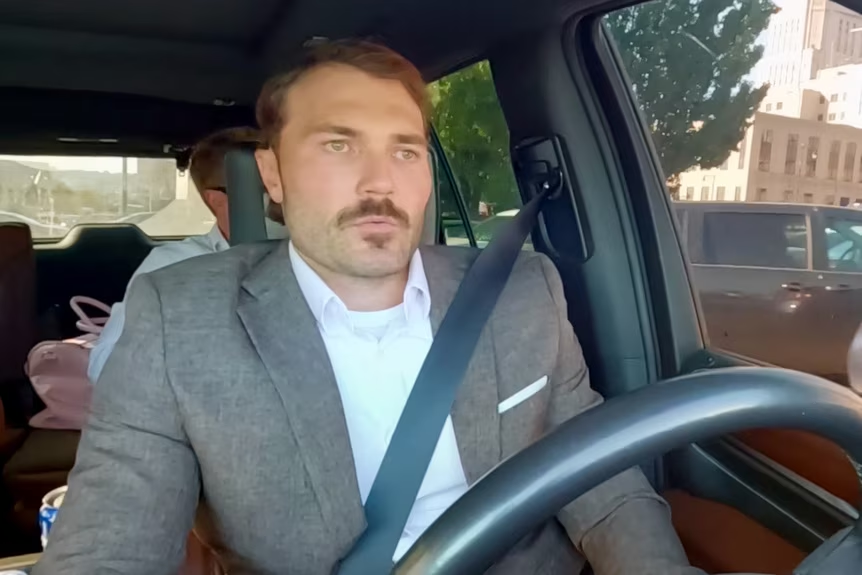
Steven McBee Jr. made the decision to sell the McBee Farm & Cattle Co. headquarters.
The property included grain bins, a shop, and an aviation building.
These were not symbolic items. Grain storage, maintenance space, and aviation infrastructure can support major agricultural operations.
Selling them signaled that the family was shrinking or changing the business rather than waiting for conditions to improve.
The $7 Million Pressure
Steve McBee Sr. faced a combined $7 million in fines and restitution connected to his federal case.
Steven Jr. said the amount was difficult to comprehend because the family did not have that money readily available.
A liability of that scale can threaten assets beyond the business that created it. Banks may tighten terms, creditors may demand payment, and operating cash can disappear into debt service.
The brothers therefore had to protect the properties they considered essential.
Why Selling Was the “Only Path Forward”
Steven Jr. said he hated selling the headquarters but believed it was the only way to preserve the main farm and the family’s houses.
His strategy was to reduce debt enough for banks to stop applying constant pressure.
Only then could the brothers focus on operating the actual business rather than reacting to financial emergencies.
The statement reflects triage: sacrifice secondary assets to protect the core.
What “The Banks Can Breathe” Really Means
When lenders believe a borrower may not meet obligations, communication can become relentless.
Reducing principal, improving collateral ratios, or selling encumbered assets may restore confidence.
Steven’s goal was not only to raise cash. It was to change the relationship with the banks enough to regain operational space.
A business cannot plan five years ahead when every day is dominated by calls about immediate debt.
The Family Is Leaving Traditional Farming
Cole said the business was no longer farming.
That statement marks a significant strategic change for a family publicly identified with agriculture.
Traditional crop farming can require large acreage, expensive equipment, grain storage, seasonal input costs, and exposure to weather and commodity prices.
Selling grain bins and related infrastructure becomes more understandable if the company no longer intends to operate that model.
Cattle Become the New Center
Cole’s future plan focuses on expanding the cattle operation.
He wants to increase pasture acreage and double the herd over five years.
The strategy fits his own expertise and role within the family. Cole has been closely associated with cattle management and appears to see it as the most credible path forward.
It also allows the company to preserve a connection to the land while reducing dependence on the crop-farming system being dismantled.
Why Doubling the Herd Is Not Simple
Cole acknowledged that the plan was easier to describe than execute.
More cattle require more pasture, fencing, water, handling capacity, feed planning, veterinary support, labor, and working capital.
The family first needs money to purchase or lease additional land.
Debt reduction may improve stability, but growth will require new investment.
The Five-Year Timeline
A five-year plan is more credible than promising immediate expansion.
Pasture acquisition and herd growth should occur gradually because cattle reproduce on biological timelines and land must support the animals without being overused.
Growing too quickly could recreate the same financial pressure the family is trying to escape.
The timeline suggests Cole understands that recovery and expansion are separate stages.
Why Cattle May Fit the New McBee Business
The family already operates McBee Farm & Cattle Co. and has developed products connected to ranch-raised beef and tallow.
A larger cattle herd could support meat sales, branded consumer products, and byproducts such as the skincare line operated by Kacie Adkison.
This creates the possibility of earning more value from each animal rather than relying only on commodity sales.
The source does not provide a complete business plan, but the existing ventures show how cattle could connect several revenue streams.
The Danger of Expanding Before Recovery Is Complete
Cole admitted that problems remained.
Buying land too early could add debt before the family has stabilized existing obligations.
Doubling the herd would also increase exposure to feed costs, disease, weather, and cattle prices.
The family must avoid treating growth as proof of recovery if the underlying balance sheet remains fragile.
What Was Preserved
The brothers’ priority was to keep the main farm and family homes.
That distinction reveals what they considered non-negotiable.
The headquarters and specialized buildings could be sold. The central land and places where the family lived represented the foundation they were unwilling to lose.
Financial restructuring often becomes emotionally difficult because assets carry history. The McBees chose which parts of that history could be sacrificed to save the rest.
The Headquarters Was More Than Real Estate
A headquarters can symbolize permanence, status, and the scale of a company.
Selling it may feel like public evidence of decline even when the transaction improves financial health.
Steven Jr.’s sadness reflects that symbolic loss.
The family had to accept looking smaller in order to become more stable.
Steve Sr.’s Absence Changes Financial Leadership
The restructuring occurred while Steve Sr. was serving a prison sentence.
His sons had to make decisions about assets and debt without relying on his normal daily leadership.
That situation forces a generational transition. Steven Jr., Cole, Jesse, and Brayden are not only maintaining the business. They are deciding what version of it deserves to survive.
Why Cole’s Update Builds Credibility
Cole did not announce that every debt had disappeared.
He said progress was real and incomplete.
That honesty makes the update more credible than a broad claim that selling property solved everything.
Financial recovery is usually gradual. Cash flow, lender trust, operating margins, and future investment all need time to improve.
What Viewers Cannot Calculate
The source does not provide the family’s total debt, sale proceeds, current cash flow, interest obligations, or exact ownership structure.
Without those figures, outsiders cannot calculate how close the business is to full recovery.
The $7 million fine and restitution amount is only one part of the financial picture.
A responsible article should not turn Cole’s optimism into a claim of solvency that the available numbers cannot prove.
The Role of Television Income
The report does not disclose how much the family earns from the show or how that income affects debt repayment.
Reality-TV exposure may support consumer businesses and create marketing value, but it cannot be assumed to cover the liabilities.
The family’s decision to sell major property suggests that media income alone was not sufficient to remove the pressure.
The Emotional Cost to the Brothers
The sons inherited responsibility for consequences connected to their father’s legal case and business decisions.
They may benefit from the companies he built, but they also face the risk of losing family assets.
That combination can create resentment, loyalty, and pressure at the same time.
The sale of headquarters shows that the consequences were not abstract.
Why Everyone Must Align Around the New Plan
Cole said the family was generally aligned with the cattle strategy.
Agreement is essential because the brothers hold different roles and priorities.
Steven Jr. focuses on executive decisions. Cole wants cattle growth. Jesse has construction responsibilities. Brayden works heavily around the car-wash business.
The future may depend on allowing separate ventures to support one another without recreating unclear control.
A Smaller Business Could Be a Stronger Business
Selling infrastructure and leaving crop farming may reduce revenue scale.
It may also reduce capital intensity, maintenance burden, and exposure to operations the family no longer considers central.
A focused cattle company with direct consumer products could be more resilient than a larger group stretched across too many assets.
That outcome is possible, not guaranteed.
What Success Would Look Like
Success over the next five years would involve more than doubling cattle numbers.
The family would need stable debt service, profitable operations, sufficient pasture, retained homes and core land, and enough cash to withstand another setback.
Growth without financial stability would repeat the old problem at a different scale.
The Most Accurate Financial Status
The McBees are in a better position than they were the previous year.
Asset sales relieved significant pressure and helped protect the main farm and homes.
They are not free of every problem.
The company is shifting away from traditional farming and toward cattle, with a five-year goal of expanding pasture and doubling the herd.
Cole’s update is cautiously positive because the family has moved from emergency reaction toward planning.
The crisis is not over. The difference is that the brothers can finally see a possible business on the other side of it.
Why Selling Assets Does Not Automatically Mean Failure
Families often treat the sale of a headquarters as proof that a company has collapsed. In restructuring, the opposite can be true. An asset may be valuable yet still produce less benefit than the debt relief created by selling it.
The McBees appear to have chosen survival over appearance. They accepted the public embarrassment of becoming smaller in order to preserve the land, homes, and cattle operation they considered capable of supporting a future.
Debt Reduction and Business Growth Pull in Opposite Directions
The family needs to preserve cash and reduce obligations. Cole’s cattle plan requires spending money on land, fencing, water systems, and animals.
That creates a sequencing problem. Expanding too early could weaken recovery; waiting too long could allow competitors or land prices to move against them.
A cautious plan would grow only when existing operations produce enough cash to support the next step without recreating emergency leverage.
The Brothers Are Redefining What Counts as the Core Business
Under Steve Sr., the McBee identity included farming, cattle, aviation, real estate, car washes, meat, and other ventures.
The financial crisis forces the sons to decide which activities have strategic value and which exist because the family accumulated them over time.
Cole’s answer is cattle. Steven Jr. may approach the question through broader executive and consumer-business opportunities. The final structure will depend on whether those visions can operate together.
Why Protecting the Houses Matters
Keeping family homes has emotional and practical value.
Homes provide stability for children and partners while the businesses change. Losing them would convert a corporate crisis into immediate displacement for several households.
Steven’s willingness to sell headquarters infrastructure to protect those homes shows that the restructuring was designed around family continuity, not only balance-sheet efficiency.
Recovery Will Be Measured in Ordinary Months
The dramatic decisions—selling a headquarters or announcing a five-year cattle plan—receive television attention.
Financial recovery will happen through less visible repetition: paying obligations on time, maintaining margins, avoiding unnecessary purchases, and surviving seasonal volatility.
Cole’s statement that they are moving in the right direction “every day” may be the most realistic description of the process.