Rick Ness Puts $1 Million on the Line in His Most Dangerous Gold Rush Gamble Yet
Rick Ness Puts $1 Million on the Line in His Most Dangerous Gold Rush Gamble Yet

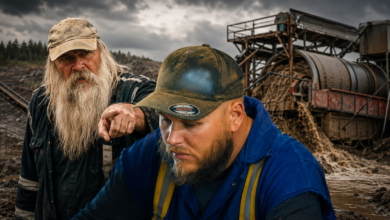
Rick Ness has never been afraid to make a difficult call, but his move back to Vegas Valley pushed that reputation into dangerous territory. With his operation under pressure and time running short, the Gold Rush miner committed to a plan that could consume approximately $1 million before he knew whether the ground would deliver enough gold to save the season.
The strategy was simple to describe and brutal to execute. Rick wanted his crew to expand Vegas Valley by four acres, shift more than one million yards of material, and complete the work in roughly six weeks. The site had already earned a reputation for risk, and the volume of earth involved meant that any slowdown could quickly become expensive.
Rick presented the decision to his team as the only realistic path forward. Staying conservative would protect cash in the short term, but it could leave the crew without enough productive ground to reach its goals. Going all in could create access to the gold they needed, yet it also placed the company’s future on a narrow schedule with almost no margin for equipment failure.
The crew accepted the challenge and gave the new cut a name that matched the scale of the gamble: “Valhalla.” Rick drew the name from a Stormwarrior song and from the hall of fallen warriors in Norse mythology. It was dramatic, but it also captured the mood. The team was heading into a fight that promised either a breakthrough or a damaging defeat.


How Rick Ness Reached This Point
Gold Rush viewers first met Rick as a member of Parker Schnabel’s crew. He joined the series during its third season and eventually became one of Parker’s most recognizable operators. His transition from crew member to mine boss changed the direction of his life and gave the show another independent operation to follow.
Starting his own mining company around 2018 brought Rick control, but it also transferred every major risk onto his shoulders. As an employee, he could focus on production. As a boss, he had to make decisions about ground, payroll, fuel, repairs, equipment, and long-term survival. Each season became a test not only of mining knowledge but of leadership.
By Season 16, Rick’s operation had moved away from Lightning Creek and returned to Vegas Valley. That choice immediately raised concerns because the site had previously been considered too dangerous to mine. The word “dangerous” can refer to more than physical safety. Steep terrain, unstable ground, difficult access, and costly stripping can make a cut financially dangerous even when crews follow proper procedures.
Rick was not returning because the site offered an easy win. He was returning because the alternatives appeared even less promising. The decision reflected the reality of a miner who needed enough volume and enough gold to keep the company moving.

The “Valhalla or Bust” Plan
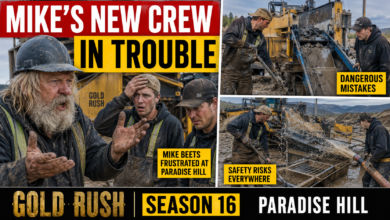
Rick gathered the crew and explained the scope of the job. Extending Vegas Valley by four acres required moving an extraordinary amount of overburden before the team could reach and process the pay dirt below. The six-week target meant the operation would need to maintain a punishing pace.
The plan depended on coordination. Excavators had to dig and load efficiently. Rock trucks had to carry material without creating bottlenecks. Roads had to remain passable. Operators had to avoid damaging machinery while still working fast enough to meet the schedule. A failure in any one part of the system could reduce production across the entire site.
At Duncan Creek, the crew began stripping the bottom and initially made respectable progress. That early pace was important because a project of this size can become psychologically overwhelming. Visible movement reassured the team that the target, while extreme, was not impossible.
However, Rick was warned that the cost of the push could leave his entire $1 million commitment exposed. The money would not disappear in a single purchase. It would be consumed through fuel, labor, maintenance, parts, equipment time, and the opportunity cost of focusing on a cut that had not yet produced a return.
Rick chose to continue. From his perspective, the company needed access to new ground more than it needed to preserve cash. That is the core tension behind the episode: the safest financial decision could have produced the least useful mining result, while the most dangerous financial decision offered the only meaningful path to gold.
A Rock-Truck Failure Threatened the Schedule
The first major warning arrived when a rock truck went down. On a small job, one disabled truck can be inconvenient. On a million-yard stripping campaign with a six-week deadline, it can become a critical production loss.
Every truck in the haul cycle contributes to the amount of material moved per hour. When one unit stops, excavators may wait longer between loads, remaining trucks must carry more of the burden, and the total yardage falls behind the planned rate. Even after repairs, the lost hours cannot be fully recovered without increasing the pace somewhere else.
The breakdown therefore represented more than a mechanical problem. It exposed how little flexibility Rick had built into the Valhalla plan. His team eventually obtained the necessary parts and repaired the truck, but the delay consumed valuable time.
Equipment failures are inevitable in mining. Heavy machines operate under repeated load, on rough ground, and for long hours. A realistic plan accounts for some downtime. Rick’s difficulty was that the target itself was so aggressive that normal downtime could become financially dangerous.
The crew’s response showed why Rick was willing to trust them with the gamble. They did not abandon the plan when the truck failed. They diagnosed the problem, waited for parts, completed the installation, and returned the machine to work. Their loyalty did not remove the risk, but it prevented the first major setback from ending the project.
Rick’s Leadership Became Part of the Debate
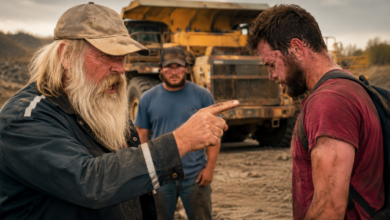
Viewers watching the episode focused not only on the ground but on Rick’s management style. One fan argued that Rick struggles to balance friendship with authority. The comment suggested that he needed to communicate the plan directly and make expectations unmistakable.
“I think Rick struggles as a boss with walking the line between buddy and boss with his employees,” the viewer wrote, before arguing that he needed to be clear about the plan.
That criticism reflects a challenge Rick has faced throughout his time as a mine boss. His crews often operate with a strong sense of personal loyalty, and Rick tends to build relationships that feel less formal than a traditional employer-employee structure. That can create commitment during hard moments, but it can also make discipline, accountability, and difficult personnel decisions more complicated.
In a project like Valhalla, unclear authority can be costly. Operators need to know the daily target, the priority of each task, and the consequences of falling behind. A friendly atmosphere does not prevent effective management, but the boundaries must remain visible when the company is risking $1 million.
Other viewers responded with support rather than criticism. One fan wrote, “Y’all got this RICK&TEAM.” That reaction captured the emotional appeal of Rick’s storyline. Many viewers do not simply judge the project as a business case; they want to see a familiar crew survive a difficult season.
Tony Beets Was Building Momentum Elsewhere
Rick’s dangerous gamble unfolded alongside a much stronger week for Tony Beets. At the weigh-in, Tony’s operation produced more than $2.3 million in gold. The total moved him closer to his season target, with roughly 2,000 ounces still remaining.
The contrast mattered. Tony’s cleanup represented the kind of immediate return Rick was still trying to unlock. While Rick spent money stripping ground, Tony was converting processed material into gold. One operation was investing in access; the other was collecting the result of earlier investments.
Tony’s success also increased the competitive pressure that defines Gold Rush. The miners do not operate under identical conditions, and the show is not a formal contest with equal rules. Still, weekly totals create a visible scoreboard. A strong result from Tony can make Rick’s lack of immediate gold feel even more dangerous.
For Rick, however, copying Tony’s approach was not an option. He had to work with the ground, equipment, and finances available to his own company. Valhalla was not designed to beat Tony in one week. It was designed to create enough future production to keep Rick’s operation alive.
Parker Schnabel Faced a Chain of Smaller Failures
Parker Schnabel’s team encountered a different collection of problems. Debris left behind by crew members created trouble, and a piece of steel damaged a rock-truck tire. Later, the wash plant developed feeder issues. None of those setbacks alone carried the same dramatic price tag as Rick’s gamble, but together they reduced efficiency.
The weekly weigh-in confirmed the effect. Parker’s numbers were down, adding pressure to a season already built around high expectations. Like Rick, Parker still believed the operation could recover in time to reach its target.
Parker’s problems illustrate how mining losses often accumulate. A damaged tire costs money and time. Feeder issues interrupt plant throughput. Poor housekeeping can create mechanical damage that should have been preventable. When several small failures occur close together, the total impact can resemble one major breakdown.
Rick’s Valhalla challenge was easier to identify because it centered on one enormous decision. Parker’s challenge was operational discipline. Both required leadership, but the solutions were different. Rick needed to keep the crew committed to an extreme plan. Parker needed to prevent routine mistakes from undermining an expensive production system.
Why a $1 Million Gamble Can Still Make Sense
From the outside, risking $1 million on uncertain ground can appear reckless. The logic becomes clearer when the alternative is considered. A mining company cannot survive indefinitely without new pay dirt. Preserving cash while running out of productive ground only delays the crisis.
Rick was effectively buying a chance to reach the next stage of the operation. The million dollars funded access. If Valhalla exposed enough profitable material, the gold could repay the stripping cost and support the company. If the cut failed, Rick would have spent heavily without creating a reliable revenue source.
The quality of the decision therefore cannot be judged only by the outcome. Mining always involves incomplete information. Rick had to assess geological expectations, historical results, equipment capability, crew performance, and available alternatives. A positive result would not prove the choice was safe, and a negative result would not automatically prove it was irrational.
What made the plan extraordinary was the concentration of risk. The six-week schedule, million-yard target, difficult location, and $1 million exposure all depended on each other. A slower schedule might have reduced operational pressure but increased costs. A smaller cut might have saved money but failed to reveal enough pay dirt. Rick chose the version with the greatest potential reward and the least room for error.
The Real Meaning of “Valhalla or Bust”
The episode title was not merely a dramatic label. “Valhalla or Bust” summarized the position of Rick’s company. The crew was not stripping the cut as a side project. The work represented a direct attempt to secure the operation’s future.
The name also fit Rick’s identity on the show. His story has often centered on resilience, personal setbacks, and the difficulty of returning to full strength. Viewers have watched him make mistakes, rebuild relationships, and attempt to regain momentum. Valhalla became another test of whether determination could be converted into a functioning business result.
Determination alone, however, cannot move one million yards. The crew needs reliable machines, disciplined scheduling, and measurable daily progress. The emotional belief that “we can do this” must be supported by production numbers.
That is why the repaired rock truck mattered. It was a small victory inside a much larger gamble. The crew proved that a breakdown would not immediately stop them, but they still had to recover the lost time and continue moving material at the required pace.
What Rick Needs to Make the Gamble Pay Off
First, the operation must keep its haul fleet running. Preventive maintenance, available parts, and quick diagnosis will be essential. Another major breakdown could create a delay the six-week plan cannot absorb.
Second, Rick needs clear production targets. The team must know how many yards have to move each day and whether they are ahead or behind. Without that information, the project can feel active while still failing mathematically.
Third, the ground must justify the cost. Reaching pay dirt is not enough. The material needs sufficient gold concentration to cover stripping, processing, labor, fuel, and the broader overhead of the company.
Finally, Rick must lead with both loyalty and authority. His crew’s faith is a major asset, but support has to translate into consistent execution. The “buddy versus boss” criticism becomes most relevant when the operation falls behind and difficult decisions are required.
Rick Ness Has Chosen His Path
By committing to Valhalla, Rick eliminated the possibility of a cautious ending. He chose to risk a large amount of money because he believed the company needed a large opportunity. The decision may ultimately be remembered as the move that saved his season or the gamble that exhausted his remaining options.
For now, the project remains alive. The crew survived the rock-truck failure, repairs were completed, and work continued. Tony and Parker’s parallel storylines showed that no miner was free from pressure, even though each operation faced a different type of problem.
The most important result has not yet appeared in the gold room. It is still buried beneath the material Rick’s crew is racing to remove. Until Valhalla reaches consistent production, every repaired truck, every completed shift, and every dollar spent remains part of a bet.
Rick Ness has placed approximately $1 million behind the belief that Vegas Valley can deliver. Now the ground—and the clock—will decide whether that belief was a calculated risk or one gamble too many.