Parker Schnabel Admits He Was ‘Embarrassed’ — And Now He’s Burning $250,000 a Day to Prove Himself
Parker Schnabel Admits He Was 'Embarrassed' — And Now He's Burning $250,000 a Day to Prove Himself
Parker Schnabel has spent 15 years building a mining empire that most operators can only dream of. He has pulled millions of ounces of gold from the frozen Yukon ground, built a fleet of more than 60 machines, and become one of the most recognizable faces in reality television. But for all his success, the 31-year-old mining prodigy has never experienced failure — not until last season. For the first time in his career, Parker missed his season goal. And the feeling, he admits, was humiliating.
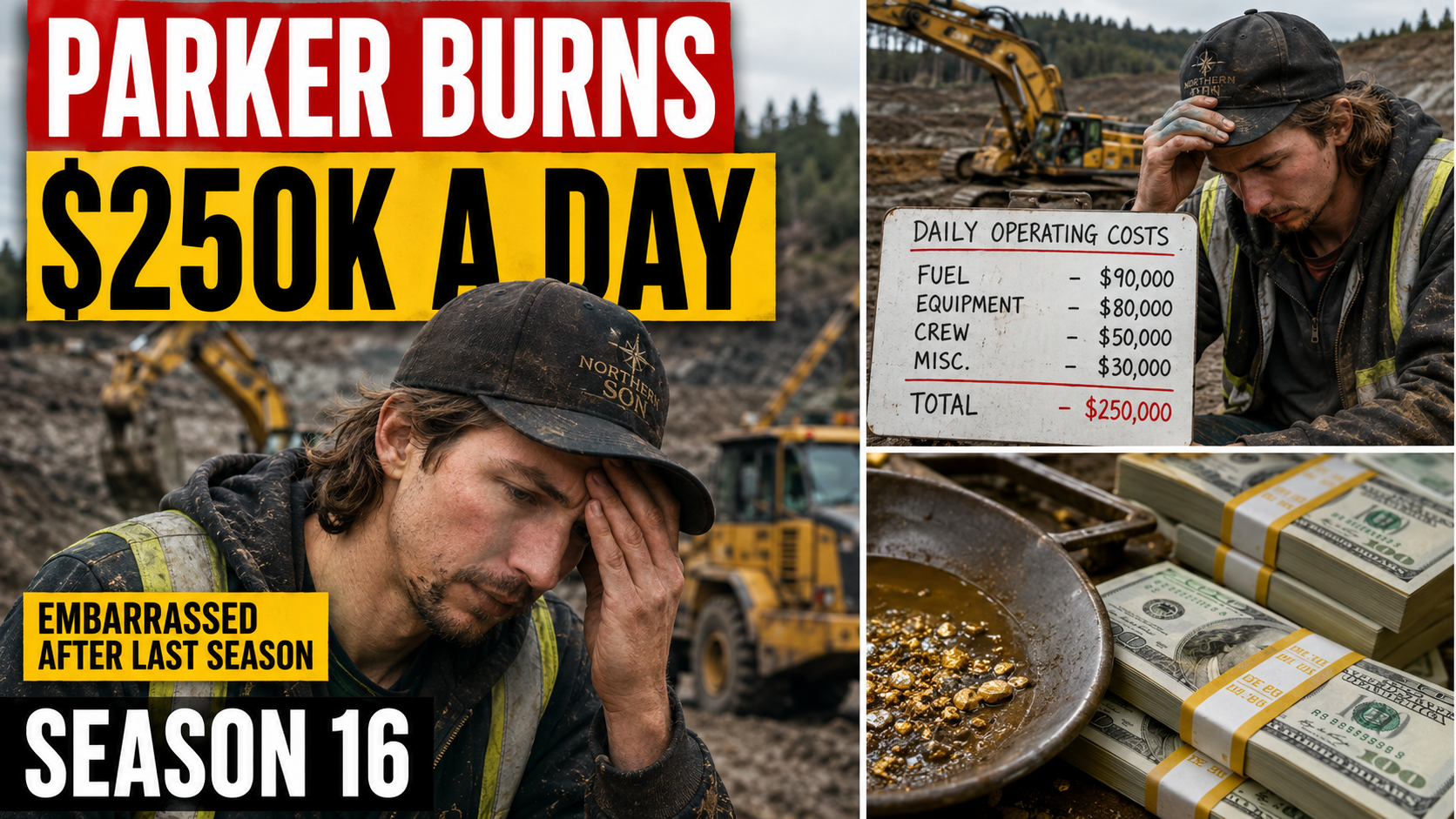
That embarrassment has become the driving force behind his most aggressive season yet. Parker is spending up to $250,000 a day on his Season 16 operation, a staggering investment that reflects his determination to never feel that shame again. “I definitely came in with a lot of force and fire,” he told PEOPLE in an exclusive interview. “We just came out swinging”.
The numbers are almost incomprehensible. Parker’s base operating costs run at approximately $100,000 per day. But when equipment acquisitions, staffing, and other investments are factored in, the total skyrockets to between $200,000 and $250,000 daily. It is a level of spending that would terrify most miners. But Parker sees it differently. “I think that from our standpoint, we want to spend as much money as possible,” he said.
This is not reckless spending. It is a calculated gamble. Parker is betting that the soaring gold prices — which have reached historic highs — will more than cover his massive investment. If his gamble pays off, Season 16 could be the most lucrative of his career. But if it fails, the losses could be catastrophic.


The Shame That Changed Everything
Parker’s Season 15 failure was a gut punch. For 14 years on the show, he had never missed a goal. He had always delivered. But last season, something went wrong. The gold didn’t come fast enough. The ground didn’t cooperate. And for the first time, Parker had to face the reality that he was not invincible.
The admission was painful. “I was definitely a little bit embarrassed by not hitting our goal last year,” he said. “That’s not something that I don’t think it’s ever happened. I think that was the first time in 14 years that we’ve been on the show. It was definitely fairly off-putting that that happened last year”.
The word “off-putting” barely captures the weight of the moment. Parker had built his reputation on consistency. He was the young prodigy who never missed. The miner who always found a way. The failure was not just a financial loss — it was a blow to his identity.
But Parker did not wallow in self-pity. He channeled that embarrassment into action. “I was not about to have a repeat of that,” he said. “So I definitely came in with a lot of force and fire”.
The $250,000-a-Day Gamble
Season 16 is Parker’s answer to failure. He has scaled up his operation to an unprecedented level. More than 60 machines are now working across his claims. Four wash plants are running simultaneously. A “bold new team structure” has been implemented to maximize efficiency. And the cost of it all is staggering.
Parker’s base operating costs alone are $100,000 per day. That covers fuel, wages, maintenance, and the day-to-day expenses of running a massive mining operation. But that is just the beginning. When equipment purchases, land acquisition, and other capital investments are included, the total daily expenditure jumps to between $200,000 and $250,000.
To put that in perspective, Parker is spending the equivalent of a luxury home every single day. In a week, he burns through more than $1.7 million. Over the course of the season, the total investment could reach tens of millions of dollars.
But Parker is not fazed by the numbers. “Those numbers seem high, but they don’t scare me at all,” he said. Instead, he sees the spending as motivation. “I think that the whole company really thrives under that pressure, and we’ve attracted people and kept people on who deal with that kind of pressure very well and take that responsibility on as a personal challenge”.
The Psychology of Spending Big
Parker’s approach to spending is counterintuitive. Most miners try to minimize costs. They cut corners, defer maintenance, and stretch their budgets as far as possible. Parker does the opposite. He spends aggressively, believing that the investment will pay off in the long run.
“I think that from our standpoint, we want to spend as much money as possible,” he said. It is a philosophy that reflects his confidence in the gold market. With prices soaring, every ounce of gold is more valuable than ever. Parker is betting that the increased production from his massive operation will more than cover his costs.
But there is another dimension to his spending. It is psychological. By investing so heavily, Parker is sending a message to his crew, his competitors, and himself: failure is not an option. The money is on the line. The stakes are high. And everyone — from his foreman Tyson Lee to his crew at Dominion Creek — knows that they have to deliver.
“I think that the whole company really thrives under that pressure,” Parker said. “Nobody really thinks about it. Even I don’t really think about it too much apart from it’s my job to make sure there’s money in the bank accounts to pay bills. But I don’t know. I really enjoy it”.
The Crew Under Pressure
Parker’s aggressive spending has created a high-pressure environment for his crew. His foreman, Mitch Blaschke, has been tasked with squeezing every ounce of gold from Sulphur Creek before the water license expires. Tyson Lee has been working 15-to-16-hour days, managing multiple wash plants while Parker demands even more.
The pressure is intense, but Parker believes his team is built for it. “We’ve attracted people and kept people on who deal with that kind of pressure very well,” he said. The crew members who remain are those who thrive under the weight of expectation.
But the pressure has also led to tough decisions. Parker has ordered Tyson to fire the “weakest link” on the crew, a brutal but necessary move to ensure that every member of the team is performing at their best. He has also poached crew members from rival operations, including Kevin Beets’ team, to strengthen his own ranks.
The High Stakes of Season 16
Parker’s goal for Season 16 is ambitious: 10,000 ounces of gold, worth approximately $35 million at current prices. It is a target that would cement his legacy as one of the greatest miners in Gold Rush history. But it is also a massive challenge.
Midway through the season, Parker had already closed in on 5,000 ounces. He was on track to hit his goal, but the margin for error was razor-thin. Every breakdown, every delay, every mechanical failure could derail the entire season.
The rivalry with Tony Beets added another layer of complexity. Tony, the “King of the Klondike,” was also having a strong season, generating millions of dollars in gold and pushing his crew to the limit. The competition between the two miners was intense, and every ounce counted.
Parker’s $250,000-a-day spending was his answer to the challenge. He was not going to be outspent or outworked. He was going to throw everything he had at the season and see what stuck.
The Emotional Toll
Behind the numbers and the machinery, Season 16 is a deeply personal journey for Parker. The embarrassment of his previous failure is a constant presence, driving him to push harder and spend bigger.
The weight of expectation is immense. Parker is not just mining for gold — he is mining for redemption. He is proving to himself, his crew, and the world that last season was an anomaly. That he is still the miner who never misses.
But the pressure is also exhausting. Parker admits that he doesn’t think about the spending too much — “apart from it’s my job to make sure there’s money in the bank accounts to pay bills”. But the subtext is clear: the responsibility is crushing, and the stakes are higher than ever.
What Success Would Mean
If Parker’s gamble pays off, Season 16 could be the most lucrative of his career. The 10,000-ounce goal would generate $35 million in revenue, more than enough to cover his massive daily expenses. It would also cement his legacy as one of the greatest miners in Gold Rush history.
But the rewards are not just financial. Success would validate Parker’s approach to mining. It would prove that his aggressive spending and high-pressure management style are the right way to win. It would erase the shame of last season and restore his reputation as the miner who never fails.
What Failure Would Mean
The flip side of success is equally stark. If Parker’s gamble fails, the losses could be catastrophic. A $250,000-a-day burn rate is not sustainable over the long term. If the gold doesn’t come fast enough, the operation could go bankrupt.
Failure would also be a psychological blow. Parker’s identity is tied to his success as a miner. Another missed goal would confirm the fears that last season was not an anomaly — that the young prodigy is finally losing his touch.
The pressure is immense, but Parker is not backing down. He is all in, and he is determined to see it through.
The Bottom Line
Parker Schnabel’s Season 16 is a gamble unlike any other in Gold Rush history. Driven by the embarrassment of his first-ever failure, he is spending up to $250,000 a day to reclaim his throne. The stakes are enormous, and the pressure is crushing.
But Parker is not afraid. He thrives under pressure, and he has built a team that does the same. He is betting on himself, his crew, and the soaring gold prices to deliver the most lucrative season of his career.
Will the gamble pay off? Only time will tell. But one thing is certain: Parker Schnabel is not going down without a fight. The embarrassment of last season has lit a fire under him, and he is determined to never feel that shame again.
As Parker himself said, “Failure isn’t an option”.