BLOOD, SWEAT, AND NEGLIGENCE: THE SHOCKING SAFETY CRISIS PLAGUING THE GOLD RUSH MINING CAMPS
BLOOD, SWEAT, AND NEGLIGENCE: THE SHOCKING SAFETY CRISIS PLAGUING THE GOLD RUSH MINING CAMPS
The Hidden Cost of the Gold Rush
For more than a decade, viewers of the Discovery Channel’s flagship mining series have been captivated by the glittering paydays, the mechanical triumphs, and the larger-than-life personalities who brave the frozen wilderness in pursuit of fortune. But beneath the polished television edit, behind the triumphant gold weigh-ins and the dramatic breakdowns, lies a grittier and far more troubling reality. The relentless pursuit of gold, amplified by the pressures of production schedules, the unforgiving Yukon winter, and the ever-present cameras, has created a workplace culture where safety often takes a backseat to output. This season, that dangerous equation has produced a string of incidents so alarming that they have forced even the most hardened fans to question the human cost of the operation. From burns caused by molten metal to high-pressure hydraulic fluid spraying directly into a worker’s face, the recent episodes have painted a disturbing portrait of an industry where men are pushed to their physical limits—and sometimes beyond. The question is no longer whether these accidents are happening, but why, and what it will take for the industry to change.
Alec Kelly’s Harrowing Ordeal: Burned but Unbroken
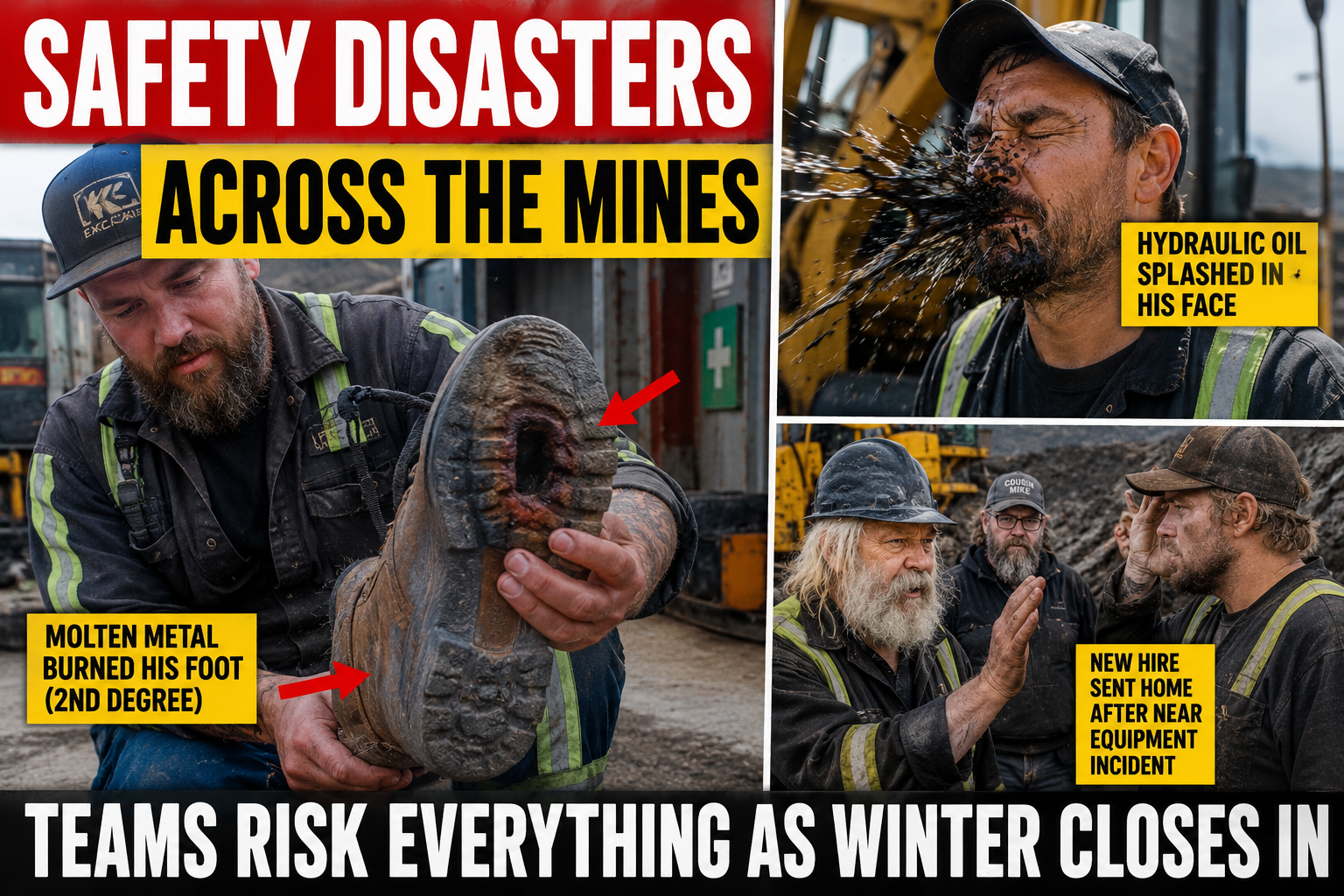
The first incident, and arguably the most visceral, occurred at one of the busiest mining operations when mechanic Alec Kelly found himself in the wrong place at the wrong time. During a routine repair session, a piece of molten metal—whether from welding or from a hot engine component—somehow found its way past Kelly’s protective gear and into his boot. The searing heat immediately made contact with his foot, causing a second-degree burn that would have sent most workers to the nearest medical facility without a second thought. But Kelly, perhaps driven by the relentless pressure of the season or a personal code of toughness that borders on self-destruction, made a decision that shocked even his crewmates. He refused to stop. After a brief moment to assess the damage, he continued working, soldiering through the pain to complete the repair. The image of a man limping through his duties while his boot slowly filled with blood and blister fluid is a stark reminder of the dangerous machismo that permeates the mining culture. It raises a deeply uncomfortable question: what kind of workplace pressure makes a man feel that a second-degree burn is not a valid reason to stop working? Kelly’s decision, while admirable in its dedication, speaks to a systemic failure to prioritize worker wellbeing over production targets.

Ryan Kent’s Brush with Blindness
If Alec Kelly’s injury was a slow, agonizing burn, the incident involving Ryan Kent was a sudden, terrifying explosion. While working near a high-pressure hydraulic line, Kent was caught in the path of a catastrophic failure that sent a jet of pressurized oil directly into his face. Hydraulic fluid, under the immense pressures required to operate heavy machinery, can act like a bullet. When a line bursts, the spray is not just messy; it is a physical assault that can cause serious eye damage, chemical burns, and even blindness. For Kent, the moment of impact was undoubtedly one of sheer terror. The oily, caustic fluid filled his eyes, nose, and mouth, leaving him gasping and disoriented. The immediate response from his crew—rushing him to flush his eyes and face with water—was a textbook emergency reaction. But the incident itself should never have happened. A properly maintained hydraulic system, with regular inspections and timely replacements of worn hoses, is a basic safety standard in any industrial setting. That a line failed so catastrophically suggests either a lapse in maintenance, a failure to replace aging components, or the simple reality that in the rush to keep production moving, preventative checks are often the first thing to be sacrificed. Kent was fortunate to escape without permanent vision loss, but the incident served as a chilling warning that the next failure might not be so forgiving.
Tony Beets’s Greenhorn: A Rookie Mistake or a Culture of Negligence?
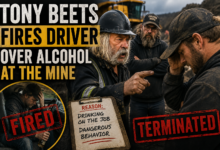
The third incident, perhaps the most emblematic of the systemic issues at play, occurred on Tony Beets’s claim. A new employee, a greenhorn fresh to the mining world, was tasked with operating some of the most expensive and dangerous equipment on the planet. The result was almost predictable: a near-catastrophe that could have cost the operation millions of dollars in damaged machinery and potentially endangered the lives of everyone on site. The specifics of the rookie’s error remain somewhat opaque, but the consequences were immediate and severe. Tony, with his characteristic bluntness, gave the employee his walking papers on the spot. It was a swift, decisive act of leadership—or, depending on one’s perspective, a failure of training and supervision. The question that lingers is not why the rookie made a mistake, but how he was allowed to be in a position to make such a costly error in the first place. In any properly managed operation, new hires undergo extensive training, shadowing experienced operators, and are gradually introduced to the complexities of the machinery. That this individual was able to get behind the controls and nearly cause a disaster suggests that the training protocols on the Beets claim may be insufficient, or that the pressure to get bodies into seats is overshadowing the need for thorough preparation. Tony’s decision to fire the employee was, in a sense, an admission of failure—a recognition that the individual was not fit for the job. But it also conveniently absolved the management of responsibility for the inadequate training that put him there.
The Winter Gamble: Racing Against the Clock
The backdrop to all of these incidents is the one factor that no miner can control: the Yukon winter. As the season progresses, the window of opportunity for extracting gold narrows with each passing day. The ground begins to freeze, the daylight hours shrink, and the machinery becomes harder to start and maintain. In this environment, the pressure to maximize every minute of production becomes almost unbearable. Mine bosses, already operating on razor-thin margins, are forced to make impossible choices: push the crew harder to meet the target, or accept a disappointing season and the financial consequences that come with it. This is the context in which safety protocols are routinely bypassed, maintenance schedules are compressed, and workers are expected to perform miracles. A mechanic like Alec Kelly, with a molten metal burn in his boot, may feel that he has no choice but to keep working; any delay, any trip to the hospital, could cost the operation precious time. A rookie like the one on Tony Beets’s claim may be thrust into the driver’s seat before he is ready because there is simply no one else available to operate the equipment. The winter is a relentless adversary, and in the race against it, the safety of the workers is too often the first casualty.
The Production Pressure: When Millions Are at Stake
It would be naive to suggest that the crew’s safety issues are purely accidental or the result of individual negligence. The producers of the show, the mine owners, and the entire ecosystem surrounding Gold Rush are all invested in one thing: extracting as much gold as possible. The dramatic narrative of the show is built on the tension between the unforgiving environment and the human drive to conquer it. In this context, production targets are not just goals; they are the measure of success, the storyline that keeps viewers engaged, and the metric by which the miners themselves judge their worth. When millions of dollars are on the line, the calculus of risk changes. A mechanic working through an injury is not seen as a liability; he is seen as a hero. A rookie making a mistake is not a sign of insufficient training; it is a plot point. The safety incidents that have occurred this season are not anomalies; they are the logical, if horrifying, consequences of a system that values output over wellbeing. The question is not whether these accidents will happen again—they almost certainly will—but whether the industry, and the show that chronicles it, will finally take meaningful action to prevent them.
The Crew’s Perspective: Heroism or Folly?
Watching the show, it is easy to be inspired by the grit of the miners. Alec Kelly’s decision to continue working after being burned is a testament to human endurance. Ryan Kent’s crew’s quick response to the hydraulic accident demonstrates the solidarity and training that exists within these tight-knit groups. But there is a fine line between heroism and folly. When a worker is so conditioned to put the job first that he ignores a serious injury, he is not being a hero; he is being exploited. The culture of machismo that permeates the mining industry—the unspoken rule that you don’t complain, you don’t stop, and you don’t show weakness—is a direct contributor to the safety crisis. It is a culture that is reinforced by the show itself, which glorifies the “tough guy” image and often frames safety concerns as a sign of weakness or a lack of commitment. Until that culture changes, until workers feel empowered to say “no” without fear of reprisal, the injuries will continue.
The Employer’s Responsibility: Where Does the Blame Lie?
While the individual workers are often the face of these incidents, the ultimate responsibility lies with the management. Tony Beets, Parker Schnabel, and Rick Ness are not just crew leaders; they are business owners. It is their equipment, their claims, and their bottom line that is at stake. They have a legal and moral obligation to provide a safe working environment. This means adequate training, proper maintenance of equipment, and a culture that encourages safety reporting rather than discouraging it. The incidents this season—the burn, the hydraulic accident, the greenhorn’s near-miss—all point to failures in these areas. Was the hydraulic line that injured Ryan Kent inspected regularly? Was the rookie on Tony Beets’s claim given the proper training before being placed in a critical role? Was Alec Kelly’s injury treated with the seriousness it deserved, or was he tacitly encouraged to continue working? These are questions that the mine bosses must answer, not just to the cameras, but to themselves and to their crews.
The Viewer’s Dilemma: Entertainment or Exploitation?
For the millions of viewers who watch Gold Rush, the safety incidents present a moral dilemma. The show is entertainment, but the injuries are real. When a worker is burned or sprayed with oil, it is not a special effect; it is a human being in pain. The thrill of the chase, the excitement of the big payout, is accompanied by a sobering realization that the cost of this entertainment is often borne by the men and women on the ground. The question for the audience is whether they are complicit in this system. By tuning in, by enjoying the drama, are they endorsing a culture that puts profit over people? It is a heavy question, but one that deserves consideration. The show has a responsibility to portray the reality of the industry, not just the glamour. This includes showing the consequences of safety failures and holding the mine bosses accountable for the conditions they create. The recent incidents have provided a platform for this conversation, and it is one that the producers and the network should embrace rather than shy away from.
The Path Forward: A Culture of Safety
The mining industry is inherently dangerous. Heavy machinery, extreme weather, and physically demanding work will always carry risks. But the incidents this season are not inevitable; they are preventable. A culture of safety requires a fundamental shift in priorities. It means investing in regular equipment inspections and timely maintenance. It means providing comprehensive training for new hires and ongoing safety education for all workers. It means creating an environment where a mechanic like Alec Kelly feels comfortable seeking medical attention without fear of reprisal. It means recognizing that a rookie is not ready for the job until he is properly trained, regardless of the production schedule. The mine bosses have the power to make these changes. They have the resources and the authority to prioritize safety over output. The question is whether they have the will. The recent string of incidents should be a wake-up call, a reminder that the most valuable resource in the mining industry is not the gold in the ground, but the men and women who extract it.
A Critical Juncture
As the season continues and the winter deepens, the pressure on the crews will only intensify. The race for gold will become more desperate, and the likelihood of further incidents will increase. The recent events—Alec Kelly’s burn, Ryan Kent’s hydraulic accident, the rookie’s firing—are not isolated incidents; they are symptoms of a deeper, systemic problem. The mining world is at a critical juncture. It can continue down the path of prioritizing production over safety, risking the health and lives of its workers, or it can make a conscious decision to change. The decision will not be made by the executives or the producers; it will be made by the mine bosses who control the daily operations. Tony Beets, Parker Schnabel, and Rick Ness have the power to set the tone for their crews. They can choose to be leaders who protect their workers or managers who exploit them. The hope, for the sake of the men and women who risk their lives every day in the frozen wilderness, is that they choose wisely. The gold will always be there, but the lives of the miners are irreplaceable. It is time for the industry to recognize that safety is not a cost; it is an investment in the future.