Kacie Adkison’s Real Job Revealed: How a Baby-Inspired Tallow Project Became a McBee Business
Kacie Adkison’s Real Job Revealed: How a Baby-Inspired Tallow Project Became a McBee Business
Kacie Adkison’s workday does not fit neatly inside an office schedule. It can include farm errands with Cole McBee, caring for their daughter Blair, filling skincare jars during nap time, responding to the demands of a growing business, and returning outside with the family before the day is over.
Her role on The McBee Dynasty: Real American Cowboys may introduce her to viewers, but television is not her primary job. Kacie runs the McBee family’s beef tallow skincare line through McBee Farm & Cattle Co.
The company began with a product she made for Blair, not with a formal plan to launch a brand. Demand transformed the personal project into a business, and that transformation placed Kacie in the middle of production, marketing, fulfillment, family conflict, and rapid on-the-job learning.
What Kacie Adkison Does for a Living
Kacie is responsible for the tallow skincare operation associated with McBee Farm & Cattle Co. The products are made with tallow sourced from cattle raised on the ranch, and the company describes them as handcrafted rather than produced by a contract manufacturer.
Her work therefore extends beyond appearing in promotions. It includes the physical process of making and packaging products, coordinating orders, building a brand identity, and connecting the line to the farm’s grass-fed cattle operation.


The job is also highly visible. Customers can watch parts of the process through social media, while viewers see Kacie learning how to operate the company during the show. Mistakes, disagreements, and growth problems become public storylines rather than private business lessons.
The Product Started With Blair
Kacie has said the tallow project began for her daughter. She was not initially trying to create a company. The product served a personal purpose, and the business emerged only after it attracted interest beyond the household.
That origin matters because it explains why Kacie speaks about the line with a strong sense of ownership. She did not join an established McBee division and inherit a defined job description. She developed something from a need inside her own family and watched it become commercially valuable.
Once sales increased, the nature of the project changed. A handcrafted item made in small quantities became an operation with repeat customers, delayed orders, packaging requirements, online promotion, and pressure to scale.
Kacie said viewers would see every step of her learning process. She openly admitted she did not know how to run a business when she started. Rather than presenting herself as an experienced executive, she framed the company as a public education in entrepreneurship.
A Day That Combines Motherhood and Production
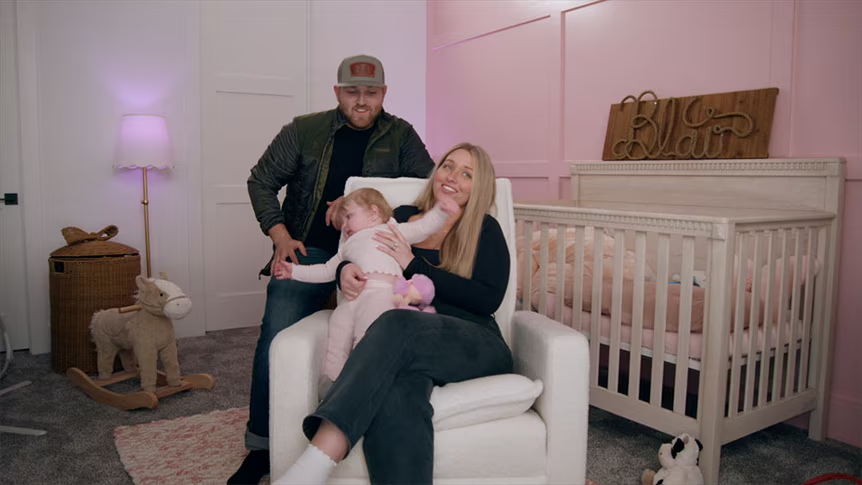
In a “day in my life” video, Kacie showed how closely her work and family responsibilities overlap. Blair accompanied her and Cole during farm errands. Kacie handled nap time, filled jars of skincare, and continued family activities on the property.
This arrangement allows her to remain physically present with her daughter, which was one of the reasons the business appealed to her. It also removes the clean separation between work hours and home life. Production can happen around a child’s schedule, but a child’s needs do not pause when orders increase.
Kacie is therefore balancing two forms of unpredictability. Small children do not follow production calendars, and a young consumer business does not generate perfectly stable demand. When both require attention at once, the workload becomes difficult to absorb without help.

Why the Tallow Line Became More Than a Passion Project
Kacie described the company as a passion project that unexpectedly grew. She wanted a source of independence while Steve McBee Sr.’s legal problems and prison sentence placed pressure on the broader family operation.
Relying entirely on the existing McBee businesses carried risk. The farm and related ventures were dealing with leadership uncertainty, financial strain, and the absence of the family patriarch. A separate product line gave Kacie and Cole another path, even though it remained connected to the ranch.
The business also allowed Kacie to continue staying home with Blair. Instead of choosing between paid work and motherhood, she attempted to build a job around both. That flexibility came at the cost of taking responsibility for a company she was learning to run in real time.
Cole Was Her First Worker
Kacie said Cole became the first person to work with her on the project. His involvement made sense because they were building a family together and living on the McBee property.
Cole’s participation also gave Kacie support inside a family system where business decisions could become contentious. When conflict later developed over ownership, he defended the idea that Kacie and McBee Farms should remain the central owners of the line.
Their partnership blended domestic and commercial life. They were engaged, raising Blair, expecting another daughter, and working on products tied to the family ranch. Success could strengthen the household, while a business dispute could follow them home immediately.
Working With Steven McBee Jr. Was the Hardest Test
Kacie collaborated with Steven McBee Jr. as the tallow line expanded. Their skills and priorities did not always align.
Steven focused on the operational danger created by delayed orders. He believed the company needed stronger systems and marketing help. Kacie agreed she needed assistance but resisted his proposal to give a 20% stake to Allie Eklund, Steven’s girlfriend at the time.
The disagreement escalated because Kacie felt Steven was trying to redistribute a company she had created. Steven believed she was underestimating what was required to keep the business alive.
Kacie later said they butted heads, but she also reported that the company was doing extremely well. The conflict became part of her education: creating a product and running a scalable business are different jobs, and accepting help requires clear boundaries around ownership.
The Ownership Fight Clarified Kacie’s Position
During the dispute, Kacie repeatedly described the skincare line as her business. She had created the product, developed repeat customers, and handled the early work. That history shaped her refusal to give Allie a large share before the partners had even tested how they would work together.
Kacie did not claim she could manage every task alone. She said she had asked for help. Her objection concerned the terms of assistance and the speed with which permanent ownership was being offered.
The argument ultimately reinforced her identity as the founder rather than a supporting cast member attached to the McBee name.
How the Ranch Becomes Part of the Product
The tallow line draws its core ingredient from cattle associated with McBee Farm & Cattle Co. The company emphasizes that the tallow comes from grass-fed and grass-finished cattle raised on the land.
That connection gives the product a story larger than a generic skincare jar. Customers are buying an item linked to a working ranch, a recognizable television family, and a person who publicly shows parts of the manufacturing process.
Kacie’s role is to make that story credible. The company says the products are handcrafted by her, not outsourced to an anonymous manufacturer. Her presence therefore functions as both labor and brand assurance.
This direct connection can build trust, but it increases pressure. If customers believe they are buying from a real person on a real ranch, delays and quality concerns feel personal. Kacie cannot hide behind a distant corporate structure.
Who Kacie Is Outside the Company
Kacie is Cole McBee’s fiancée and the mother of Blair Collins McBee. She and Cole live on the family farm, placing her daily life inside the same setting where the business operates and the show is filmed.
Her Season 3 story included two goals: moving toward engagement with Cole and expanding the skincare company. Both goals developed while the family dealt with Steve Sr.’s incarceration and the uncertainty surrounding the larger businesses.
This context explains why the tallow line became emotionally important. It was not only a source of revenue. It represented a project Kacie could influence directly while much of the family’s future felt unstable.
Kacie and Cole’s Growing Family
Kacie and Cole are parents to Blair and announced that they were expecting a second daughter. The baby was due in August 2026, after the couple revealed the pregnancy in March and later shared that they were having another girl.
Kacie has described motherhood as the best thing she has experienced. She admitted that people warned it would change her life and said they were right.
That change is visible in the way she designed her work. The skincare business allows her to remain close to Blair, but it also grew from a product initially made for her child. Motherhood is therefore not a separate biographical fact added to the business story. It is part of the company’s origin and operating model.
The Challenge of Scaling a Handcrafted Brand
A small handmade operation can satisfy early demand through personal effort. Growth changes the calculation. More orders require larger equipment, inventory planning, reliable packaging, customer service, and predictable fulfillment.
The tallow company reportedly encountered a backlog, which became one of Steven’s strongest arguments for intervention. Later updates showed the family investing sales revenue into a larger mixer, indicating that production capacity had increased.
That progression—from jars filled around family routines to larger equipment—captures the transition Kacie has been managing. The brand’s appeal depends partly on being handcrafted, yet the company must produce enough volume to serve customers without destroying the personal quality that made it attractive.
What the Products Include
The line expanded beyond a single general-purpose item. The McBee operation promoted products such as face cream, skin balm, baby balm, and baby butter.
The baby products connect directly to the origin story involving Blair. The broader skincare items allow the company to reach customers who are interested in tallow-based products even if they do not have children.
Expanding the range creates new revenue opportunities and additional complexity. Each item needs consistent production, labeling, inventory, and messaging. Kacie’s job therefore grew as the catalog grew.
Learning in Front of an Audience
Most first-time founders make early mistakes in relative privacy. Kacie’s learning process became part of a reality series. Viewers saw disagreements with Steven, questions about Allie’s role, and the pressure created by unfilled orders.
Public visibility can help a new brand reach customers quickly. It can also turn normal startup problems into judgments about competence and character.
Kacie’s response has been unusually direct. She has not claimed she began with formal business expertise. She has said she was learning and that the audience would see the process.
That honesty supports the brand because it aligns with the handcrafted identity. The company is not presented as a polished corporate launch. It is presented as a family project becoming professional under pressure.
Why Kacie’s Job Is Easy to Underestimate
From the outside, filling skincare jars can look like a simple task. The visible production step is only one part of the role.
Kacie has to maintain the product concept, protect quality, coordinate with the farm, respond to demand, appear in promotional content, manage family involvement, and decide how much ownership to exchange for help. She is also raising Blair and preparing for another child.
Her work is therefore part manufacturer, part founder, part brand representative, and part operations manager. The lack of a conventional office does not make the job less demanding. It makes the boundaries harder to see.
Where the Business Stands
Kacie has said the tallow company is doing extremely well. Social-media updates showed ongoing production and investment in improved equipment. She remained the public face of the product and thanked customers for supporting the business through orders, messages, follows, and encouraging comments.
Steven later said the ownership conflict had been resolved and gave Kacie credit for anticipating risks around Allie’s involvement. That update suggests the family found a better working arrangement without removing Kacie from the center of the operation.
The Job Kacie Created for Herself
Kacie’s answer to “What do you do for a living?” is not simply “reality television personality” or “member of the McBee family.” She runs a skincare company that grew from a product made for her daughter.
The work reflects the life she is trying to build: present with her children, connected to the ranch, financially productive, and less dependent on the uncertainty surrounding the older McBee businesses.
It also comes with the complications of that same environment. Every partner may also be a relative. Every business dispute may affect a family relationship. Every production problem may become a televised storyline.
Kacie entered the project without claiming to know how to run a company. She learned by making the product, serving customers, defending ownership, asking for help, and adapting when demand outgrew her original process.
The result is a job that did not exist until she created it—and a business whose identity remains tied to the mother, child, and ranch that gave it a beginning.